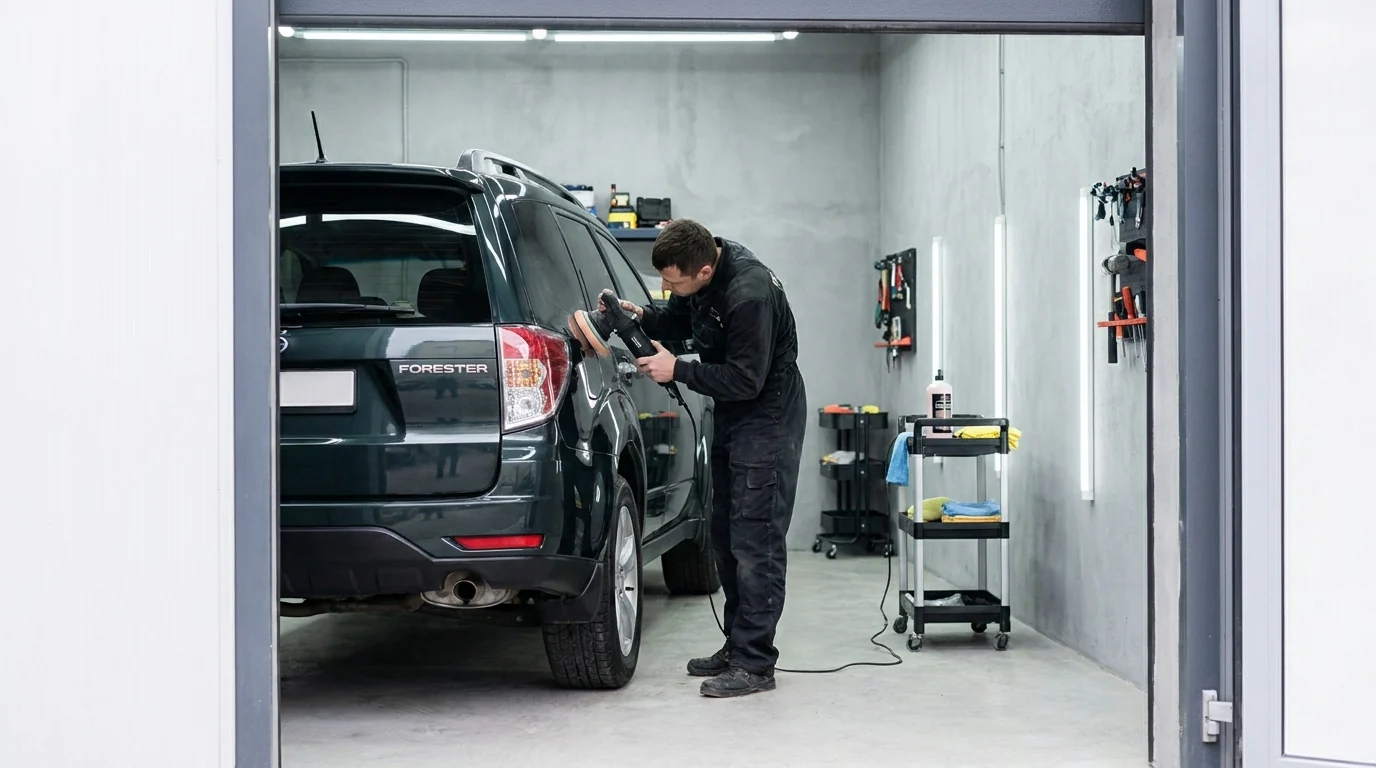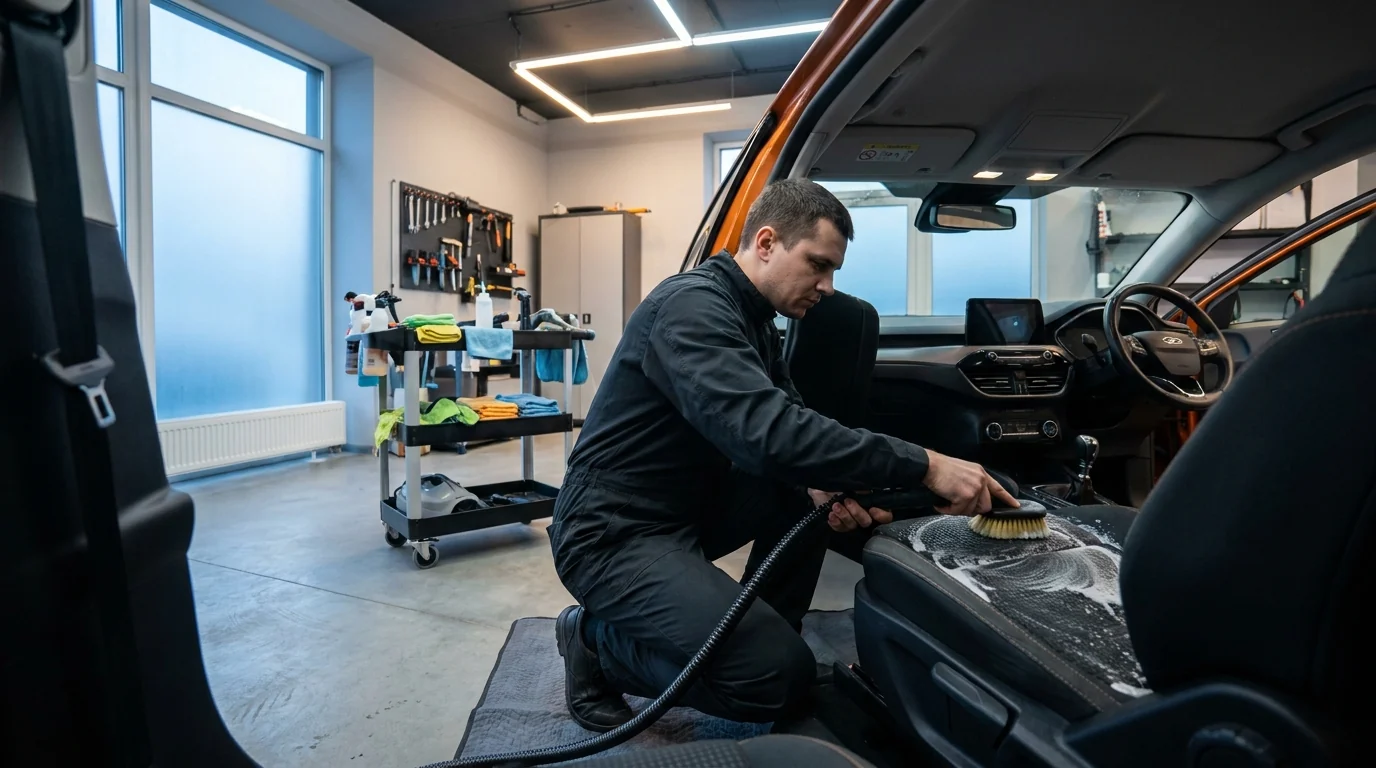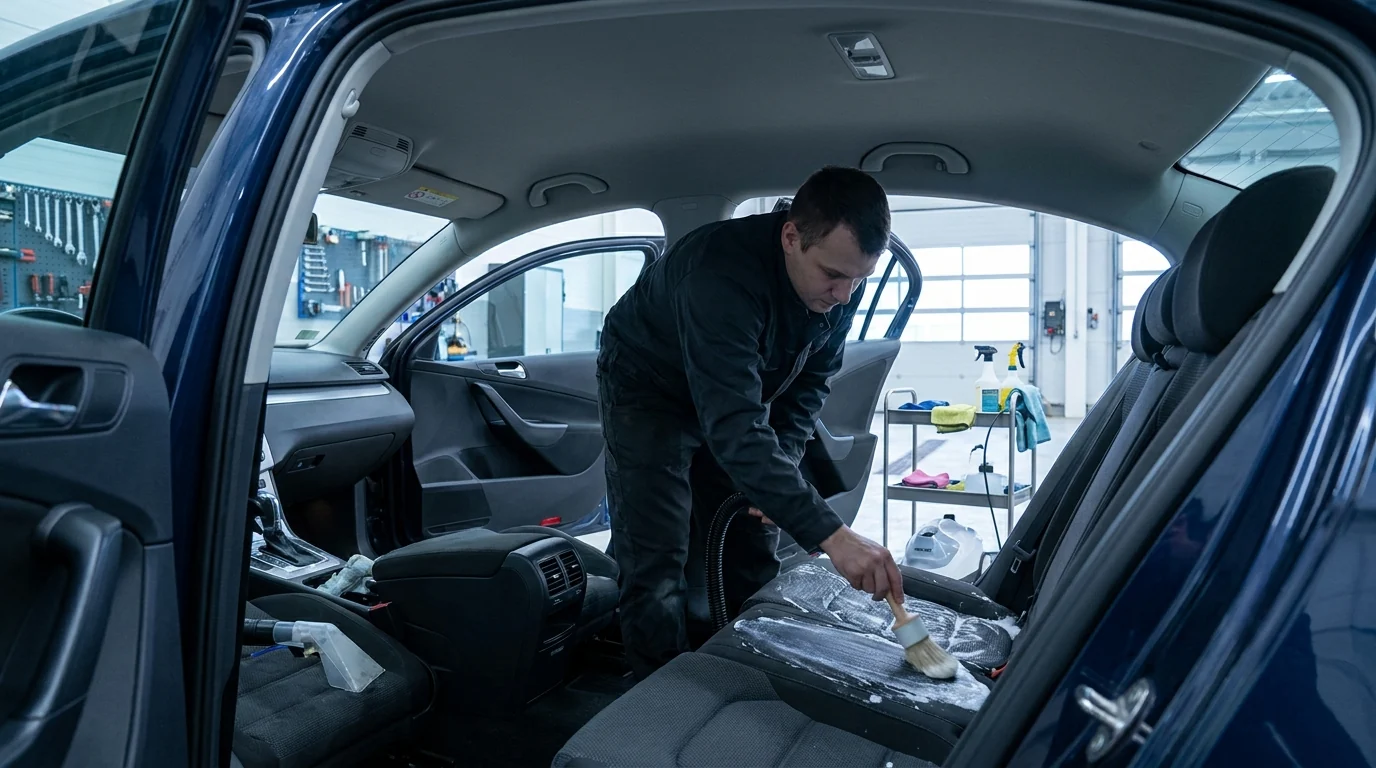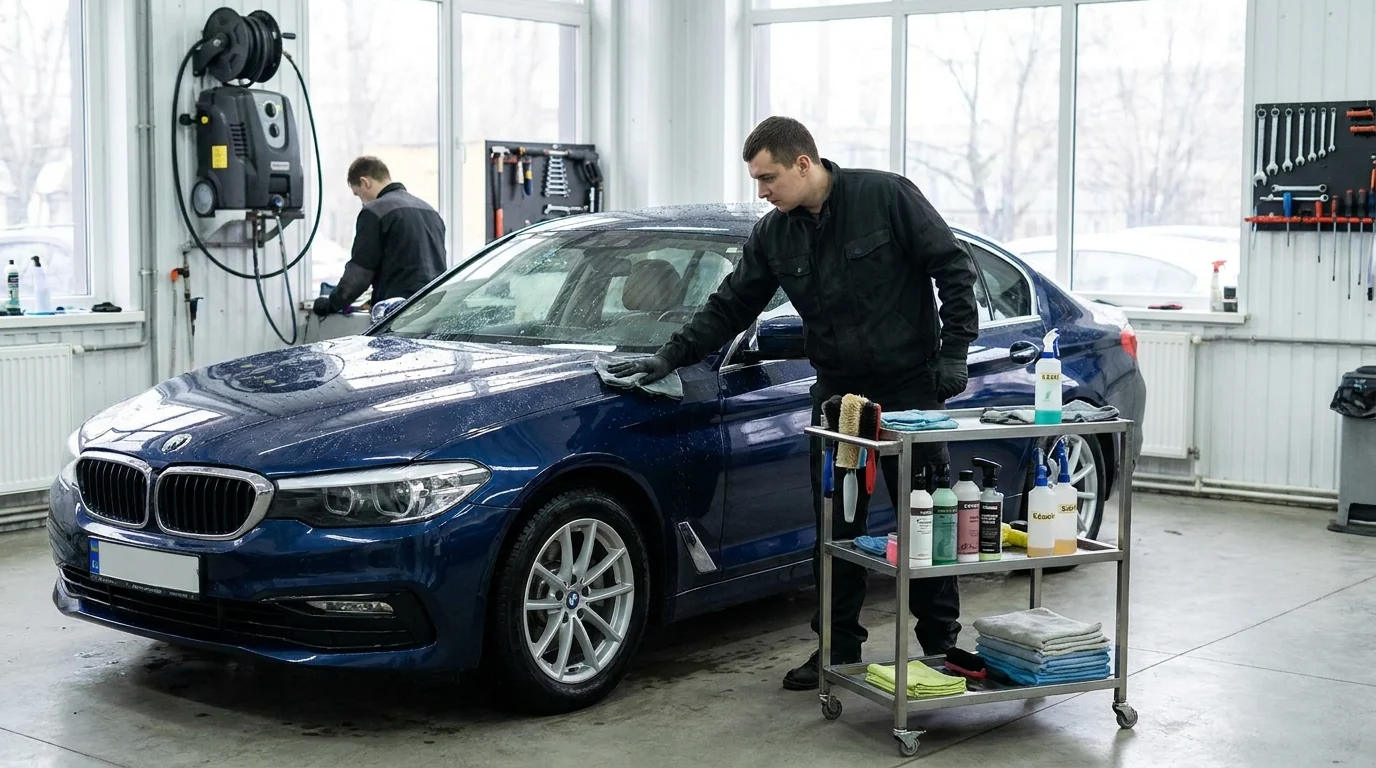
A two-phase body wash is a gentle cleaning method consisting of two sequential steps: first, a contactless application of active foam to safely soften dirt, followed by a careful hand wash with a special sponge. It's primarily for owners who want to minimize the risk of micro-scratches, or 'swirl marks,' on their paintwork. This is especially relevant for dark-colored cars, where every minor scratch is visible, and for vehicles with protective films or ceramic coatings, where aggressive chemicals or mechanical friction are undesirable. Unlike a standard contact wash, which essentially grinds dirt across the body, or a purely contactless wash, which doesn't always handle static grime, the two-phase approach offers a balance between effectiveness and paint safety. It's not just a way to get your car clean; it's part of a proper care regimen that preserves its appearance and value.
How a Two-Phase Wash Works: Two Steps to a Scratch-Free Clean
The two-phase wash process is clearly divided into two stages, each with its own purpose. The first phase is a preliminary, contactless cleaning. A special pre-wash compound, or active foam, is applied to the dry, dirty body. Its job isn't to wash away all the dirt, but to chemically soften it and break the bond between abrasive particles (sand, dust, road chemicals) and the paint surface. The foam works for a few minutes, penetrating the layer of grime, after which it's rinsed off with a pressure washer. This step removes the bulk of the most dangerous, large contaminants—all without any mechanical contact with the body.
The second phase is the main, manual wash, but under completely different conditions. Once the abrasive dirt is gone, only a thin film of static, greasy grime remains. Now, the detailer uses a special high-lubricity shampoo and a large-pore sponge or microfiber mitt. The shampoo creates a slick layer between the sponge and the paint, allowing the remaining dirt to be safely removed. The washing technique is also important: straight-line motions are used, not circular ones, to avoid creating swirl marks. The sponge is regularly rinsed in a bucket of clean water (ideally, using two buckets—one for rinsing, the other with shampoo) to remove any trapped dirt particles. This approach ensures that a clean tool, not a piece of sandpaper, is gliding across the paint.
The key idea behind this method is to minimize mechanical impact on the paint. Imagine trying to wipe dust off a polished surface with a dry cloth—you'd inevitably leave scratches. The active foam in the first phase is like a moisturizer that lifts the dust, allowing it to be removed without friction. The hand wash in the second phase is the final, gentle wipe-down. This approach is the standard in professional detailing because it helps maintain the paintwork in perfect condition for years, avoiding premature wear and the need for frequent polishing.
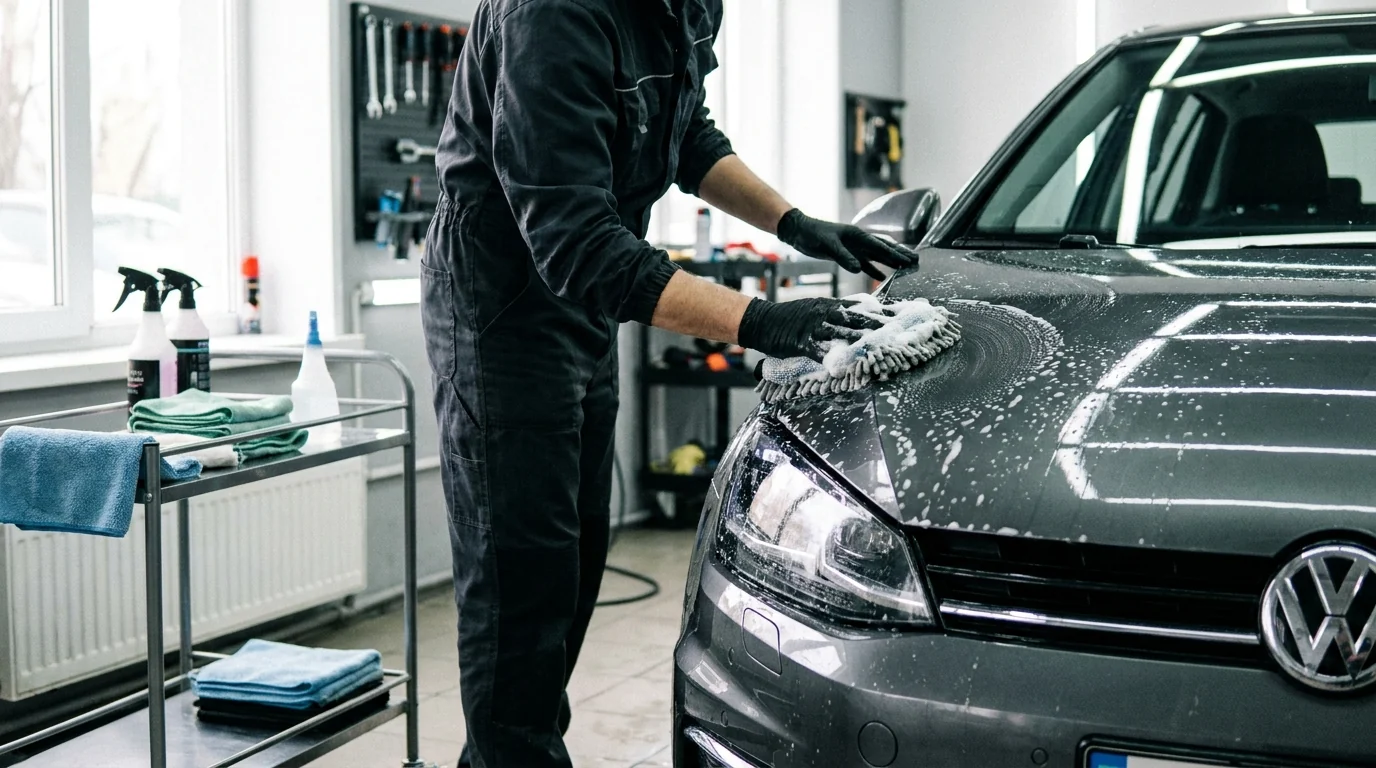
A two-phase wash does not remove existing scratches and swirl marks. It is a preventative method that stops new damage from occurring. To remove old defects, polishing is required.
Two-Phase, Standard, Contactless: What's the Key Difference?
To understand the value of a two-phase wash, it's worth comparing it to two other popular methods. The standard contact wash, especially at high-volume car washes, is the most aggressive option. Often, dirt is quickly blasted with water, and then a detailer immediately starts scrubbing with a sponge dipped in a single bucket of shampoo. All the sand and abrasive particles collect in that sponge and are spread across the entire body, acting like sandpaper. The result is the infamous 'swirl marks' that are especially visible in the sun. It's the cheapest but also the most dangerous method for your paint.
A purely contactless wash (at a self-service bay or an automatic portal) seems safer because there's no mechanical contact. However, there's another issue here. To dissolve dirt without friction, very aggressive, alkaline chemicals are used. These can damage chrome elements, rubber seals, and, most importantly, quickly strip away protective coatings like wax, sealants, or ceramic. Furthermore, a contactless wash often can't cope with the static film of dirt (a mix of road oils, soot, and other substances), leaving a grayish haze on the body after it dries.
The two-phase wash is the golden mean, combining the advantages of both methods while neutralizing their drawbacks. It uses less aggressive chemicals in the first stage than a purely contactless wash because its goal is only to soften the dirt, not dissolve it completely. The second stage involves a gentle manual contact that is guaranteed to remove the static film, but does so safely on a surface already cleared of abrasives. This way, you get a perfectly clean car without risking your paint or protective coatings. It's a smart compromise between speed, price, and, most importantly, quality and safety.
The true value of a two-phase wash isn't the shine right after the procedure, but in how many scratches DON'T appear on your paint over time.
If your car is purely a work tool and minor swirl marks on the body don't bother you, a regular wash might be sufficient. The two-phase method is a choice for those who strive to maintain the car's perfect appearance.
When a Two-Phase Wash is the Best Choice for Your Car
While a two-phase wash is beneficial for any car, there are situations where it becomes practically mandatory for preserving its appearance. First and foremost, this applies to dark-colored cars: black, dark blue, dark gray. On these shades, every single scratch, even the tiniest one, is visible. A standard contact wash can turn a deep, mirror-like shine into a scuffed surface covered in swirl marks within a few months. The two-phase method allows you to wash such cars regularly without accumulating damage.
The second category is new cars or vehicles that have just undergone professional body polishing. Having spent a significant amount to get your paint to a perfect state, it would be a shame to ruin the result with the very first incorrect wash. The same goes for cars with expensive protective coatings: ceramic, glass coating, wax, or a protective film. A two-phase wash uses pH-neutral or mildly alkaline shampoos that don't harm these coatings, extending their lifespan. The aggressive chemicals of contactless washes, on the other hand, can 'eat away' the protective layer long before its stated service life.
The third case is caring for a car after harsh operating conditions. For example, after a long highway trip when the front end is covered in bug residue, or after the winter season when the body is coated in a layer of salt and road chemicals. These contaminants are highly abrasive and chemically active. Trying to scrub them off mechanically is guaranteed to damage the paint. The first phase of a two-phase wash is ideal for safely soaking and removing these difficult contaminants before the main wash.
Benefits and Limitations: An Honest Look at What This Method Offers
The main and undeniable advantage of a two-phase wash is maximum safety for the paintwork. It's not just a wash but a preventative procedure that helps avoid new scratches. Regular use of this method preserves the depth of color and shine of the body for years, postponing the need for abrasive polishing. Additionally, this method is significantly more effective than a purely contactless one, as it's guaranteed to remove all types of contaminants, including the static film, leaving a perfectly clean and smooth surface.
Another plus is the gentle treatment of all exterior elements. The chemicals used are typically less aggressive than those at portal washes, so they are safe for chrome, plastic, rubber seals, and headlights. This is especially important for modern cars with complex optics and numerous decorative elements. This method is also the best for maintaining cars with any protective coatings, as it doesn't destroy their structure and allows them to perform for as long as possible.
At the same time, it's important to understand the limitations. A two-phase wash is a preventative measure, not a cure. It will not remove existing scratches, swirl marks, or holograms. If the paint is already damaged, only polishing can restore its perfect appearance. This process also takes more time than an express wash and costs more. If your car is purely a work tool and a perfect shine isn't a priority for you, simpler and cheaper options might be sufficient. The best care is the one that meets your needs and expectations.
A Real-World Example: Caring for a Dark Car After Winter
Here's a typical situation at our service center in Kyiv at Tiraspolskaya, 12: at the beginning of spring, a black car arrives that has been actively used in the city all winter. The body is covered in a thick layer of grayish-brown film. This isn't just dirt; it's a potent mix of sand, salt, road chemicals, and an oily film from exhaust fumes. The owner complains that after using self-service washes, the car still doesn't look clean, and numerous new fine scratches are visible in the sun.
Using a standard contact wash on such a car is like scrubbing it with sandpaper. Every particle of salt and sand will act as an abrasive. A purely contactless wash will remove the top layer but leave the stubborn static film, and there will be no shine. This is where the two-phase method truly excels. In the first stage, we apply active foam, which in a few minutes 'lifts' all the abrasive dirt off the paint. After rinsing with water, the body is already visually clean, but still feels rough to the touch.
And this is where the magic of the second phase begins. Using a neutral, high-lubricity shampoo and a soft mitt, we gently go over the entire body without applying pressure. The shampoo creates a protective layer, and the mitt safely removes the remaining static dirt. The result is a perfectly clean, smooth surface without a single new scratch. The deep black color regains its mirror-like shine. This is the approach that allows a car to get through winter without compromising its appearance.
How to Complement Post-Wash Care for the Best Results
A perfectly clean body is great, but the details are what create a finished look. After a quality two-phase wash, neglected wheels become particularly noticeable. Therefore, a logical next step is tire dressing. This isn't just for aesthetics: special compounds create a protective layer on the rubber surface that repels dirt and water, and also protects against cracking from UV exposure. A car with a clean body and neat, deep-black tires looks much more expensive and well-maintained.
When the exterior is sparkling clean, any mess inside the cabin starts to stand out. That's why clients often combine a body wash with interior care. This can range from a light cleaning to a full interior detailing service if it hasn't had a thorough cleaning in a while. A comprehensive approach provides the feeling of a brand-new car, both inside and out. For those who want it all at once, there's the comprehensive wash service, which includes both gentle body care and an interior cleaning.
Finally, a clean paint surface is the perfect time to apply or refresh protective coatings. This could be a quick wax (quick detailer) that adds shine and a hydrophobic effect for a few weeks, or more durable sealants. If you've been planning to protect the body, it should be done right after such a thorough preparation. A clean surface ensures maximum adhesion of the protective compound to the paint, meaning it will last longer and work more effectively.
The Bottom Line
A two-phase wash is the safest washing method for your car's paintwork, consisting of a contactless foam pre-soak to soften dirt followed by a gentle hand wash. It is ideal for dark, new, and coated cars as it prevents the formation of micro-scratches. If you value your car's appearance and want to preserve it for the long term, this is the best choice. To book a two-phase wash at Tiraspolskaya, 12, please specify the details when making an appointment.
Frequently asked questions
Book in a minute —
Leave your number and we'll call back. Or share the details so the technician can prepare.
Book nowWhat clients say.
Honest Google reviews. Unedited.