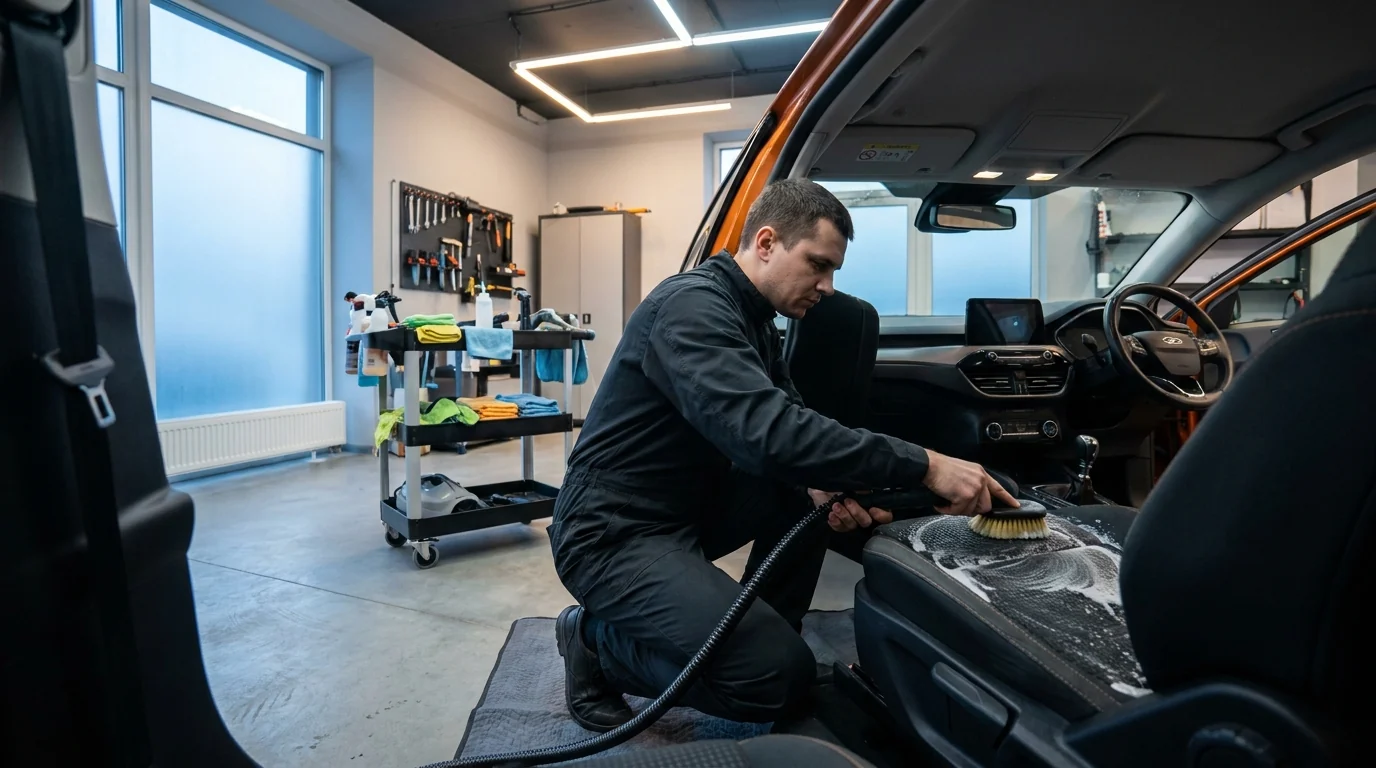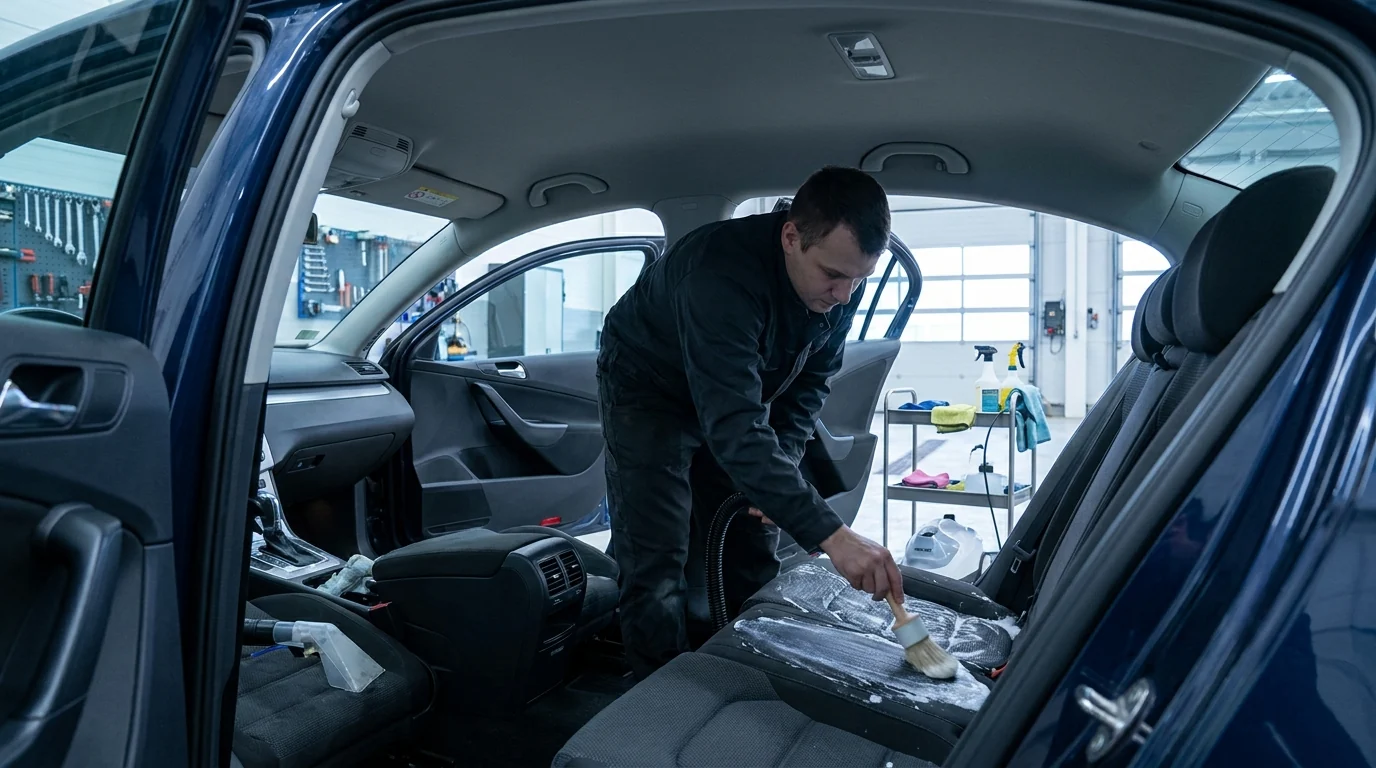
Yes, in the vast majority of cases, a quality car headliner cleaning is performed without removing the upholstery, and this is standard professional practice. Removal is a last resort, necessary only for extreme damage, such as severe water leaks causing mold or when the fabric has already completely detached. Modern technologies allow for deep cleaning of the surface using minimal moisture methods, like dry foam treatment or extraction, which prevents damage to the adhesive layer and subsequent sagging of the fabric. The main condition for safe cleaning is not the amount of water, but the right chemicals and equipment that can dissolve dirt and instantly remove it, preventing moisture from penetrating to the base. This is precisely the approach that is part of the comprehensive interior detailing service at our shop at Tyraspilska, 12, where we take care to preserve every element of the interior.
Headliner Cleaning Without Removal: The Standard Approach for Most Stains
In the overwhelming majority of cases that car owners face, removing the headliner for cleaning is unnecessary. Standard issues like dust, fingerprints near handles and visors, light beverage stains, a film from cigarette smoke, or general graying from age can be effectively removed in place. The professional approach involves using specialized products that work on the surface of the fabric without soaking through it. This could be a thick, active foam applied to the surface, which absorbs dirt and is then removed with a microfiber cloth, or the use of a tornador, which uses pressurized air to 'knock' dirt out of the fibers.
The technology is chosen based on the material type (fabric, velour, Alcantara) and the nature of the stains. For example, for a light-colored fabric headliner that has simply turned gray over time, the dry cleaning method is ideal. For more stubborn stains, an extractor is used—a device that simultaneously sprays a minimal amount of cleaning solution and immediately vacuums it up along with the dirt. This allows for millimeter-precise control over the moisture level, which is key to protecting the adhesive layer.
This procedure is an integral part of a full interior detailing, which starts at 2 500 ₴. Although the headliner itself only takes up a fraction of the total work time of 3–5 hours, the approach to it requires maximum attention and experience. This is why trying to save money by cleaning the headliner yourself often leads to a much more expensive repair—a complete re-upholstery.
Never use household detergents or large amounts of water to clean your headliner. The adhesive holding the fabric is extremely sensitive to moisture, and damaging it is usually irreversible.
Professional Cleaning Technology: How We Clean Headliners Without the Risk of Sagging
The secret to safe headliner cleaning lies in three components: the right chemicals, specialized equipment, and adherence to the proper technique. We use pH-neutral cleaning agents that effectively break down dirt but are completely safe for the fabric and adhesive. They don't leave streaks, change the material's color, or have a harsh smell. Unlike household products, professional chemicals are designed to work with delicate automotive materials.
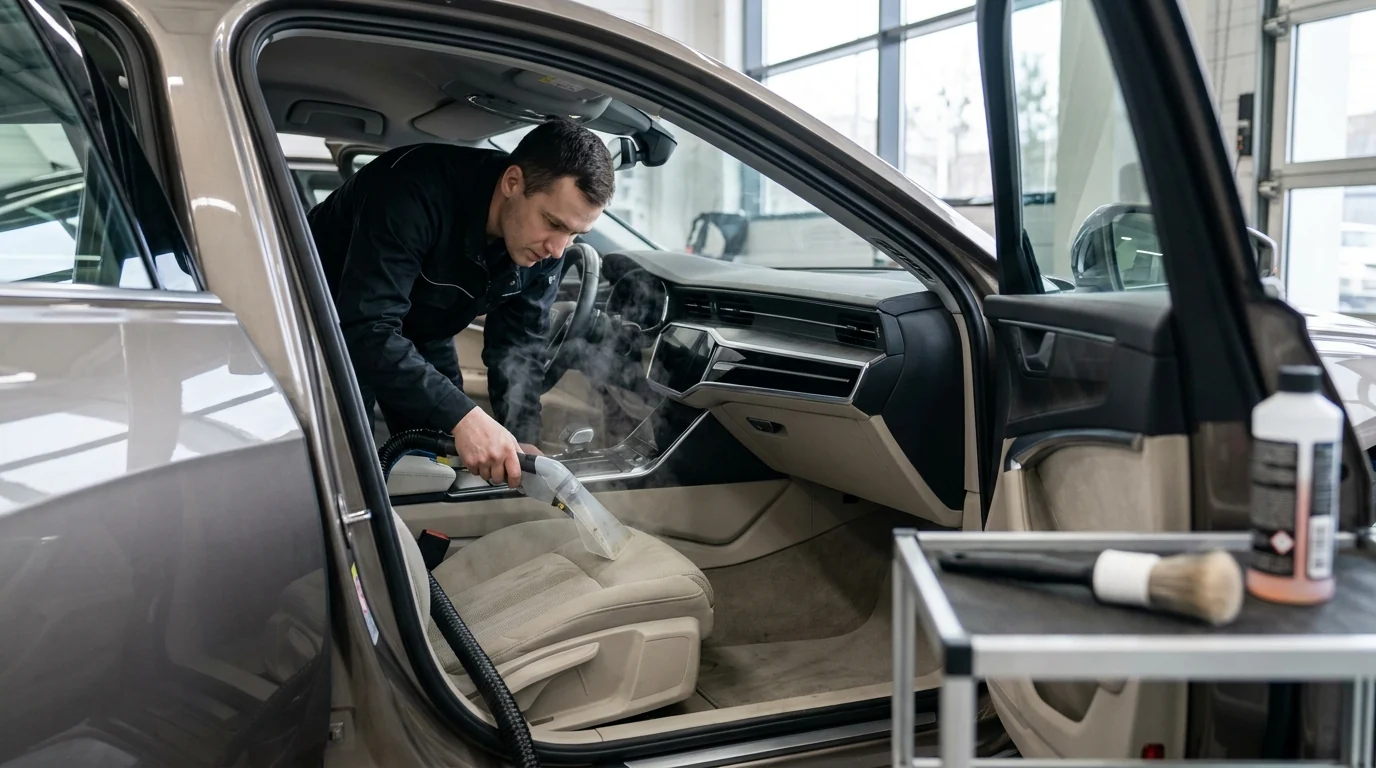
Equipment plays a key role. For deep cleaning, we use a wet vacuum (extractor). Its principle of operation is fundamentally different from simply soaking a cloth. The extractor injects a cleaning solution into the top layer of the fabric under pressure and, in the same second, a powerful turbine sucks it back out. The dirt doesn't have time to penetrate to the base; it's pulled to the surface. This allows for a deep clean with minimal moisture.
For particularly delicate materials or localized stains, a 'tornador' tool is used. It creates a vortex of air with a fine mist of cleaning agent, literally 'knocking' the dirt out of the fibers. The surface is then wiped with a microfiber cloth. The final step is always thorough drying. We use special automotive air movers or leave the car in a warm, dry bay with good ventilation to ensure any residual moisture evaporates as quickly as possible. This is the guarantee that the headliner will stay in its place.
The best headliner cleaning is one that leaves it looking clean but feeling dry. Excess moisture isn't cleanliness—it's a one-way ticket to a full re-upholstery job.
If your headliner has already started to sag, cleaning won't help. It's like trying to wash a wall after the wallpaper has peeled off. The only solution is a full re-upholstery. Don't waste money on cleaning hoping for a fix.
The Main Risk of DIY Cleaning: Why Moisture Makes the Headliner Detach
The most common mistake owners make when deciding to clean their headliner themselves is using too much water and aggressive chemicals. To understand why this is dangerous, you need to know the structure of a modern car headliner. It consists of three main layers: the decorative fabric, a thin layer of foam underneath it, and a rigid, molded base. All these layers are bonded together with a special thermal adhesive.
Over the years and under the influence of temperature fluctuations, this adhesive loses its properties and becomes very vulnerable to moisture. When you generously wet the headliner with a spray bottle or a wet sponge, the water soaks through the fabric and foam and reaches the adhesive layer. The glue softens, loses its adhesion, and the fabric begins to peel away from the base under its own weight. At first, small 'bubbles' appear, and eventually, the entire headliner sags.
Unfortunately, this process is irreversible. Drying the headliner and hoping the glue will 'catch' again is a futile effort. The waterlogged glue turns into a sticky powder that no longer holds anything. The only way to fix the situation is a complete re-upholstery of the headliner: removal, stripping the old fabric, cleaning the base of adhesive and foam residue, and applying new material. This is a much more complex and expensive procedure than professional cleaning. Therefore, the cheapest repair is the one that was avoided by entrusting the job to specialists.
When Is Headliner Removal Actually Necessary?
Although in most cases we clean the headliner without removing it, there are exceptional situations where removal is the only correct solution. First and foremost, this applies to cars that have been severely flooded or have chronic leaks from a sunroof, windshield seals, or antenna. In such cases, water soaks not only the fabric but the entire base. Mold and mildew can form under the upholstery, which is impossible to remove without complete removal, disinfection, and drying.
The second case is the presence of very deep, old stains that have penetrated through all layers. For example, stains from engine oil, paint, or other technical fluids. A surface clean may be powerless here, and trying to remove them in place could cause the stain to spread even further. Removal allows us to work on the stain from both sides of the material and use more powerful agents without risking damage to other interior elements.
The third, and most obvious, reason is when the headliner is already sagging or has mechanical damage to the base itself (cracks, creases). There is no point in cleaning such a headliner, as it won't solve the underlying problem. In this case, the upholstery is removed for a complete re-upholstery. Our technicians always conduct a preliminary inspection and will tell you honestly if they see that cleaning without removal will not yield the desired result or would be risky.
What to Do If the Headliner Is Already Sagging: Will Cleaning Help?
This is one of the most frequent questions, and the answer is unequivocal: no, cleaning cannot re-glue the fabric. If the headliner is already sagging, it means the adhesive layer between the fabric and the base has been destroyed. Cleaning is a process of purification, not repair. Attempting to clean a sagging fabric will not only fail to produce results but may worsen the situation. The additional weight from the moisture will stretch the material even more and accelerate its further detachment.
Imagine trying to wash wallpaper that has already peeled off the wall. It's illogical and ineffective. The only correct solution for a sagging headliner is a complete re-upholstery. The process involves removing the headliner from the car, completely stripping the old fabric, thoroughly cleaning the rigid base of old foam and adhesive residue (this is the most critical stage), and only then applying new headliner fabric with a special high-temperature adhesive.
This is meticulous work that requires experience and precision. Therefore, if you are facing this problem, don't waste money on cleaning in hopes of a miracle. It's better to immediately contact specialists who deal with interior re-upholstery. And to understand what type of care your interior needs as a whole, it's useful to read our article Car Interior Cleaning or Detailing: What to Choose?.
How to Complement Interior Care After Headliner Cleaning?
A clean headliner is a great start, but for a feeling of complete freshness in your car, it's worth taking care of other elements too. When the interior looks like new, the logical next step is to perfect the exterior as well. The easiest way is to order a comprehensive wash, which includes a body wash, wheel cleaning, interior vacuuming, and window cleaning. This will balance the impression of cleanliness inside and out.
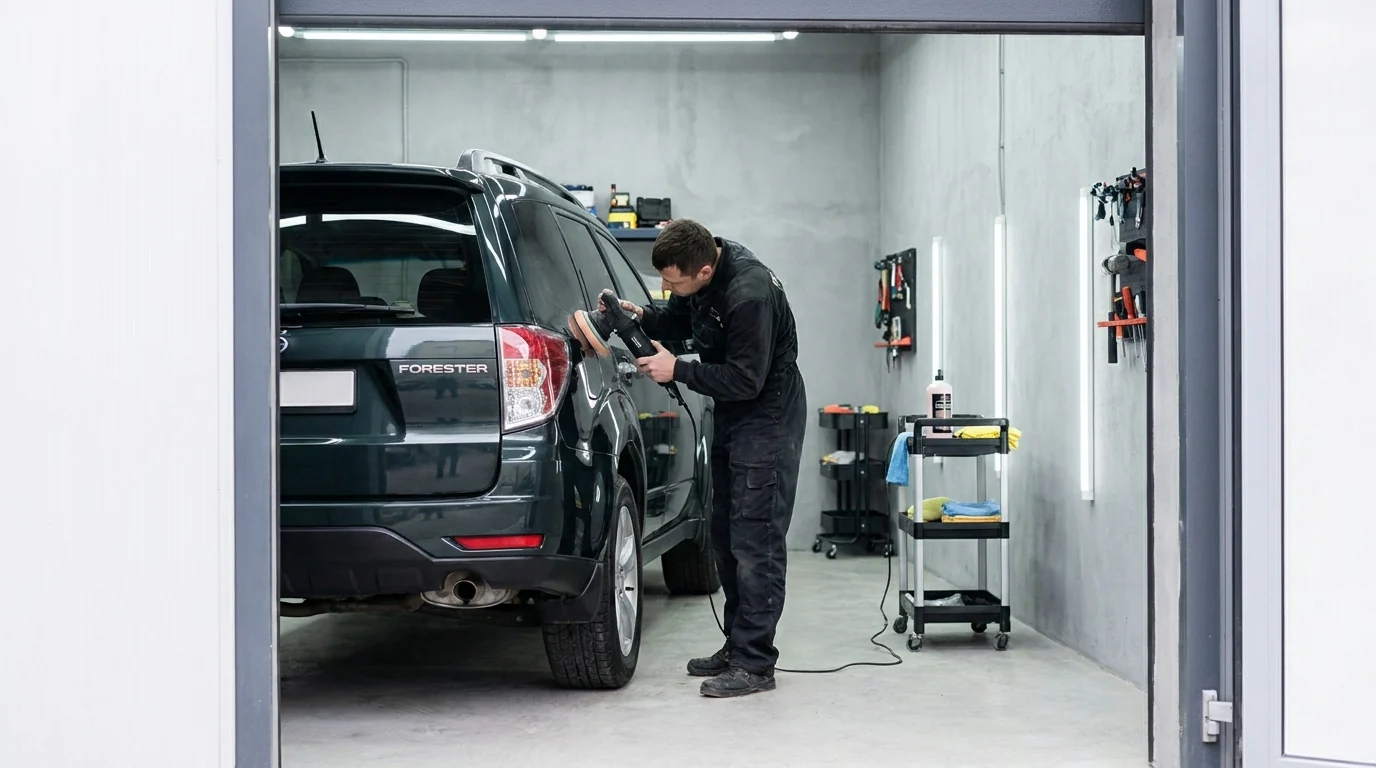
If you're aiming for maximum results, consider body polishing. This procedure removes fine scratches, swirl marks, and restores a deep shine and rich color to the paintwork. A car that has undergone a full interior detailing and body polishing looks much younger than its years, which is especially relevant for pre-sale preparation or simply for your own satisfaction.
After professional care, it's important to maintain cleanliness. Regularly air out the cabin, use quality floor mats that are easy to clean, and try not to leave trash behind. For plastic and leather care, use specialized products that not only clean but also protect surfaces from UV rays and drying out. Such a comprehensive approach will help preserve the results of professional cleaning for a long time.
The Bottom Line
A quality headliner cleaning is almost always done without removal, using professional equipment and minimal moisture. DIY cleaning with lots of water is the main cause of sagging, which can only be fixed by a complete re-upholstery. If your headliner needs attention, it's best to trust the professionals. Schedule an inspection, and we will select the optimal cleaning method for your car.
Frequently asked questions
Book in a minute —
Leave your number and we'll call back. Or share the details so the technician can prepare.
Book nowWhat clients say.
Honest Google reviews. Unedited.