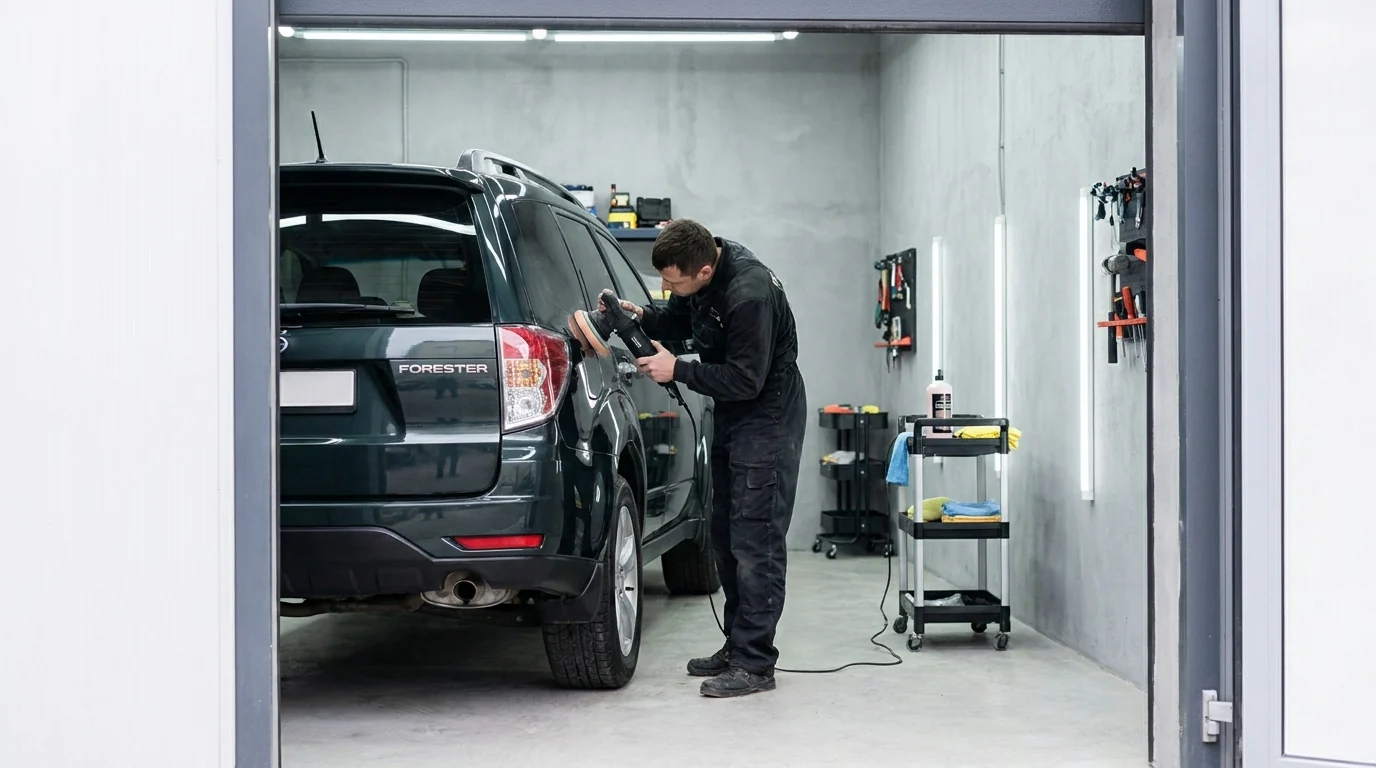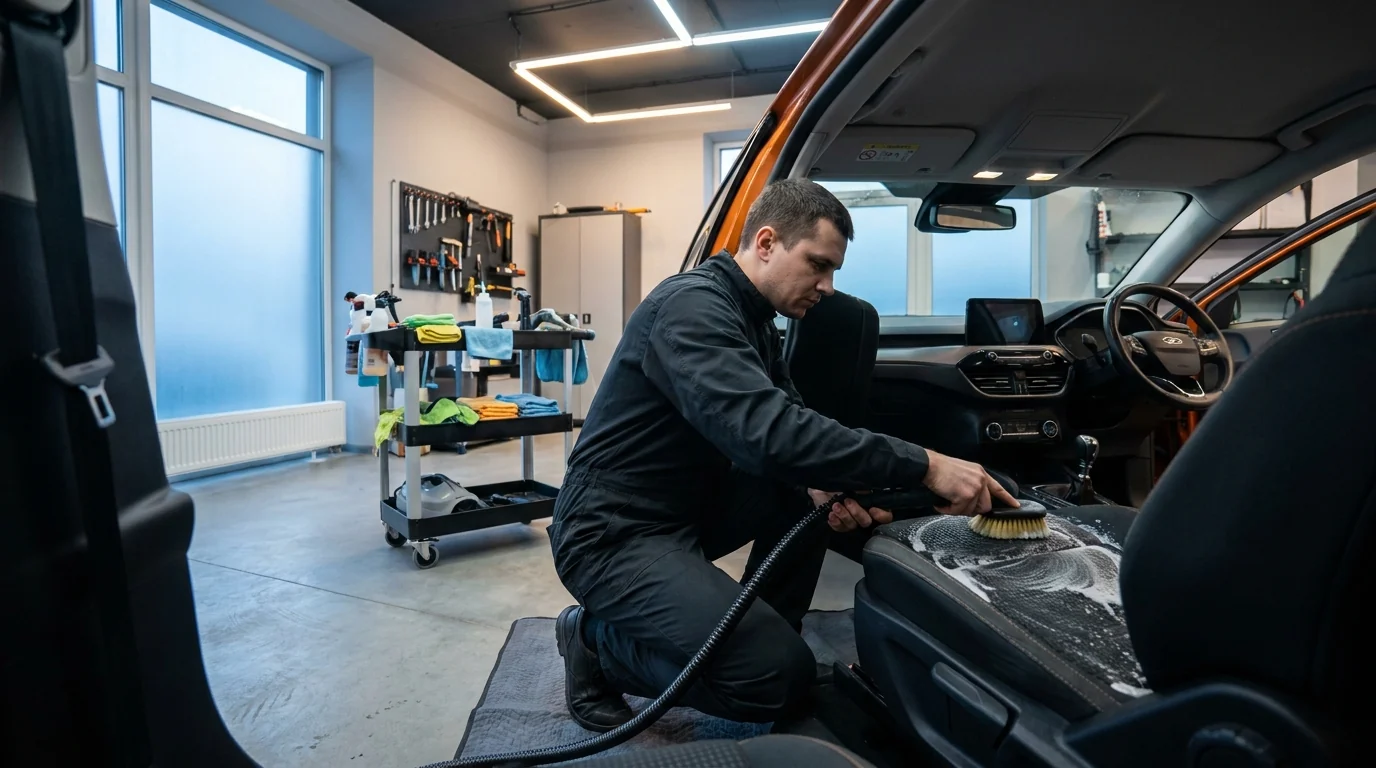
Proper care for a leather interior between professional cleanings comes down to three key actions: regular dry cleaning, immediate removal of fresh stains with specialized products, and periodic moisturizing with a conditioner. This helps prevent premature wear, cracking, and color loss, keeping the interior looking neat for a long time. The main thing is to avoid aggressive household chemicals and hard brushes, which can permanently damage the delicate surface. Regular attention to detail at home significantly extends the intervals between needing a comprehensive car interior cleaning and helps avoid expensive restoration in the future. Remember, leather is a natural material that requires gentle, consistent care rather than intensive washing.
Daily and Weekly Care: Simple Rules to Preserve Leather
The foundation of a long-lasting leather interior isn't complex procedures, but simple regularity. The greatest damage to leather is caused not so much by stains as by abrasive particles: dust, sand, and fine debris. When you get into the car, these particles act like sandpaper, gradually wearing away the protective layer and dye. Therefore, the key rule of daily care is to keep the interior clean. If you notice dirt or sand on the seat, brush it off with a soft brush or a microfiber cloth. This takes a minute but significantly reduces mechanical wear.
The weekly cleaning should be a bit more thorough. Use a vacuum cleaner with a soft brush attachment to gently collect dust from all surfaces, especially from seams and folds where the most dirt accumulates. Go over the seats, headrests, and door cards. Afterward, wipe all leather surfaces with a slightly damp (but not wet) microfiber cloth to pick up any remaining dust. This simple ritual is enough to maintain basic cleanliness and prevent dirt from embedding into the leather's pores. Such care is excellent prevention that will postpone the need for a professional cleaning.
An important aspect is an immediate reaction to any liquids. Spilled coffee, juice, or even plain water can leave stains if not cleaned up right away. Always keep a roll of paper towels and a clean microfiber cloth in the car. If something spills, immediately blot the liquid without rubbing it into the surface. The motion should be from the edges of the stain toward the center to avoid enlarging it. Fresh stains are much easier to remove without a trace than those that have had time to soak into the material's structure. This is the easiest way to avoid a situation where a deep interior detailing is needed.
Always keep a small bottle of specialized leather cleaner and a microfiber cloth in the glove compartment. This way, you can react instantly to a fresh stain, which significantly increases the chances of removing it without a trace.
Choosing Products: What to Use and What Will Ruin Your Leather
The car care market is flooded with various products, and making the right choice is crucial. The main rule: for leather, use only specialized leather products. Universal interior cleaners, glass cleaners, or, even worse, household chemicals for the kitchen and bathroom are too aggressive. They contain alkalis, alcohols, or solvents that destroy the leather's protective lacquer layer and strip its natural oils, leading to drying, cracking, and color loss. The cheapest repair is the one you managed to avoid, so don't skimp on quality chemicals.
The optimal choice is a pH-neutral leather cleaner. Such products have a balanced composition that effectively dissolves dirt without harming the material itself. They usually come as a spray or foam. Foam is a better option because it doesn't run, stays in contact with the dirt longer, and doesn't oversaturate the leather, which is especially important for perforated seats where excess moisture can cause problems. Always read the label and reviews before buying. A good product should not leave a greasy shine or stickiness behind—quality care leaves the leather with a matte finish and a pleasant feel.
It's also worth mentioning what you should never use. First, alcohol-based wet wipes. They are great for disinfecting hands but are disastrous for leather. Alcohol instantly dries out the material. Second, avoid any products containing ammonia, chlorine, or abrasive particles. Third, folk remedies like hand cream, olive oil, or shoe polish are a direct path to ruining your interior. These products have a different composition; they clog the leather's pores, leave greasy stains, and over time only attract more dirt. The cost of restoration after such experiments will be much higher than the price of a bottle of professional product.
The best leather care is regular and gentle. It's cheaper to wipe away dust once a week than to try to save a cracked interior once a year.
Don't believe the myths about caring for leather with hand cream or olive oil. These products clog the pores, leave greasy stains, and attract even more dirt over time. This isn't saving money; it's money down the drain, because you'll have to pay for a deep detailing later to fix the consequences.
How to Remove a Fresh Stain Yourself: A Step-by-Step Guide
Even with the most careful use of a car, stains will appear sooner or later. The key is to act quickly and correctly. If you notice a fresh stain from food, drinks, or dirt, don't panic and don't try to scrub it off with force. Aggressive rubbing will only damage the top layer of the leather and enlarge the contaminated area. Instead, follow this simple algorithm, which will help you deal with most common household stains.
Step one: preparation. You will need paper towels or a clean cloth, a special leather cleaner, two soft microfiber cloths, and possibly a soft-bristled brush. Before using any product, be sure to test it on an inconspicuous area, such as the bottom of the seat. This will ensure that the product does not change the color or texture of the leather.
Step two: stain removal. First, remove as much of the contaminant as possible with a dry cloth or paper towel by blotting the stain. Do not rub! Then, apply a small amount of foam cleaner to a soft brush or directly onto a cloth (not onto the leather itself, to avoid oversaturation). Using light circular motions without strong pressure, treat the stained area, moving from the edges to the center. If the dirt is in the seams or texture of the leather, work gently with the brush. Remove the remaining foam and dirt with a clean, damp microfiber cloth. Finally, wipe the treated area dry with a third, dry cloth. After cleaning, let the leather air dry completely.
Step three: final care. After the stain is removed and the surface is dry, it is advisable to apply a leather conditioner to the area. A cleaner, even the mildest one, can partially remove protective components. The conditioner will restore the balance, moisturize the leather, and protect it from future soiling. If the stain doesn't come out on the first try or you are dealing with difficult stains like dye from jeans, ink, or paint, it's better not to risk it and turn to professionals. Sometimes, attempts to remove a difficult stain on your own can lead to it setting permanently, and then even a professional detailing may not help.
Moisturizing and Protection: Why Leather Conditioner Isn't a Luxury
Many car owners consider leather conditioner to be something optional, a marketing gimmick. This is a big mistake. The leather in a car, like our own skin, needs moisture and nourishment. Under the influence of solar ultraviolet rays, temperature fluctuations, and dry air from the air conditioner or heater, the natural oils that give leather its elasticity gradually evaporate. Without regular replenishment of these components, the leather becomes dry, stiff, and begins to crack and lose its color. A conditioner is not a luxury, but a necessary tool for preventing the aging of the interior.
A quality leather conditioner performs several functions at once. First, it moisturizes the material by penetrating its structure and restoring elasticity. This makes the leather soft to the touch and prevents the appearance of creases and cracks in high-stress areas, such as the driver's seat side bolsters. Second, most modern conditioners contain UV filters that create an invisible barrier on the surface, protecting against fading from sunlight. Third, it creates a thin protective layer that repels dirt and water, making future cleaning easier.
How often should you use a conditioner? It depends on the operating conditions. For a car that spends most of its time in a garage, a treatment a few times a year is sufficient. However, if the car is often left in the sun, or you live in a region with hot summers and frosty winters, the procedure should be done more often, for example, seasonally. The application process is simple: apply a small amount of the product to an applicator or microfiber cloth and spread it evenly over the clean, dry leather surface in a thin layer. Let the product absorb according to the instructions on the package, and then remove any excess with a clean, dry cloth. Properly treated leather should be dry to the touch and have a natural satin, not greasy, sheen.
Major Care Mistakes That 'Kill' a Leather Interior
Sometimes the best care is avoiding harmful actions. There are several common mistakes that car owners make while trying to keep their interior clean, but in reality, they only accelerate its wear. The first and most important mistake is using an excessive amount of water. Leather does not like moisture. When heavily wetted, it can deform, and if water gets inside the seat through perforations or seams, it can promote the growth of mold and an unpleasant odor. Always use a barely damp cloth or foam cleaners.
The second mistake is aggressive mechanical cleaning. Trying to scrub a stain with a hard brush, a melamine sponge, or the abrasive side of a regular dish sponge is guaranteed to damage the protective layer of the leather. This will lead to scratches, scuffs, and eventually, the destruction of the dye. Only brushes with very soft natural or synthetic bristles and soft microfiber cloths are suitable for cleaning leather. Any pressure should be minimal.
A third common problem is ignoring the type of leather. Not all leather is the same. Uncoated natural leather (aniline), semi-aniline, pigmented leather (the most common type in cars), and eco-leather require different approaches. Using products not intended for your type of material can lead to unpredictable consequences. If you are not sure what type of leather is in your car, it is better to consult with specialists or choose a universal product for pigmented leather, as it is the safest for most modern interiors. Combining interior care with a comprehensive wash helps keep the car in perfect condition both inside and out.
And the last, but no less important, mistake is irregularity. Caring for leather once a year is the same as not caring for it at all. During this time, dirt has time to penetrate deep into the pores, and the lack of moisture makes the material brittle. It is much more effective to devote a little time to the interior every week than to later try to save a neglected one. Consistency is the key to preserving a leather interior in a near-new condition for many years.
When Home Remedies Aren't Enough: Signs It's Time for a Professional Cleaning
DIY care is effective for maintaining cleanliness, but it is not all-powerful. There are situations where professional equipment and chemicals are indispensable. It is important to recognize these signs in time to avoid worsening the condition of the interior. The first warning sign is stubborn stains that you couldn't remove on the first try. Traces of denim on light-colored leather, stains from ballpoint pens, markers, lipstick, or technical fluids require special stain removers that are usually not available for public sale and require experience to use.
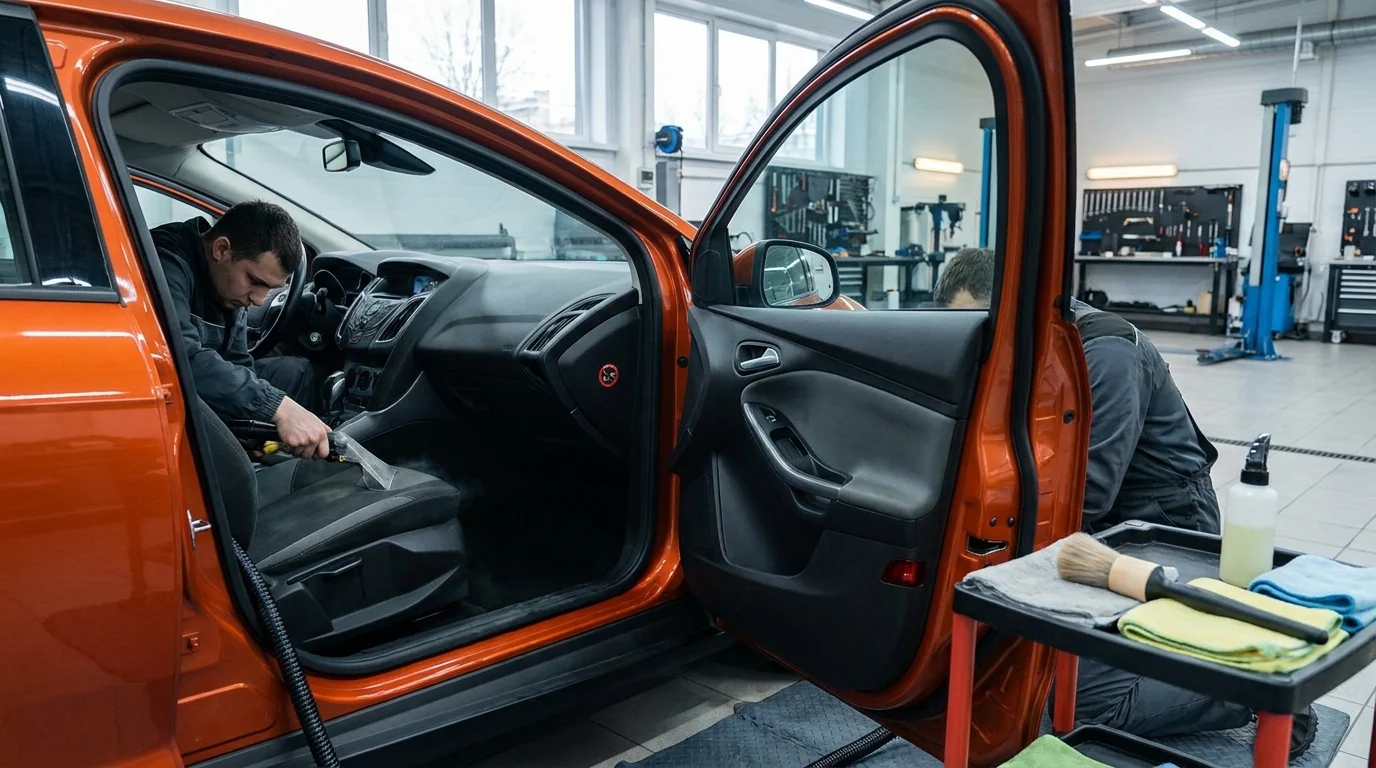
The second sign is the appearance of a persistent unpleasant odor. If the interior smells of dampness, mold, tobacco smoke, or spilled products, a simple wipe-down will not help. The source of the smell is most likely deep in the seat padding or under the floor mats. In this case, a deep interior detailing is needed, using a steam generator and an extractor, and sometimes an ozone treatment for complete neutralization of bacteria.
The third point is a generally neglected appearance. If the leather has become sticky to the touch, has lost its natural color, and dirt has accumulated in the seams and perforations that cannot be removed with a vacuum cleaner, it means that surface care is no longer enough. Professionals use special brushes, steam cleaning machines, and powerful extractors that allow them to safely pull dirt from the deepest pores and hard-to-reach places. If you are unsure what your car needs, we recommend reading our article Interior Cleaning or Detailing: What to Choose?, where we detail the difference between these services.
Finally, it is worth turning to specialists if you notice the initial signs of serious damage: deep scratches, cracks, scuffs down to the base, or color fading. In such cases, a regular cleaning will no longer help, but local restoration or leather dyeing may be necessary. A timely visit to a detailing center will stop the deterioration and restore the appearance of the element, which is much cheaper than a full seat reupholstery. Our basic interior cleaning at Tiraspolskaya, 12, starting from 2 200 ₴, is an excellent option for regular maintenance, but we will always be honest if your car needs a more serious approach.
The Main Points in Brief
Regular care of a leather interior is the key to its longevity. Weekly vacuuming, using pH-neutral cleaning products, and periodically applying a conditioner will help prevent cracks and maintain an attractive appearance for years. If you encounter stubborn stains or odors, it's best to trust the professionals. If you notice that your interior needs attention, come visit us at Tiraspolskaya, 12, for a consultation.
Frequently asked questions
Book in a minute —
Leave your number and we'll call back. Or share the details so the technician can prepare.
Book nowWhat clients say.
Honest Google reviews. Unedited.