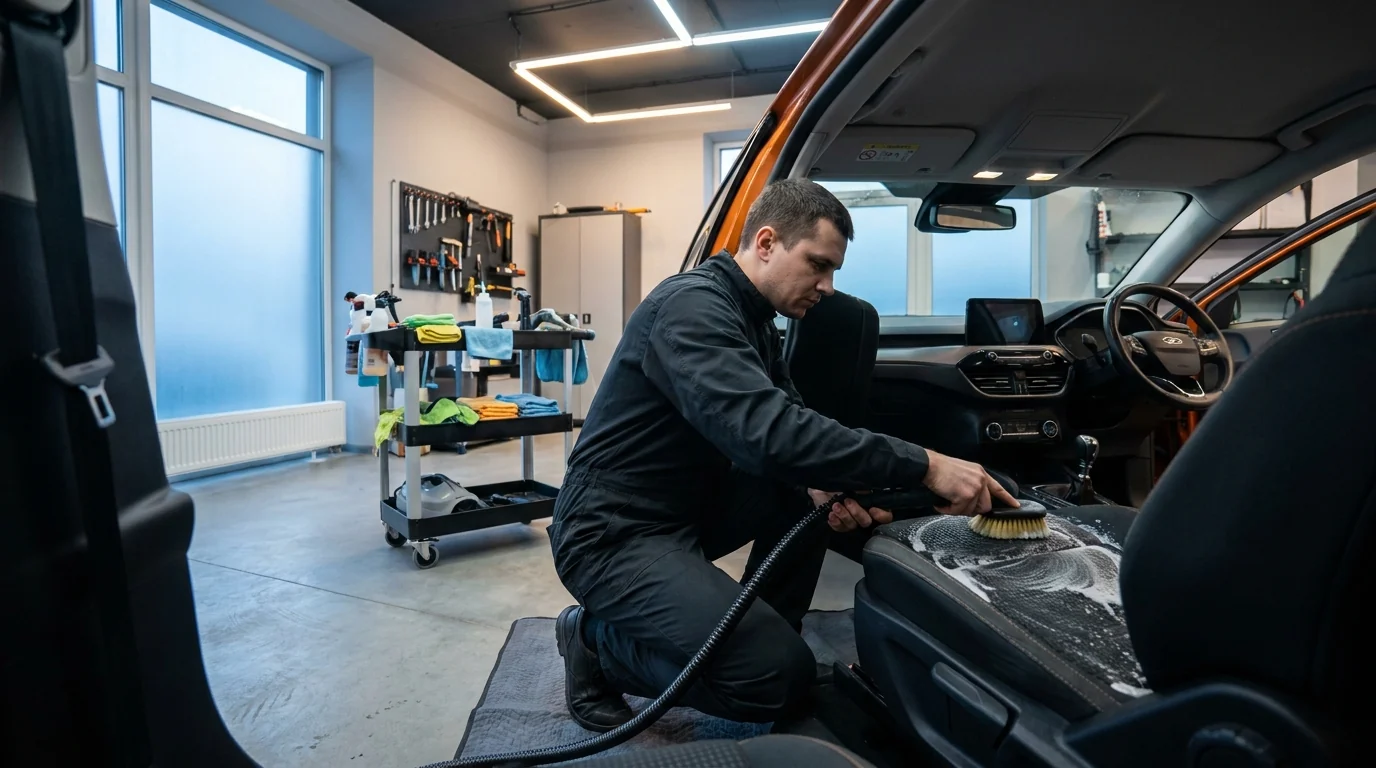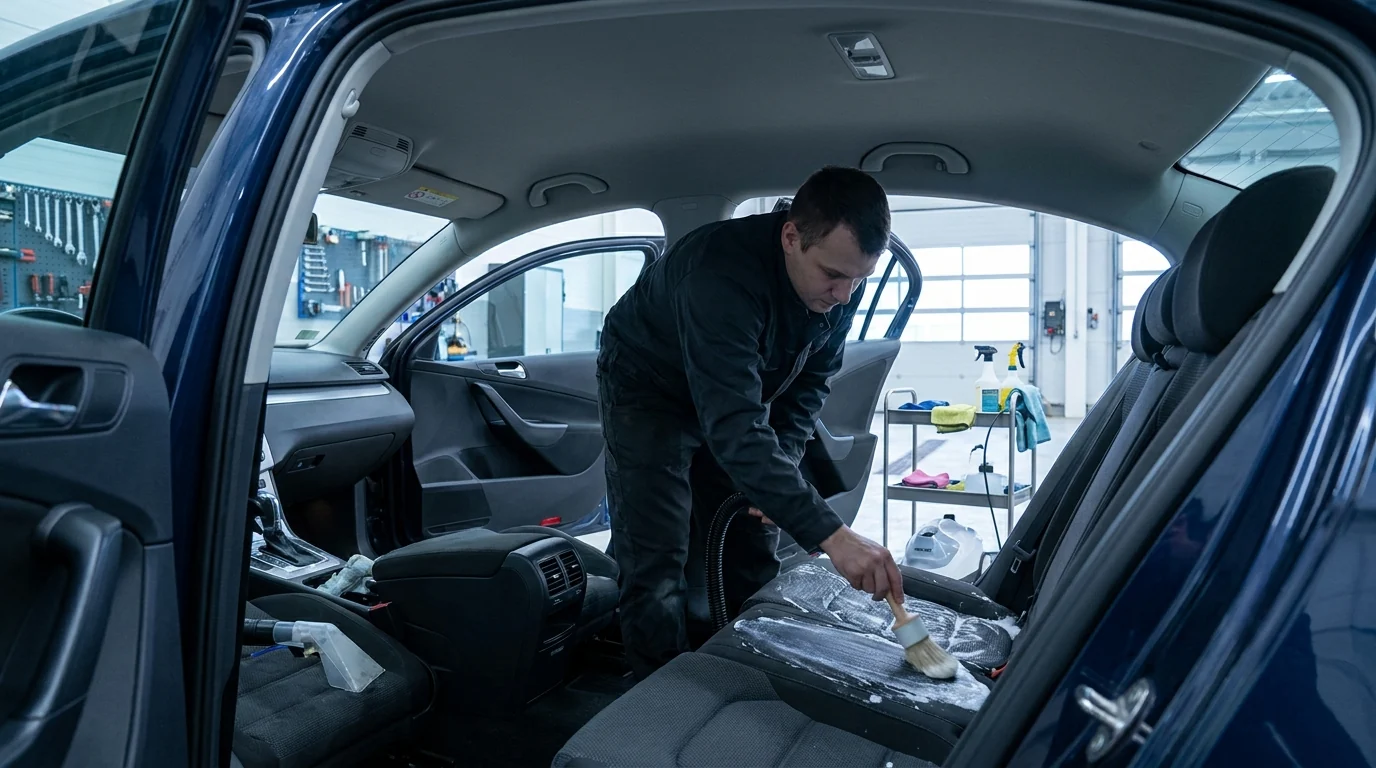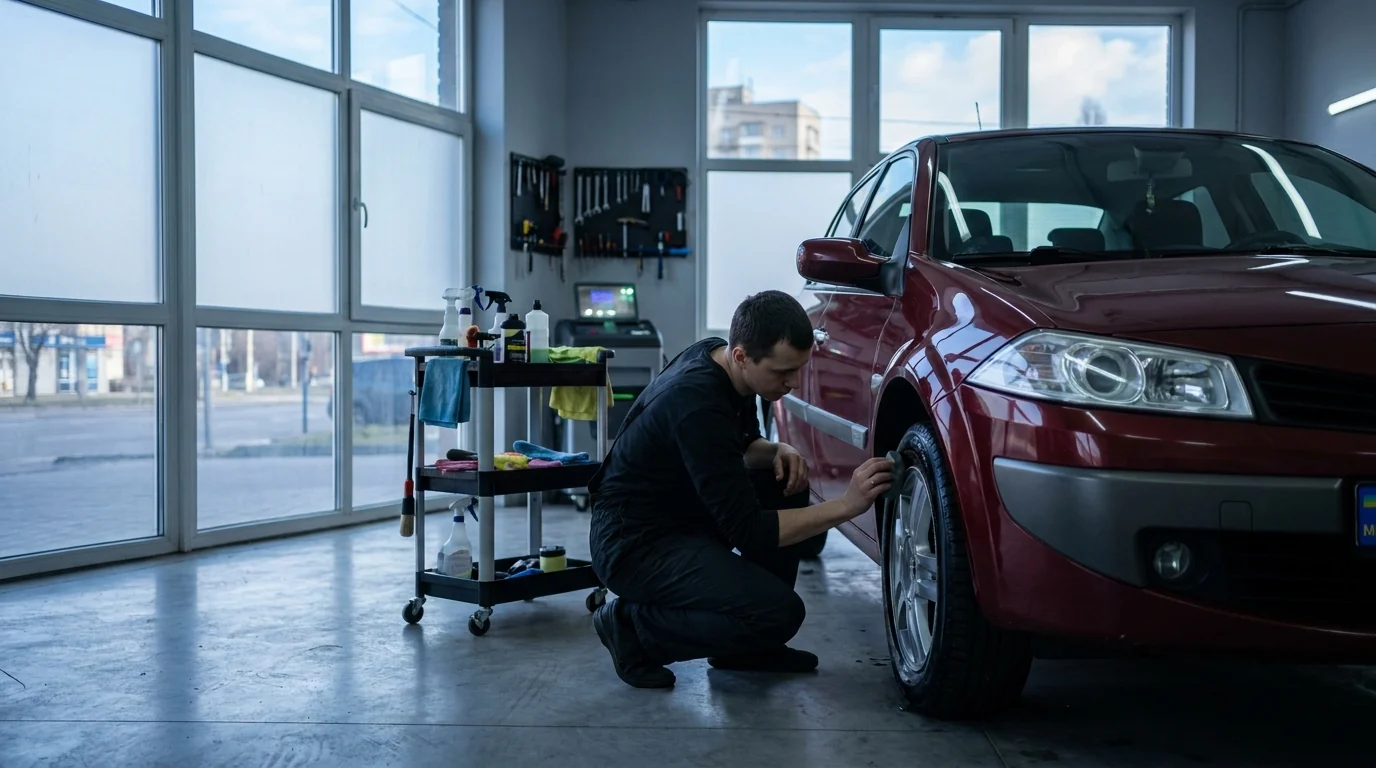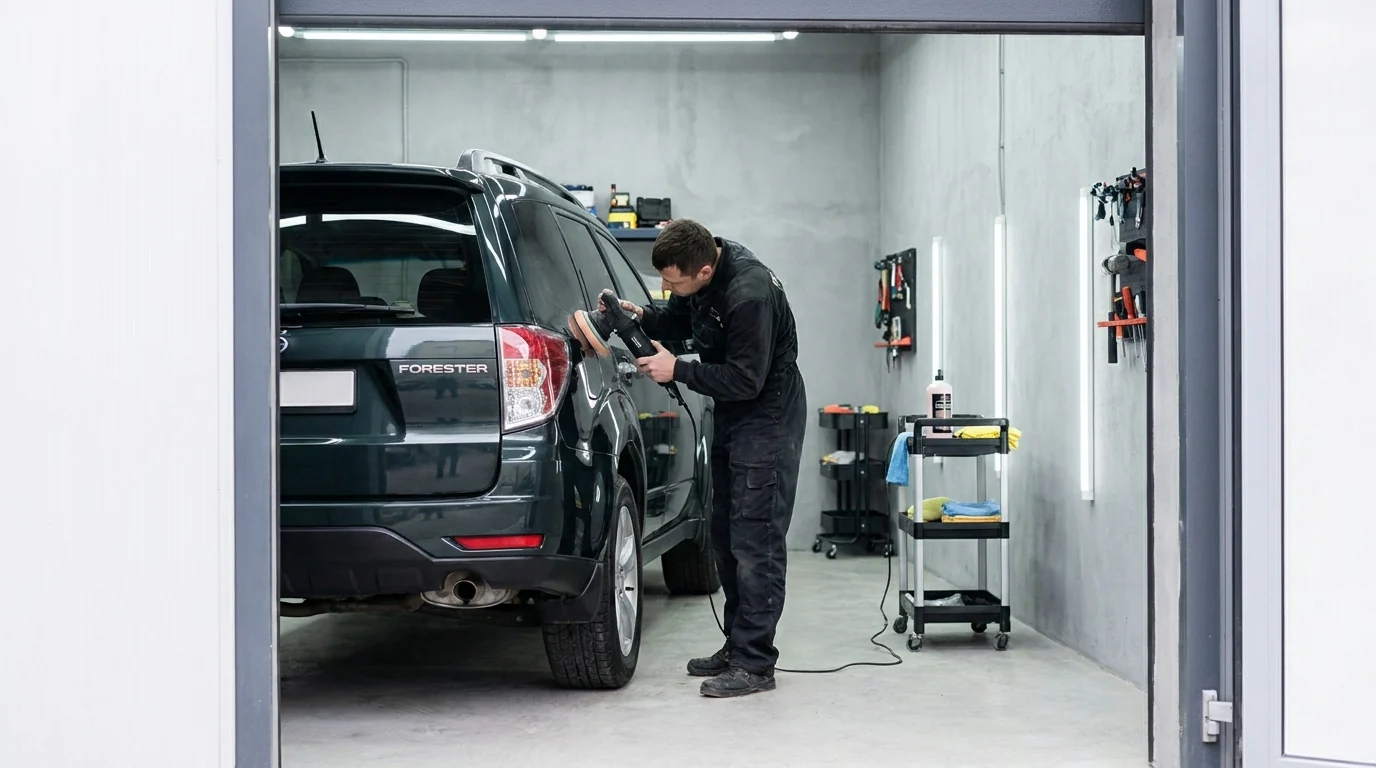
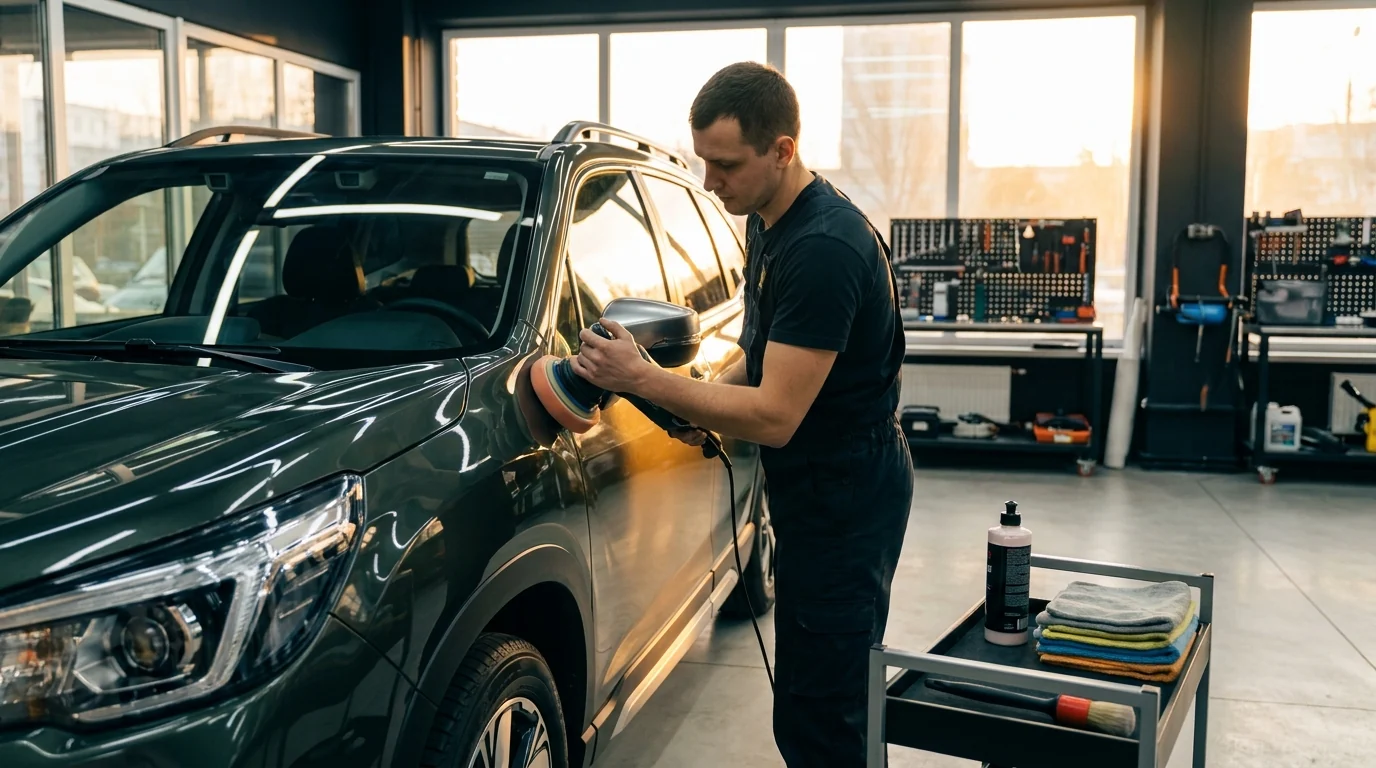
Body polishing is needed to remove minor scratches, 'swirl marks,' and cloudiness in the clear coat, restoring a car's deep color and shine. It's a cosmetic procedure that works on the top layer of the paintwork, but it's not a panacea for deep damage. There are two main approaches: restorative (abrasive) polishing, which physically levels the surface, and protective polishing, which adds an extra layer to the body for shine and preservation. The right type of polish can dramatically change the look of even an older car, making it appear visually fresher and better maintained. At єМеханік, we always start with an inspection to tell you honestly what results can be achieved in your case. The procedure usually takes one day, and the cost starts from 5 500 ₴.
When is polishing really necessary, and when is it a waste of money?
Polishing makes sense when the clear coat has lost its original shine, become cloudy, and a web of fine circular scratches—so-called 'swirl marks'—is visible in direct sunlight. These are common consequences of automatic car washes and improper care. Polishing is also effective against shallow scratches from branches, fingernails under door handles, or careless snow removal. It's an excellent way to prepare a car for sale, significantly improving its marketability.
However, polishing is a waste of money if you hope to remove deep scratches that go down to the primer or metal. A simple test: if a scratch catches your fingernail, polishing won't remove it. It might slightly smooth the sharp edges, making the defect less noticeable, but that's all. It's also not worth polishing a car if the clear coat is already too thin from numerous previous procedures. In such cases, we'll tell you frankly that abrasive treatment could cause harm. The best repair is one done with an understanding of its limits.
Polishing does not remove deep scratches. If you can feel the indentation with your fingernail, polishing will only smooth the edges but won't completely remove the defect. That requires a spot paint repair.
Restorative or protective: which type of polishing is right for your car?
The choice depends entirely on the condition of the bodywork. We distinguish between two main types of polishing:
1. Restorative (abrasive) polishing. This is the primary procedure for 'tired' paintwork. Using special pastes with abrasive particles, we remove a micron-thin layer of the clear coat, literally erasing scratches and leveling the surface. This is the method that brings back color depth and removes swirl marks. This is the very body polishing service most often ordered to restore a vehicle's appearance.
2. Protective polishing. This method does not use abrasives. Its goal is not to remove defects, but to protect what's already there. A special compound (based on wax or synthetic polymers) is applied to a perfectly clean body, filling micropores, creating a hydrophobic effect, and providing a deep shine. This is the ideal option for new cars or for a car immediately after a restorative polish to seal in the result. Before any polishing, a thorough comprehensive wash and body decontamination are mandatory.
The best polish job is one done smartly and when needed, not an attempt to buff out deep scratches until you've burned through the clear coat.
Not every car needs an abrasive polish. If the clear coat is in good condition and you just want to add shine and protection, a light protective polish is sufficient. We will never 'sand down' your clear coat without a real need.
How to make polishing results last?
The effect of polishing isn't permanent. Without additional protection, the shine can last a few months, depending on operating conditions and how often the car is washed. To extend the life of that perfect look, there are several proven methods. The most reliable is paint protection. Immediately after polishing, while the body is perfectly clean and smooth, it makes sense to apply a long-term coating. The best solution for this is paint protection film, which physically protects the clear coat from new scratches and chips. You can read more about this in our article Paint Protection Film: Why You Need It and Who It's For.
Besides film, proper care is also important. Avoid automatic brush washes—they are the main enemy of a glossy clear coat. Opt for manual two-phase washes using clean microfiber towels. And, of course, while your car is with us for exterior restoration, it's logical to combine it with interior detailing to get the feeling of a completely refreshed vehicle.
In a Nutshell
Polishing effectively removes minor paint defects (swirl marks, cloudiness) and restores a car's shine, but it does not remove deep scratches. To make the effect last as long as possible, the freshly polished surface should be protected with film or a special coating.
Frequently asked questions
Book in a minute —
Leave your number and we'll call back. Or share the details so the technician can prepare.
Book nowWhat clients say.
Honest Google reviews. Unedited.