Paint protection film is a transparent polyurethane "armor" applied over your factory paint, taking the hit from chips, scratches, and road chemicals instead of your clear coat. In simple terms: a stone kicked up by an oncoming car hits the film, not your paint—and the bodywork remains unscathed. Who needs this most? Owners of new cars who want to preserve the factory finish (which is thin on modern cars), anyone who spends a lot of time on the highway where sand and gravel are constant, and owners of cars with "expensive" paint—like pearlescent or matte finishes, which are a whole ordeal to repaint. At eMechanic at 12 Tyraspilska St., we apply anti-gravel film starting from 22 000 ₴—either for the full car or just high-risk areas. Let's be honest: the film won't make your car bulletproof. But it pays for itself by making the difference between "sold the car with original paint" and "needed a pre-sale respray."
What It Really Protects Against—And What It Doesn't
Let's be realistic about its capabilities. The film protects against everyday hazards: chips from stones and gravel, minor scratches (from branches, car wash brushes, or keys near the door handle), winter road chemicals, and paint fade from sun exposure. Quality polyurethane also has self-healing properties: minor scuffs disappear with heat—sunlight or warm water makes the surface smooth again.
What the film does NOT do: it won't save your car from a serious impact or accident, and it won't prevent a deep dent. This is surface protection, not armor. It's important to understand this limit to avoid disappointment: the film works brilliantly against the 'sandblasting' effect of highway driving and minor mechanical damage, but it can't defy the physics of a major impact.
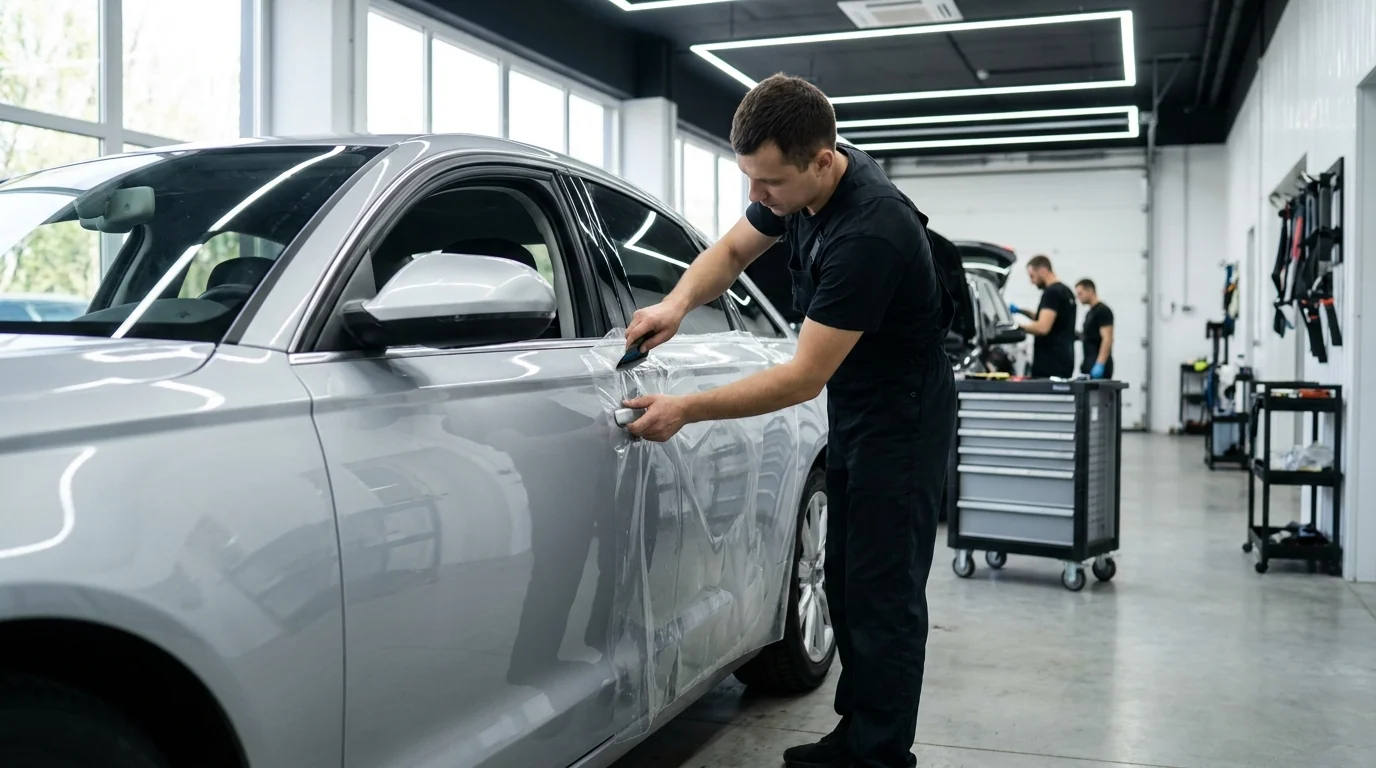
If you're on a budget, start with the front end: the hood, bumper, fenders, and mirrors catch almost all the chips. You can always add a full wrap later.
Film vs. Ceramic vs. Vinyl: Don't Get Them Confused
These are three different things that people constantly mix up. Paint Protection Film (PPF) is a thick polyurethane layer, about 150–200 microns; it's physical protection against chips, is transparent, and has a self-healing effect. A nano-ceramic coating is a liquid layer only a few microns thick; it provides hydrophobicity, gloss, and makes washing easier, but it does NOT protect against chips. A stone will punch through a ceramic coat just as easily as bare paint.
Vinyl is a thinner, decorative film used to change a car's color or finish; its purpose is styling, not protection. A simple guide: if you need physical protection from chips, you need film. If you want gloss and easy washing, you want a ceramic coating (often applied over film). If you want to change the color, you need vinyl. Ceramic coatings and film don't compete; they complement each other.
Ceramic coating provides gloss and hydrophobicity; film provides physical protection from chips. A stone will punch through a ceramic coat just as easily as bare paint.
A ceramic coating is NOT a substitute for paint protection film. They serve different purposes: film takes the impact from stones, while ceramic is about gloss and easy washing. They are often combined, but should not be confused.
Which Areas to Wrap First
If a full wrap isn't in the budget yet, start with the part that catches almost all the chips: the front of the car. The high-impact areas are: the hood, front bumper, front fenders, mirror caps, and headlights, as well as the area under the door handles where the paint gets scratched by fingernails. This is the "front-end kit"—the optimal balance of price and protection.
Later, if you wish, you can opt for a full body wrap for maximum coverage, or protect specific areas like the rocker panels and loading zones. A matte film is also available for matte-finish cars. Film is often chosen as part of a full detailing package, along with polishing before application and window tinting, to give the car a complete, finished look.
Our Process and How to Care For It
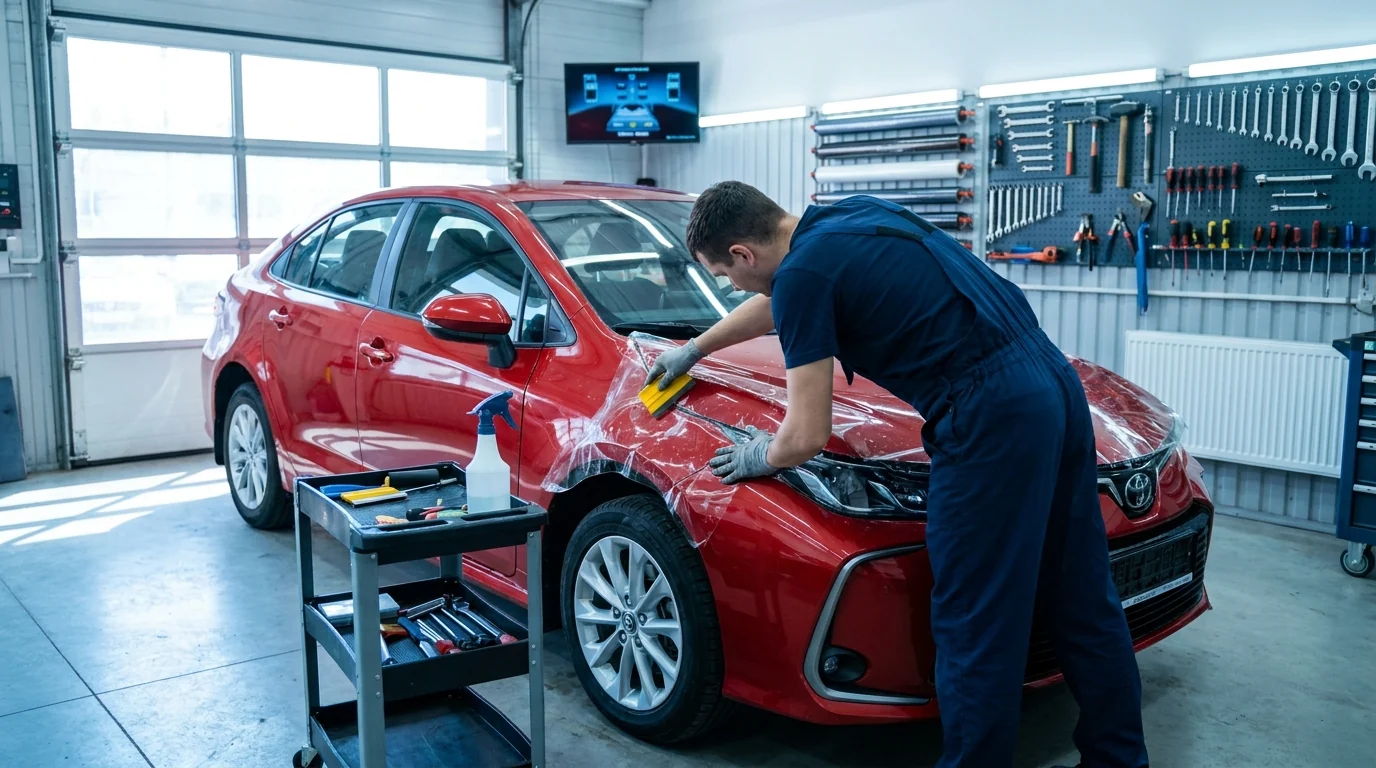
The quality of the wrap is determined during preparation, not by the film itself. First comes a comprehensive wash, deep cleaning, and degreasing, with polishing if necessary. The film is unforgiving of any dirt or scratches underneath—they'll be sealed in forever. Next, we cut the film using templates, apply it, shape the edges, and let it dry. The process takes 2–3 days, and that's normal: rushing leads to bubbles and poorly finished edges.
Care is simple: don't wash the car for the first few days. After that, use a regular car wash without aggressive chemicals or harsh brushes, and don't aim a pressure washer directly at the film's edges. Here's a real-world example: two identical crossovers, both driven on the highway weekly. After two seasons, the unprotected one was covered in 'star' chips on the hood and needed a respray before being sold. The owner of the wrapped one simply peeled off the old film to find paint that looked brand new. And on the used market, original paint is a plus to the price: any pre-purchase inspection will tell factory paint from a respray with a thickness gauge in seconds. The film manufacturer provides a warranty on the material itself—ask for the specific term when you book.
And a word on choosing the film, because the price isn't random. Materials differ in quality: a cheap film can yellow in the sun over time, become cloudy, and be harder to remove, leaving adhesive on the paint. Premium polyurethane self-heals better, doesn't yellow, and can be removed cleanly years later. So, focus not just on the price, but on WHAT film is being applied and what warranty the shop offers on their work—skimping on materials can sometimes end up costing more than the price difference.
Frequently asked questions
Book in a minute —
Leave your number and we'll call back. Or share the details so the technician can prepare.
Book nowWhat clients say.
Honest Google reviews. Unedited.