Interior detailing is necessary when a standard cleaning is no longer enough to remove old stains, persistent odors, or dirt that's deeply embedded in the upholstery. Unlike a maintenance clean that freshens up the interior, deep detailing is a restorative procedure that brings materials back as close to new as possible using special chemicals and equipment. However, you don't always need to pay for the most expensive service. Often, a regular light cleaning is enough to maintain a tidy appearance, and we'll honestly tell you which type of care your car needs so you don't waste your money. This is a decision best made based on the actual condition of your interior, not on a "once a year for prevention" principle.
Cleaning vs. Detailing: What's the Difference and What Should You Choose?
To understand which service you need, it's important to distinguish between two approaches to interior care. The first is maintenance cleaning. Think of it like regular housekeeping: vacuuming, dusting, and washing windows. The goal is to maintain order and freshness. This is the ideal option for well-kept cars without serious soiling.
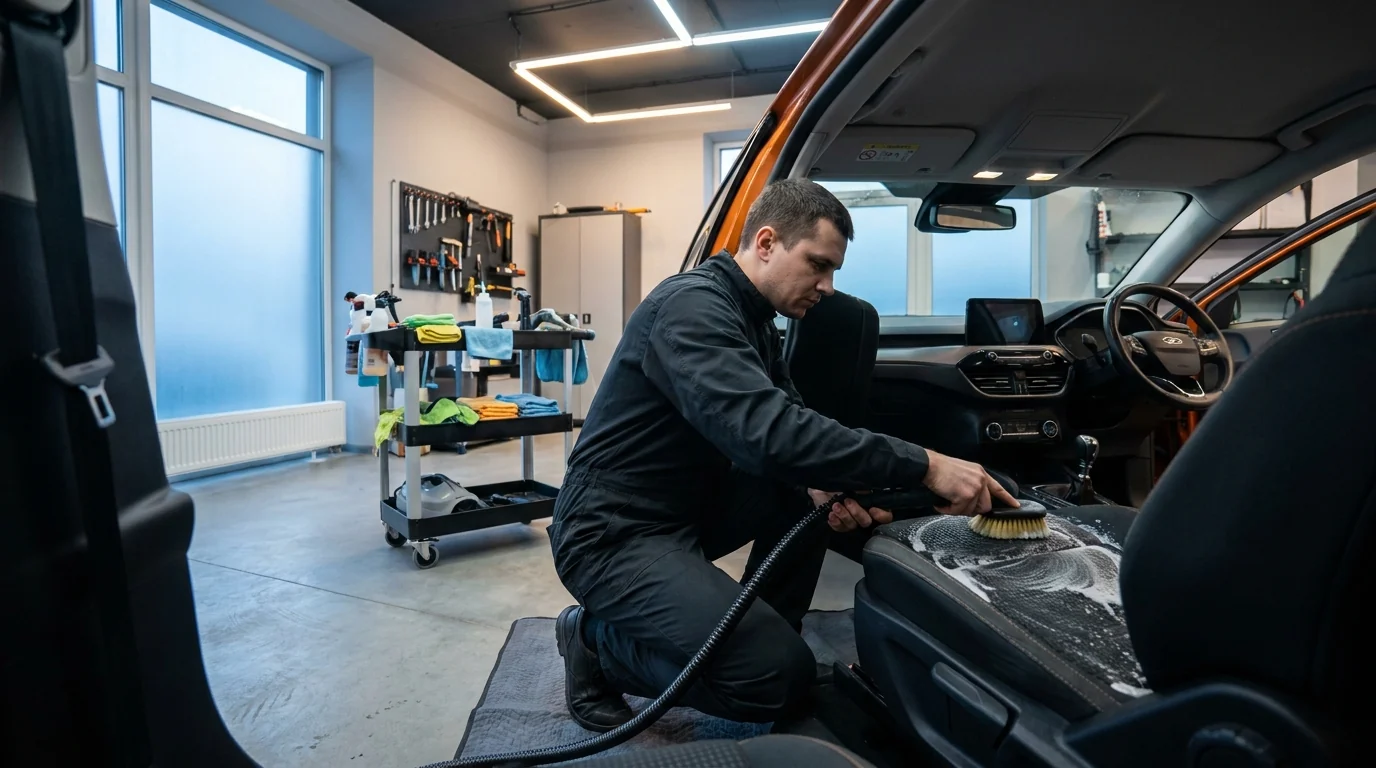
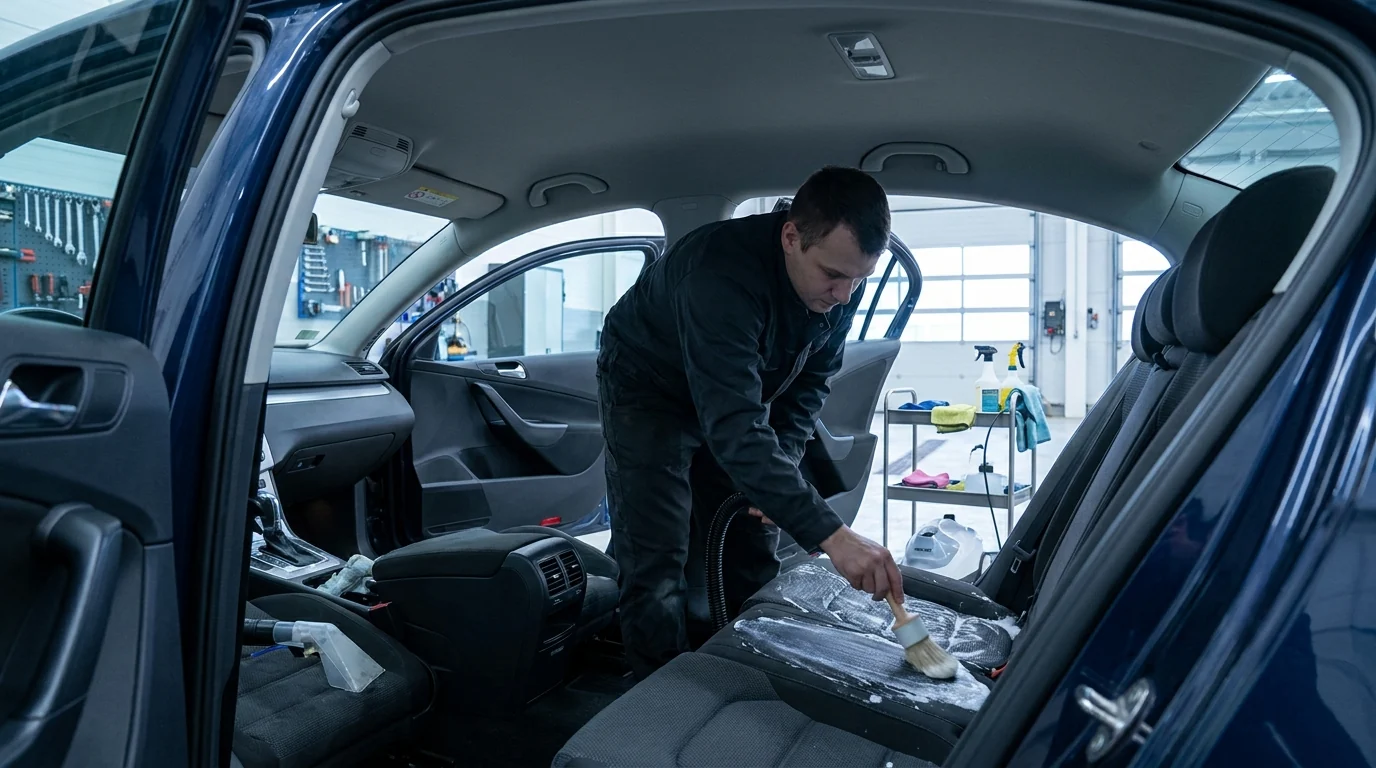
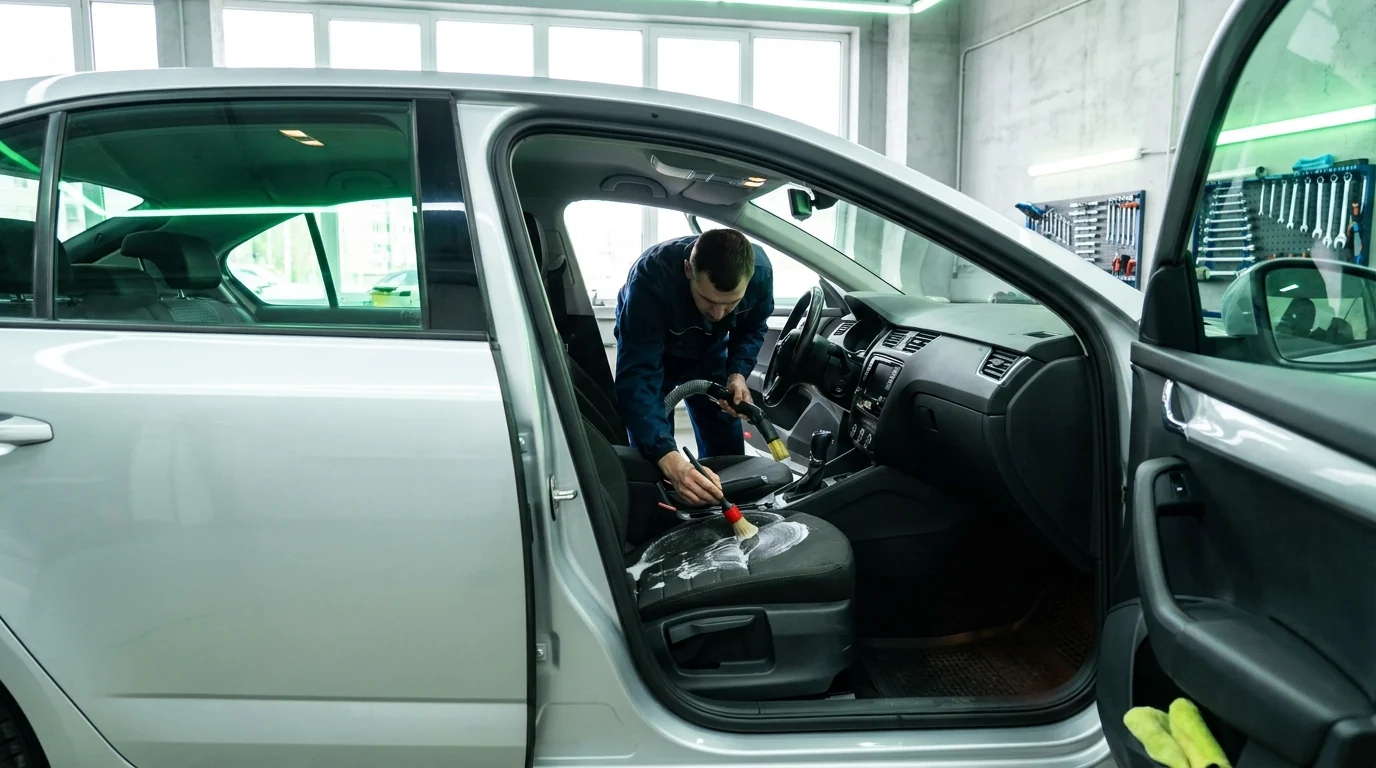
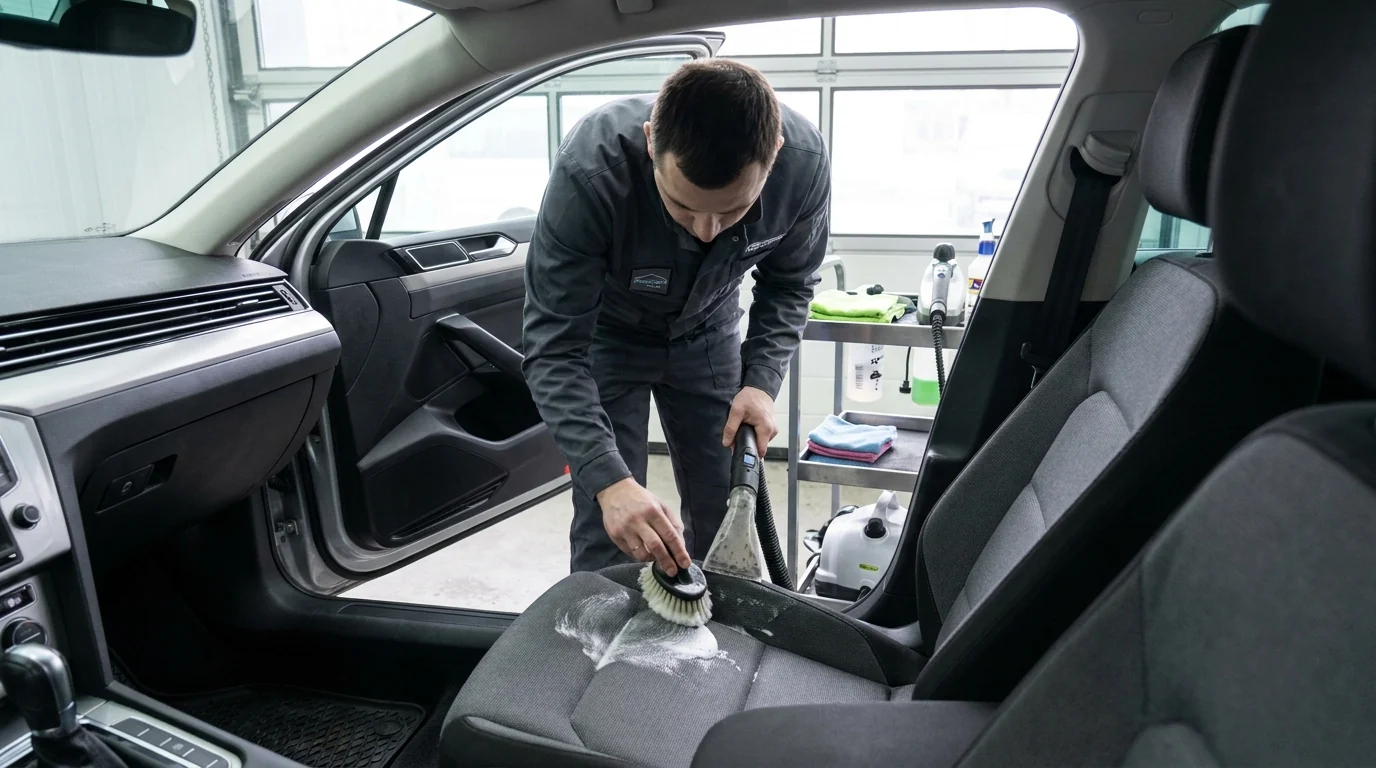
The second approach is deep interior detailing. This is more like a spring clean. It involves professional-grade cleaning agents that break down dirt deep within the fabric fibers and an extractor that pulls out the dissolved grime along with the chemicals. Detailing is done on an as-needed basis when the interior is visibly dirty, has stains, or an unpleasant odor. Our advice is simple: if you regularly maintain your car, you most likely don't need expensive detailing. The cheapest repair is the one you didn't have to buy.
Here's a simple test to help you decide without overthinking: open your car after a hot day and take a sniff before you even get in. If you only smell that typical "car smell"—a mix of plastic and air conditioning—a maintenance clean is sufficient. But if there's a persistent foreign odor (tobacco, dampness, food) that you notice immediately and that doesn't air out, it's a sign the problem is deeper than surface dust, and detailing is unavoidable.
In practice, most of our clients opt for a maintenance clean every few months and a deep detail less frequently, based on actual need rather than a schedule. This is a normal and cost-effective model: regular light care postpones the need for an expensive deep treatment, sometimes for years.
Detailing isn't all-powerful. Stains from paint, super glue, or certain chemical burns on fabric or leather may not disappear completely. We will honestly warn you about the risks before starting any work.
What's Included in a Maintenance Interior Clean?
A standard interior cleaning is a set of procedures to restore a car's tidy appearance. It includes thoroughly vacuuming all surfaces: seats, floors, mats, and the trunk. We then wipe down and treat all plastic elements with a conditioner to prevent them from drying out and to give them a well-maintained look. We also wash the interior glass and remove fresh, simple stains from the upholstery.
In practice, the process is as follows: first, a dry clean (vacuuming all areas, including hard-to-reach spots under the seats, in crevices, and in the trunk), then a damp wipe of hard surfaces and application of a protective conditioner to plastic and rubber, and finally, a streak-free cleaning of the interior glass. Fresh stains are treated immediately at this stage with a special agent before they can penetrate deeper into the fabric structure.
This service starts from 2 200 ₴ and usually takes 3–5 hours. It's an excellent way to keep your car clean without significant expense. Many of our clients combine an interior clean with a full-service wash to make their car look flawless both inside and out. And if you're also refreshing the exterior, you can learn more about when it's justified in our guides about car polishing and about paint protection film.
An important note: maintenance cleaning does not include deep extraction from the upholstery and does not combat persistent odors—that's not its purpose. If a smell or stain remains after a standard clean, it doesn't mean the job was done poorly; it simply means the specific problem requires a different level of treatment, and a technician will tell you this upfront instead of trying to pass one service off as another.
The best detailing job is the one you avoided with regular maintenance. It's cheaper to stop by for a light clean periodically than to try and salvage a neglected interior later.
Don't fall for 'one-hour detailing.' A quality job with deep cleaning and proper drying takes much more time. A quick job means it's either superficial or risks leaving the interior damp, which can lead to mold.
When a Regular Clean Isn't Enough: Signs You Need a Deep Detail
There are clear signs when a surface-level clean won't cut it and it's time to consider a full interior detail. Here are the main ones:
1. Persistent Odors. The smell of tobacco, pets, spilled milk, or just dampness cannot be removed by simply airing out the car or using an air freshener. The source of the odor is deep within the seat upholstery, carpeting, or even the ventilation system, and only specialized chemicals can reach it.
2. Set-in Stains. Traces of coffee, juice, greasy food, or ink that were ignored when they happened eventually penetrate the fabric's structure. Removing them without professional-grade stain removers and an extractor is nearly impossible.
3. A Generally Grimy Appearance. If the seat fabric remains dull even after vacuuming, and feels sticky or oily to the touch, it's a sign of accumulated dirt, sweat, and skin oils. A regular cleaning is powerless here.
4. After Buying a Used Car. This is a matter of hygiene, not just aesthetics. A deep detail will get rid of traces of the previous owner, bacteria, and allergens. By the way, before buying a used car, it's always wise to get a full diagnostic, which we wrote about in our article on why you need a pre-purchase inspection.
5. Allergic Reactions in the Car. If a passenger starts sneezing or feeling irritation right after getting into the car, and the person isn't the issue, it's often a sign of accumulated allergens (dust mites, pet dander, mold) deep in the upholstery and ventilation system that a regular vacuum can't reach.
The main rule of thumb is simple: the longer a problem is ignored, the deeper it penetrates the material, and the harder (and thus more expensive) it is to remove. Stains and odors don't just 'disappear' on their own—a damp environment and organic contaminants only soak deeper into the fibers and foam padding over time.
Don't wait for the 'perfect moment' for a detail. The longer you postpone it when any of these signs are present, the higher the chance you'll be dealing not with a stain, but with a permanent mark, or even with foam padding damaged by moisture.
How Much Does Interior Detailing Cost and What Affects the Price?
A maintenance interior clean at our shop starts from 2 200 ₴ and takes 3–5 hours. This is the price for the basic package: vacuuming all surfaces, treating plastic with conditioner, cleaning interior glass, and removing fresh, simple stains. A deep detail costs more and is calculated individually—the price is influenced by the size of the interior (an SUV with a third row of seats vs. a hatchback), the type of upholstery (fabric, leather, Alcantara), and the degree of soiling.
The upholstery material is a separate price factor. Fabric seats require more time for extraction (saturating with chemicals, letting it sit, 'pulling' out the dirt with a vacuum extractor), while leather is cleaned faster but requires more delicate, pH-neutral products and subsequent conditioning to prevent the material from drying out. Alcantara is somewhere in the middle: not as finicky as leather, but not as resistant to aggressive chemicals as regular fabric.
We service interiors for BMW, Mercedes, Audi, Lexus, Land Rover, Volvo, MINI, Infiniti, Porsche, Volkswagen, Toyota, Mazda, Kia, and Hyundai—and we always provide an exact price after a live inspection of the interior, not based on a photo or the client's description. The degree of soiling often looks and feels different in person.
Another factor that is rarely mentioned upfront is the condition of the interior from a previous owner if the car was bought used. Traces of pets, tobacco, or prolonged moisture (for example, from a leaking seal) require more passes and sometimes an additional ozone treatment to completely eliminate the odor, not just a single extraction cycle. Therefore, for used cars, the final price is more often at the higher end of the range than for a well-maintained, single-owner vehicle.
The Bottom Line
A maintenance clean freshens up a tidy interior, while a deep detail solves problems with old stains, odors, and ingrained dirt. Choose the service based on your car's actual condition, not on advertising, to avoid overpaying. Schedule an inspection if you're unsure which level of care is right for your car. We provide a transparent estimate based on the actual state of the interior—without upselling you on services your car doesn't really need.
Frequently asked questions
Book in a minute —
Leave your number and we'll call back. Or share the details so the technician can prepare.
Book nowWhat clients say.
Honest Google reviews. Unedited.