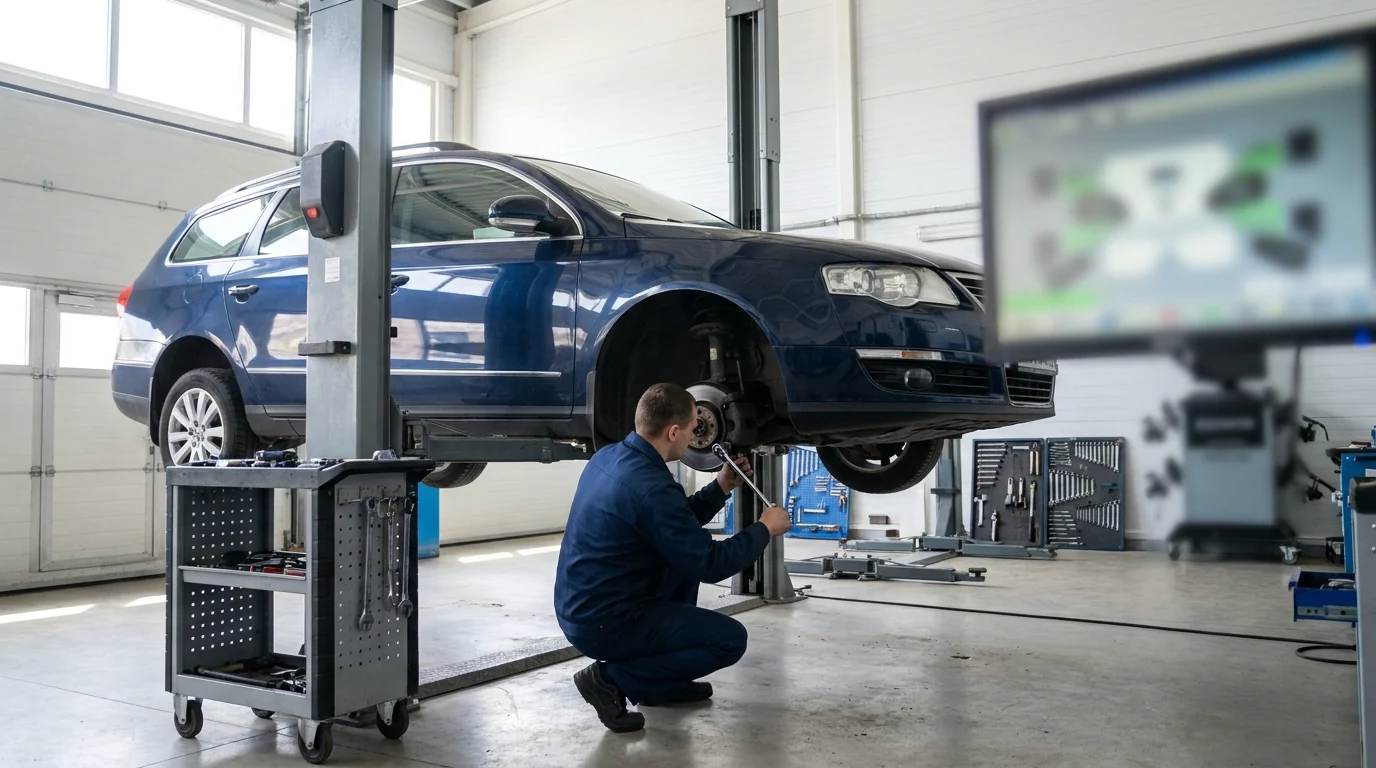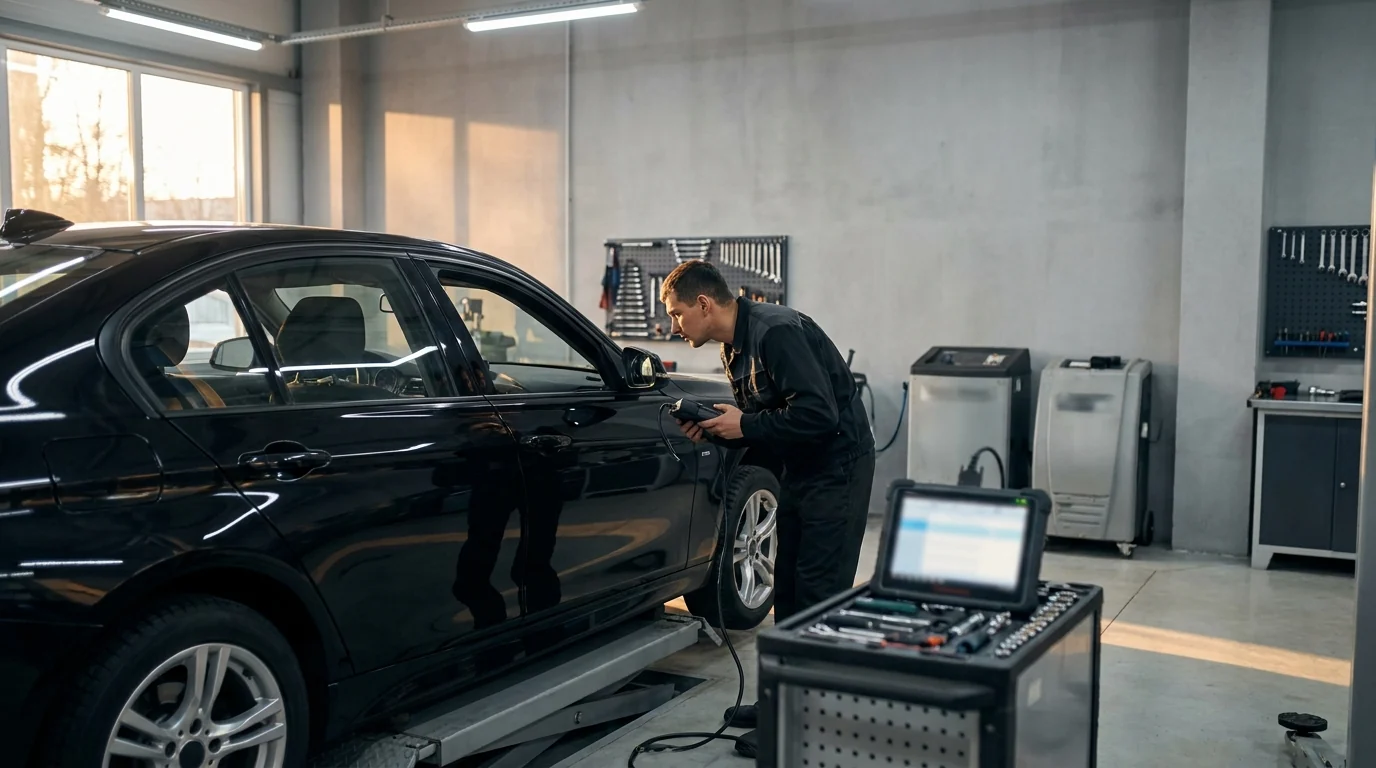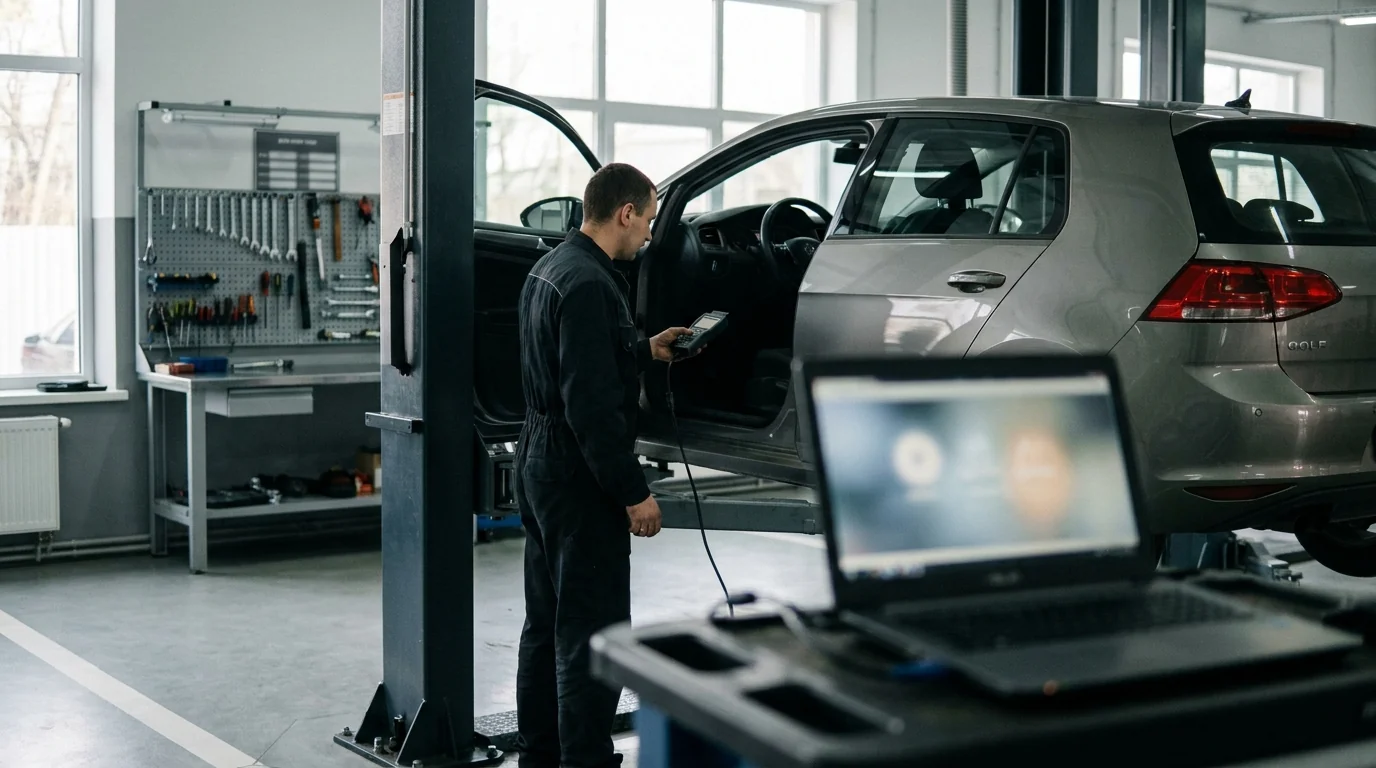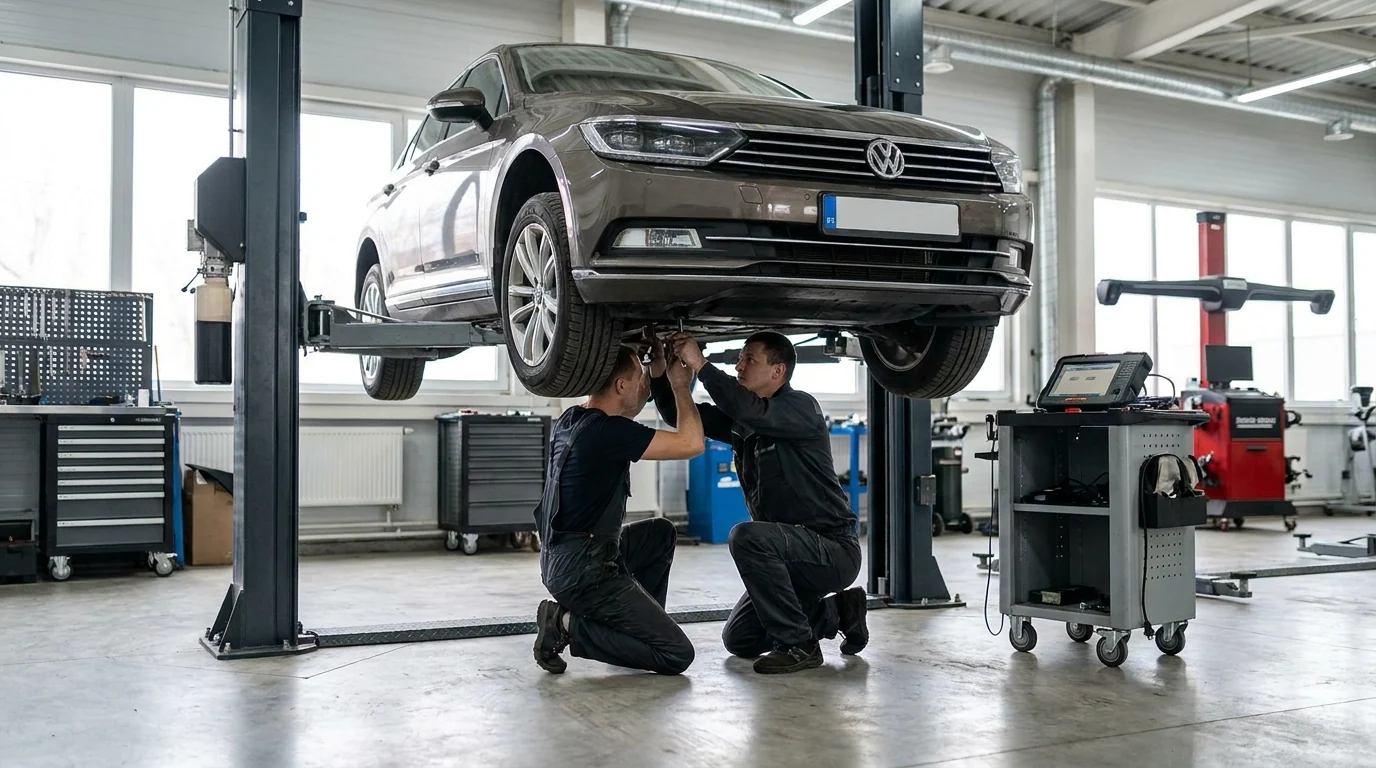
There are five main fluids in a car that require regular replacement: engine oil (every 8–10 thousand km or once a year), transmission fluid (per the schedule, but more often for automatic transmissions and CVTs in the city), brake fluid (every 2 years), coolant or antifreeze (interval depends on the type and manufacturer's recommendations), and power steering fluid (based on condition or schedule). In Kyiv's traffic, with its constant jams, short trips, and temperature fluctuations, the official manufacturer intervals should be shortened. This isn't a marketing ploy, but a reality: city driving is considered 'severe service' and accelerates the aging of any chemical in the car. A timely fluid change is the simplest and cheapest way to prevent serious damage to the engine, transmission, and braking system. Prevention is always cheaper than a major overhaul, especially when it comes to your car's key components. At our service center at 12 Tiraspolskaya St., we'll help you choose the right specifications and determine the real, not theoretical, replacement intervals for your car and driving style.
Manufacturer's Schedule vs. Real-World Conditions: When to Change Fluids in Kyiv?
Every car manufacturer specifies recommended replacement intervals for all technical fluids in the service book. These figures—for example, extended intervals for engine oil—are calculated for ideal, or 'normal,' operating conditions. This means mostly highway driving at a constant speed, smooth acceleration and braking, a moderate climate, and high-quality fuel. Unfortunately, the reality of daily driving, especially in a large city like Kyiv, has little in common with this. Commuting in rush hour, sitting in traffic jams, and frequent short trips where the engine doesn't have time to fully warm up—all of this is classified as 'severe operating conditions.'
What exactly makes city driving so harmful to fluids? First, when idling in a traffic jam, the engine continues to run, accumulating hours of operation while the mileage stays low. The oil heats up, oxidizes, and loses its properties, even though the odometer shows minimal change. Second, short trips don't allow the oil to reach its operating temperature, causing condensation and unburnt fuel to accumulate, which thins the oil and degrades its lubricating properties. Third, frequent starts and stops place increased stress on the transmission and braking system.
Therefore, the main rule for a Kyiv driver is to significantly shorten the manufacturer's official schedule. This applies first and foremost to engine oil. If the manufacturer recommends a change at high mileage, in city conditions, you should aim for an interval of 8–10 thousand km. The same goes for fluid in automatic transmissions. Ignoring these realities leads to premature wear of parts and, consequently, to expensive repairs that could have been avoided. This isn't an attempt to sell a service more often, but honest advice based on experience working with cars that drive on our roads every day.
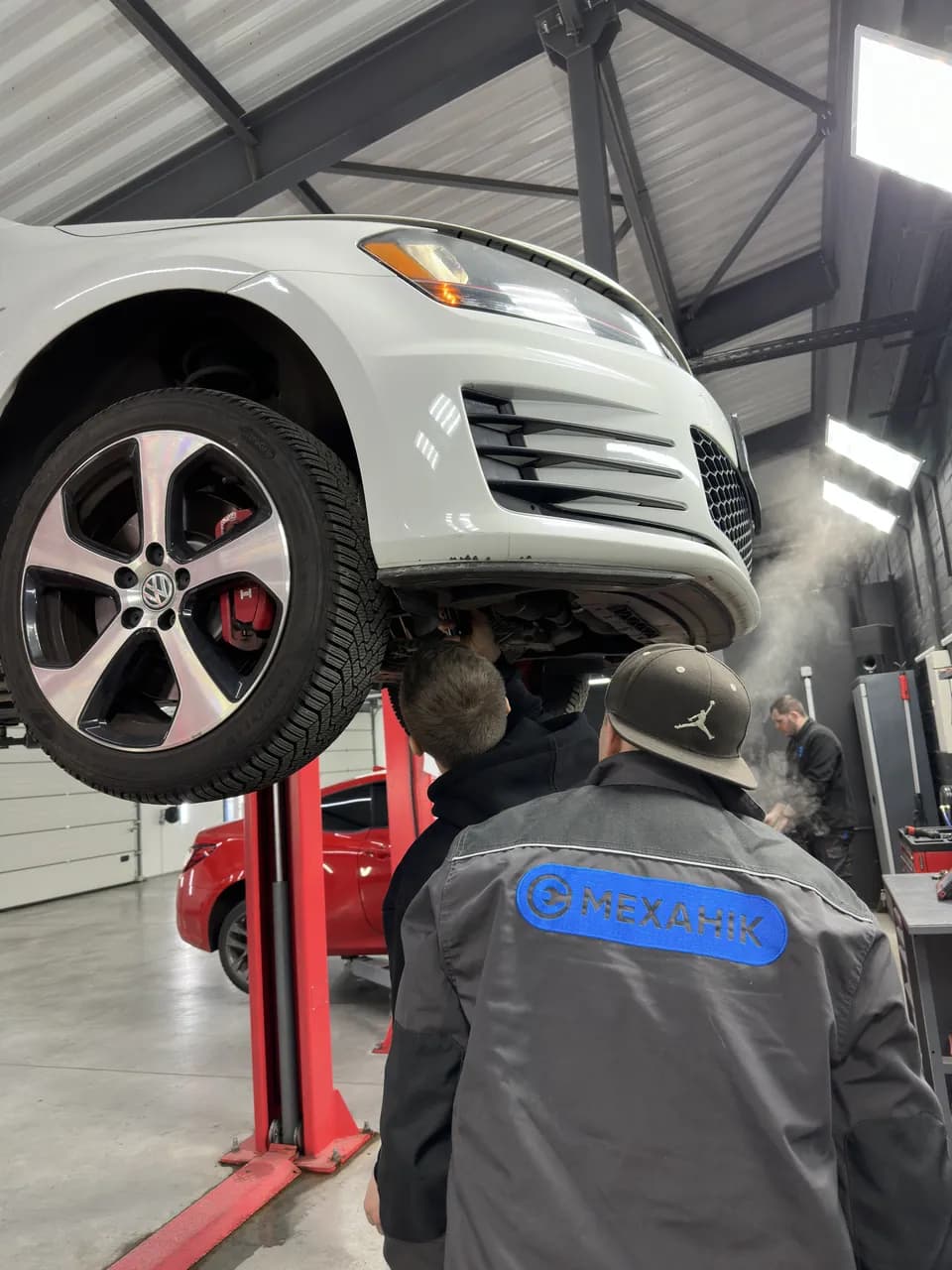
Kyiv traffic jams, short trips, and winter warm-ups are 'severe operating conditions.' Always significantly shorten the official oil change interval recommended by the manufacturer for ideal conditions.
Engine Oil: Why 8-10 Thousand km is the Maximum for City Driving
Engine oil is the lifeblood of the engine. It not only lubricates moving parts, reducing friction and wear, but also performs a number of other critically important functions. Oil cools the most stressed parts, like the pistons, where antifreeze can't reach. It also cleans the engine from the inside, collecting combustion byproducts (soot) and microscopic metal particles, holding them in suspension until the next change. Additionally, additives in the oil protect metal surfaces from corrosion. Over time, under the influence of high temperatures and contact with gases, the oil degrades: additives are depleted, its viscosity changes, and its cleaning properties worsen.
An interval of 8–10 thousand kilometers or one year (whichever comes first) is the gold standard for modern cars in urban conditions. Why? Because even the most advanced synthetic oil cannot withstand these loads forever. In the city, the engine often operates in 'start-stop' mode, which leads to local overheating and oil oxidation. Accumulated soot and other contaminants turn the oil into an abrasive paste that begins to wear down the engine instead of protecting it. If you notice that the engine has started running louder or strange noises have appeared, it could be a sign of trouble. In such cases, it's worth getting engine diagnostics to rule out more serious malfunctions.
Exceeding the replacement interval is a game of roulette. Old oil leaves behind varnish and carbon deposits on parts and clogs thin oil passages, which can lead to oil starvation and a major engine overhaul. The story that 'you can drive much longer on this oil than the recommended interval' usually ends at a service station with a serious problem. If you're not sure whether it's time to change the oil, it's better to be safe than sorry. It's the smallest investment in the health of your engine. You can read more about the signs that indicate a need for repair in our guide, 'What signs indicate your engine needs repair?'
The best way to save on repairs is to change your fluids on time. Prevention is always cheaper than a cure.
Some manufacturers claim their automatic transmission fluid is 'filled for life.' The life of a transmission that isn't serviced often ends right after the warranty period. With fresh fluid, it will last much longer.
Transmission Fluids (AT, MT, CVT): Preventing Expensive Repairs
If engine oil is the lifeblood of the engine, then transmission fluid (ATF for automatics, MTF for manuals) is the vital fluid for the gearbox. This is especially true for modern, complex units like automatic transmissions (AT) and continuously variable transmissions (CVT). In these, the fluid not only lubricates gears and bearings but also transfers torque in the torque converter, cools clutch packs, and controls gear shifts using hydraulics. It is an extremely hard-working component that loses its properties over time.
The most common and dangerous myth is that 'the fluid in an automatic transmission is filled for life.' Manufacturers do sometimes write this, but they are being disingenuous. 'Lifetime' in their understanding is often just the warranty period, after which the manufacturer bears no responsibility for the unit's condition. In reality, if you regularly change the fluid in an AT or CVT, the unit's lifespan can be significantly extended. Old fluid, saturated with wear products from the clutches, turns into an abrasive that destroys the valves of the hydraulic control unit—the 'brain' of the transmission. Repairing the hydraulic unit costs a fortune, while a timely fluid change does not.
For manual transmissions (MT) and differentials, the replacement intervals are usually longer, but that doesn't mean you can forget about them. The oil in a manual gearbox also loses viscosity over time, leading to wear on the synchronizers (gears start to engage with a crunch) and bearings (a humming noise appears). It's difficult to check the condition of the fluid in the gearbox yourself, so it's better to trust the schedule and the experience of mechanics. If you've bought a used car and don't know its service history, the first thing you should do is replace all the technical fluids. It's the cheapest insurance against future problems.
Brake Fluid: Why It Needs Changing Every 2 Years
Brake fluid is one of the most underestimated, yet most important, safety components of a car. Its main job is to transfer the force from the brake pedal to the brake pads. To do this effectively, the fluid must be virtually incompressible. However, most brake fluids have one insidious property—they are hygroscopic, meaning they actively absorb moisture from the air through micropores in the brake hoses and through the reservoir cap.
Why is this so dangerous? Water that gets into the brake fluid has two negative consequences. First, it causes corrosion of the internal components of the brake system—cylinders, pistons, and lines. This can lead to seized calipers or fluid leaks. Second, and most importantly, water significantly lowers the boiling point of the brake fluid. Fresh brake fluid boils at a very high temperature, but even a small amount of water absorbed over time significantly reduces this boiling point.
During intensive braking, for example, on a mountain pass or during an emergency stop in the city, the brake mechanisms heat up significantly. If the fluid's temperature exceeds its boiling point, the water in it will turn into steam. And steam, unlike liquid, is easily compressed. As a result, when you press the brake pedal, you'll feel it 'go to the floor,' and braking effectiveness will drop to zero. This phenomenon is called 'vapor lock,' and it's a direct path to an accident. That's why there's a strict rule: change the brake fluid every two years, regardless of mileage. The fluid's condition can be checked with a special tester, which we do during inspections.
Antifreeze and Power Steering Fluid: Less Obvious but Crucial Changes
Coolant, or antifreeze, is often thought of only as something that keeps water from freezing in the winter. In reality, its functions are much broader. Antifreeze circulates through the system, transferring excess heat from the engine to the radiator. Modern engines operate at very high temperatures, and effective cooling is critical to their longevity. In addition, antifreeze contains a package of additives that protect the metal parts of the system (cylinder block, cylinder head, radiator, water pump) from corrosion and cavitation (the destruction of metal due to the formation and collapse of vapor bubbles).
Over time, the additives in antifreeze are depleted, and it loses its protective properties, turning into an aggressive liquid that starts to eat away at the system from the inside. Corrosion products (rust) clog the thin channels of the radiator and heater core, which leads to engine overheating in the summer and a cold cabin in the winter. The replacement interval depends on the type of antifreeze and the manufacturer's recommendations, but it loses its properties over time. Ignoring this procedure can lead to replacing the radiator, water pump, or even engine repair due to overheating.
Power steering fluid (PSF) is another component that is often forgotten. It works in a high-pressure system, helping the driver turn the steering wheel easily. Over time, the fluid accumulates wear products from the power steering pump and steering rack, loses its lubricating properties, and can foam. The first signs of old fluid are a humming or whining from the power steering pump (especially when turning the wheel to full lock) and a 'heavy' steering wheel. If you ignore this, the next step will be an expensive repair or replacement of the pump or steering rack. Not all cars have a replacement schedule for PSF, so you should go by its condition (color, burnt smell, presence of contaminants) or change it preventatively to avoid problems.
Can You Judge a Fluid's Condition 'By Eye'? The Limits of DIY Checks
Many drivers try to assess the condition of technical fluids themselves by looking at their color and consistency. To some extent, this makes sense, and some warning signs can indeed be noticed. For example, if the engine oil on the dipstick has turned into a light-brown emulsion, resembling coffee with milk, it's a clear sign that antifreeze has entered the lubrication system, requiring immediate computer diagnostics and repair. If the antifreeze in the expansion tank has become brown and cloudy, it indicates severe corrosion in the cooling system.
However, it's important to understand the limits of such a visual inspection. For example, the engine oil in a diesel engine darkens almost immediately after a change due to the high soot content—and this is completely normal. Its darkening indicates that the detergent additives are working. It's impossible to determine 'by eye' whether the oil has lost its lubricating properties. The same applies to transmission fluid: its darkening is a normal part of its operation, but it doesn't say anything about its degree of wear.
The most deceptive fluid is brake fluid. It can look perfectly clear and clean, yet contain a critical amount of moisture, making it dangerous. The water content doesn't change its color. The only reliable way to check it is by using a special electronic tester that measures the fluid's electrical conductivity or its boiling point. Therefore, the most honest answer is: a DIY inspection is useful for checking levels and identifying obvious problems (leaks, emulsion), but it cannot replace professional diagnostics and adherence to scheduled replacement intervals.
The Bottom Line
Regular replacement of the five key fluids—engine oil, transmission fluid, brake fluid, coolant, and power steering fluid—is the most effective prevention against expensive repairs. In Kyiv's urban driving conditions, don't rely on the maximum mileage from the manufacturer, but on shorter, realistic intervals. If you have any doubts about the condition of the fluids in your car, it's better to stop by for a check.
Frequently asked questions
Book in a minute —
Leave your number and we'll call back. Or share the details so the technician can prepare.
Book nowWhat clients say.
Honest Google reviews. Unedited.