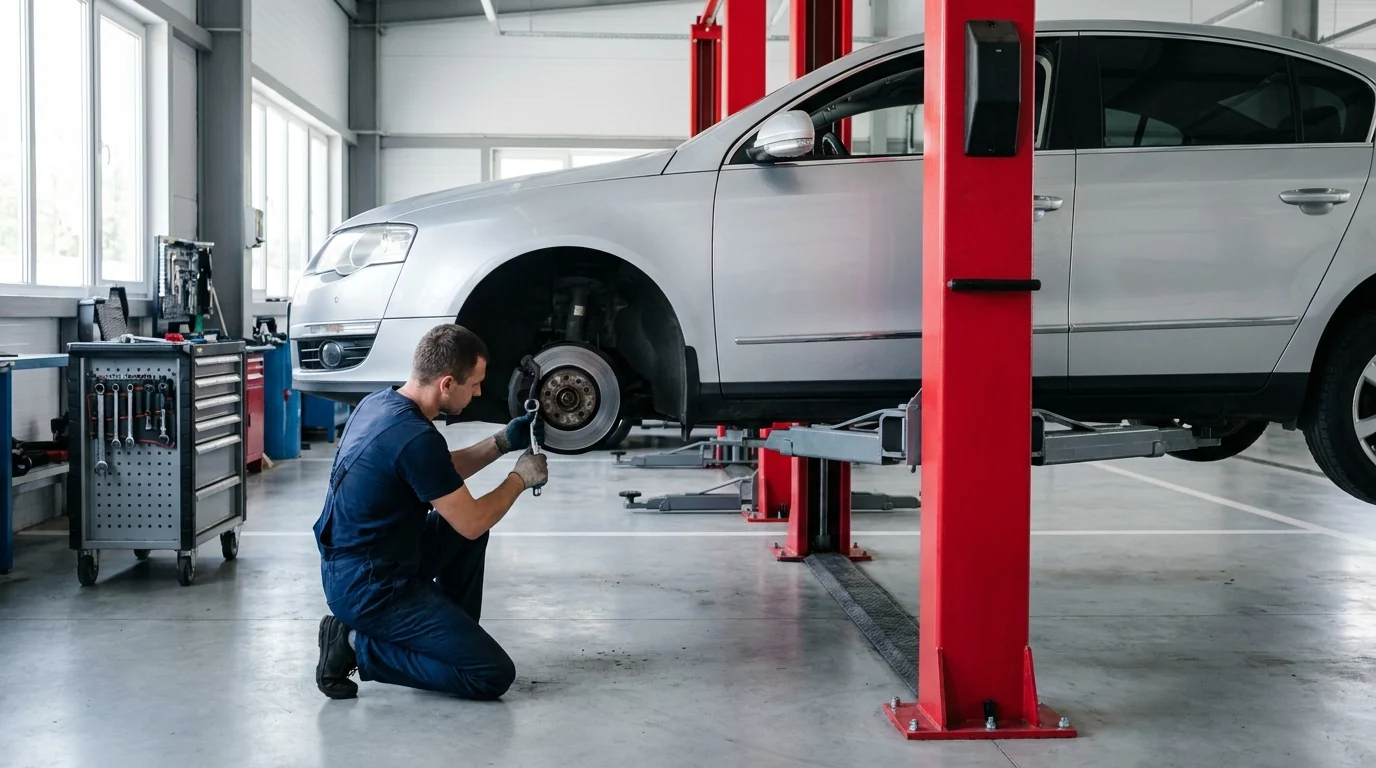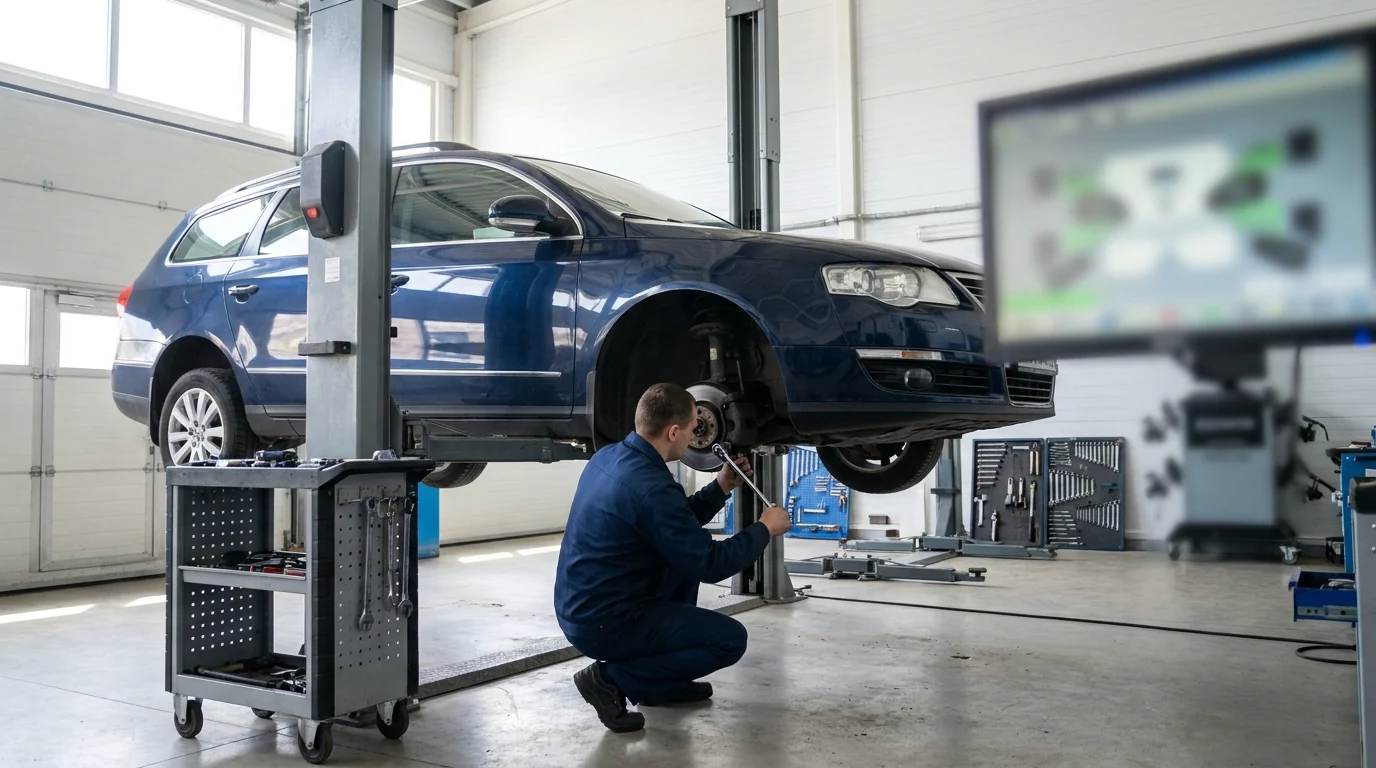
The main signs you need to replace your control arm bushings are a dull thud from the suspension on uneven roads, a vague or 'mushy' steering feel, and uneven tire wear. If you notice your car handles poorly, responds to steering with a delay, or pulls to one side, these rubber-and-metal joints are the likely culprits. Bushings are dampers that connect suspension components and absorb vibrations. When they wear out, metal starts grinding against metal, creating play that directly impacts handling and safety. Don't ignore these symptoms, as a failed bushing can lead to rapid wear of other, more expensive suspension parts. Timely bushing replacement restores precise handling and prevents more serious problems.
Key Symptoms of Worn-Out Bushings: Listen to Your Car
The first and loudest signal is a dull thud from the suspension. It's especially noticeable when going over speed bumps, potholes, or cobblestones. The sound isn't a sharp, metallic clank, but a muffled knock, like rubber hitting metal. This happens because the worn rubber element of the bushing can no longer effectively dampen oscillations, and the metal parts of the control arms start making contact with each other or the car's body. This knock might start subtly but will become louder and more frequent over time, signaling critical wear.
The second important sign is a decline in handling. The car starts to 'wander' on the road, especially at speed. You might feel like you constantly have to make small steering corrections to keep it in a straight line. The steering becomes 'spongy' or 'vague': there's a delay between turning the wheel and the car's response. This is due to play in the control arm connections—the wheels have too much freedom and can slightly change their position independently of the steering wheel. This behavior is not just uncomfortable; it's dangerous, especially during emergency maneuvers.
The third reliable indicator is uneven tire tread wear. If you see the inner or outer edge of a tire wearing down much faster than the center, it's often a result of incorrect wheel alignment angles. Worn bushings can't hold the control arms rigidly, causing the suspension geometry to shift under load. Even if you recently had an alignment done, failed bushings will negate the results. This is a direct path to the premature replacement of expensive tires.
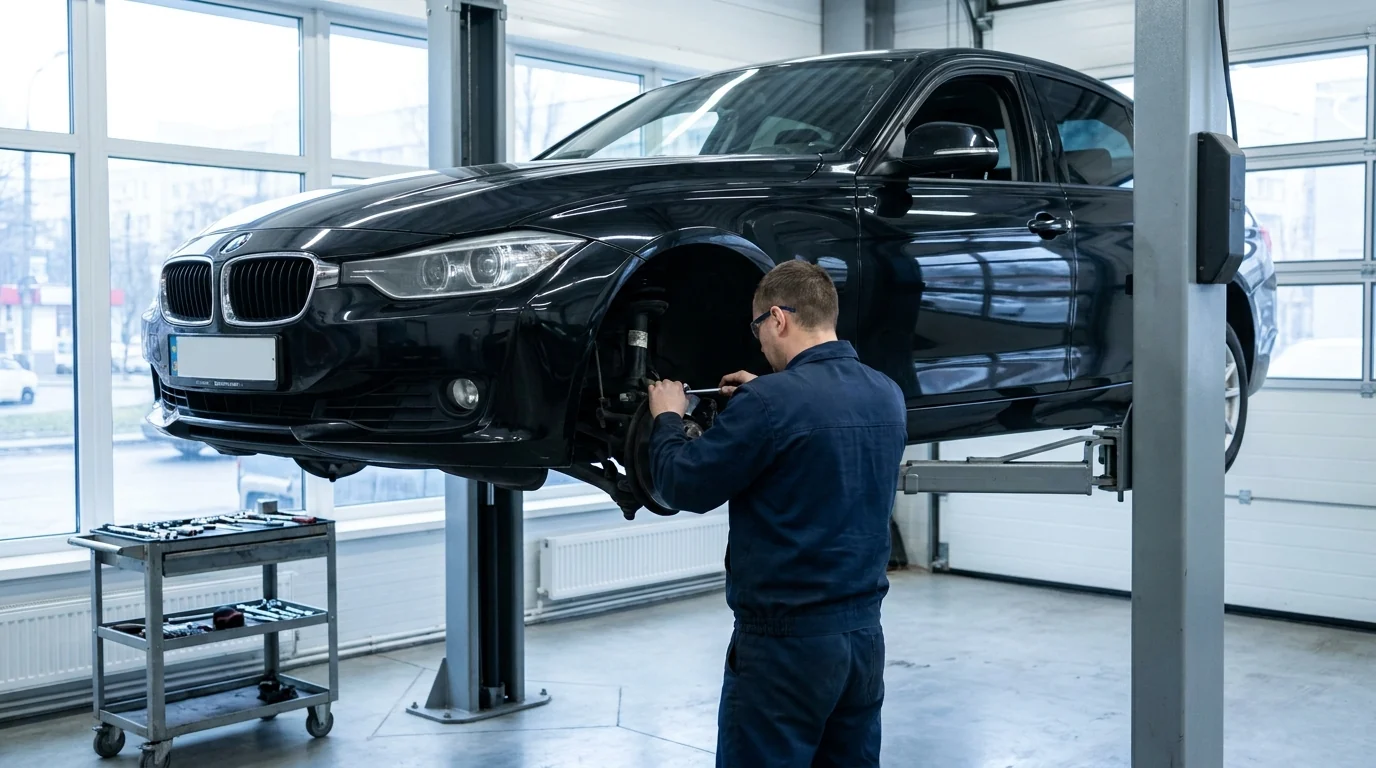
After any replacement of suspension arm bushings, a wheel alignment is mandatory. Otherwise, new tires can wear out prematurely, and any savings on the adjustment will be lost.
DIY Check: How to Find Play and Cracks Without a Lift
Even without special equipment, you can perform a basic visual inspection. You'll need a flashlight and possibly a small mirror. Turn the wheels to their extreme position to get maximum access to the front suspension arms. Carefully inspect the rubber parts of the bushings. Look for deep cracks, tears, or rubber separating from the metal sleeve. Ideally, the rubber should be intact, with no visible damage. Any 'bulges' or deformities are a clear sign that replacement is needed.
Another method is to check for play. For this, you'll need a small pry bar or a sturdy screwdriver. Safety is key: the car must be on a level surface, with the parking brake engaged and in gear. Carefully, without excessive force, try to insert the end of the pry bar between the suspension arm and the subframe near the bushing and wiggle it. If you see the arm shift easily, the rubber deforms significantly, or you hear a knock, it indicates play. A healthy bushing should be firm and not allow the arm to move freely.
However, you should understand that such a DIY check is only preliminary. Some bushings, like those on the rear beam or subframe, are nearly impossible to inspect without a lift. Furthermore, only an experienced mechanic can determine the degree of wear 'by eye.' Therefore, if you have suspicions, the best solution is a professional diagnostic. A detailed inspection on a lift will pinpoint the source of the problem and help you avoid unnecessary expenses on suspension repair. You can read more about how this check is performed in our article 'When is a suspension diagnostic needed and how is it done?'
Ignoring a knocking bushing is like using a chair with a wobbly leg. At first, it's just annoying, but eventually, it'll fail you at the worst possible moment.
The most expensive control arm assembly isn't always the best solution. If the arm itself is in good condition and its design allows for it, a quality bushing replacement can save you money without compromising reliability. We'll recommend the option that's best for your car and your wallet.
More Than Just a Knock: How Worn Bushings Affect Safety
Many drivers perceive a knock in the suspension as merely an acoustic annoyance, postponing the repair for 'later.' However, the consequences of worn bushings are far more serious. The main danger lies in the loss of vehicle control. Due to play in the suspension, the car becomes unpredictable. During hard braking or when swerving to avoid an obstacle, it can pull to one side, which could lead to an accident in a critical situation.
A second safety aspect involves the condition of the braking system and tires. The constant vibrations and impacts that are no longer dampened by worn bushings take a toll on the entire suspension system. This accelerates the wear of shock absorbers, stabilizer links, and ball joints. Moreover, the incorrect wheel alignment angles caused by the play significantly reduce tire grip on the road. This is especially dangerous on wet or slippery surfaces where the contact patch is already reduced.
Finally, ignoring the problem leads to a chain reaction of failures. A failed bushing creates impact loads on its mounting point in the control arm or subframe. Over time, this can lead to deformation or cracks in the arms themselves, which is a much more expensive repair. A typical scenario: a driver ignores a knocking sound for a long time, and when they finally come to the shop, it turns out that instead of a simple bushing press-out, the entire control arm needs to be replaced because its mounting point is damaged. Timely replacement is always cheaper.
Where to Look for the Problem: Control Arm, Subframe, and Beam Bushings
The most commonly worn bushings are those in the front control arms, as they bear the greatest load during turns, braking, and driving over bumps. Their wear manifests with classic symptoms: a knock from the front, vague steering response, and front tire wear. Typically, there are two on each arm—a front and a rear one—and they may not fail at the same time. Only a mechanic on a lift can perform an accurate diagnosis.
Subframe bushings are large, heavy-duty mounts that attach the entire subframe, which holds the engine and front suspension, to the car's body. Their wear feels different. You might get a sensation that the entire front end of the car is 'living its own life,' shifting relative to the body during acceleration or braking. Strong impacts that resonate through the body during sharp acceleration are also possible. Diagnosing their wear is difficult because they are massive and hidden from view.
In the rear suspension, problems most often arise with the bushings of the rear beam (in torsion beam suspensions) or the trailing and lateral arms (in multi-link setups). Wear in these components leads to the rear end of the car 'wiggling,' especially in turns or on uneven roads. A characteristic squeak or knock from the rear may appear. This also leads to intense and uneven wear of the rear tires. Replacing these bushings often requires special tools for pressing them out and in.
Pressing Bushings vs. Replacing the Whole Arm: What's Better for You?
Once the diagnosis is confirmed, a question arises: replace only the worn bushing or the entire control arm assembly? There's no single answer, and the choice depends on the vehicle's design, the condition of the arm itself, and economic feasibility. Pressing a bushing involves replacing only the rubber-and-metal element. This option is usually cheaper in terms of parts, as you're only buying the bushing, not the entire metal arm.
However, pressing requires a special hydraulic press and a set of correctly sized adapters. The job demands more skill and time. If the mounting point in the control arm shows signs of corrosion or deformation from being driven with a failed bushing for too long, the new element may not seat tightly. In that case, pressing it out would be a waste of money—the problem will soon return. You also need to consider the condition of the ball joint if it's part of the arm and not separately replaceable. If its lifespan is nearing its end, replacing the entire arm assembly will be more cost-effective.
Replacing the control arm as a complete assembly is a simpler and faster process. The mechanic removes the old arm and installs a new one, which already comes with factory-pressed bushings and a new ball joint. This guarantees that all components of the unit are new and have the same service life. Although the part itself is more expensive, the labor cost may be lower due to time savings. For many modern cars, especially those with aluminum control arms, the manufacturer often specifies replacement as a complete assembly, as pressing can damage the brittle metal.
Why a Wheel Alignment is Mandatory After Replacing Bushings
Many car owners neglect this procedure to save money, but it's a big mistake. Replacing control arm bushings is a major intervention in the suspension geometry. To replace a bushing, the mechanic removes or loosens the control arm's mounting bolts. Even if they put it back trying to match the old marks, the wheel alignment angles (toe, camber, caster) will inevitably change. A new, firm bushing will hold the arm slightly differently than the old, worn-out one.
What happens if you don't get an alignment? First, you won't feel the full benefit of the repair. The car might still pull to one side, and the steering wheel might be off-center. Second, and most importantly, you'll condemn your tires to rapid and uneven wear. Incorrectly set angles can quickly 'eat' the inner or outer tread of new tires. The cost of a wheel alignment procedure is incomparably less than the cost of a new pair of tires.
So, remember the rule: any repair that involves removing or replacing suspension elements (control arms, tie rods, struts) must be followed by a check and adjustment of the wheel alignment angles. This isn't an extra service they're trying to sell you; it's a mandatory technological step of the repair that ensures the proper functioning of the suspension, your safety, and the longevity of your tires. You can read about other signs that indicate the need for this procedure in our article 'What are the signs your car needs a wheel alignment?'
The Bottom Line
Worn bushings manifest as dull thuds, poor handling, and uneven tire wear. Ignoring these symptoms is dangerous and leads to more expensive repairs of other suspension components. After replacing bushings, a wheel alignment is a mandatory procedure to preserve your tires and ensure the suspension works correctly. If you notice signs of wear, don't delay—schedule a diagnostic.
Frequently asked questions
Book in a minute —
Leave your number and we'll call back. Or share the details so the technician can prepare.
Book nowWhat clients say.
Honest Google reviews. Unedited.