Strange engine noises are always a signal of a malfunction that you can't ignore. In short: knocking most often indicates mechanical wear inside the engine (bearings, pistons), squealing points to problems with accessory components (belts, pulleys), and vibration or rough running suggests issues with the ignition system, fuel system, or worn engine mounts. There's no need to panic, as the cause can often be minor. However, any unusual sound is a reason for an inspection, because ignoring a symptom can turn a small problem into an expensive repair. Only a mechanic can provide an accurate diagnosis after an inspection and measurements, as the same sound can have dozens of causes. Our goal is to find the root cause, not just treat the symptom.
Engine Knocking: What It Means and How Serious It Is
An engine knock is probably the most alarming sound for any driver. Its character, volume, and the conditions under which it appears can tell a lot about the potential problem. Knocks can be broadly divided into several types. A sharp, metallic, clicking knock that gets louder under load (for example, during hard acceleration) often indicates detonation. The cause could be poor-quality fuel, faulty spark plugs, or incorrect ignition timing. This is harmful to the piston group but is usually resolved relatively easily.
Far more dangerous is a deep, rhythmic knock whose frequency increases with engine RPM. Such a sound, especially audible at idle and from the bottom of the engine, may indicate worn connecting rod or main bearings. This is a critical failure: continuing to operate the vehicle can lead to a broken connecting rod and a destroyed cylinder block, which means a complete overhaul or engine replacement. If you hear this kind of knock, shut off the engine immediately and call a tow truck.
There is also a knock related to the valve train. It usually sounds like a ticking or clattering and is heard from the top of the engine, under the valve cover. The cause could be improperly adjusted valve clearances or faulty hydraulic lifters. This sound often gets louder on a cold engine and quiets down after it warms up. While not as critical as a bearing knock, it shouldn't be ignored, as it leads to camshaft wear and a loss of power. We covered when to be alarmed in more detail in our article on what signs indicate your engine needs repair?.
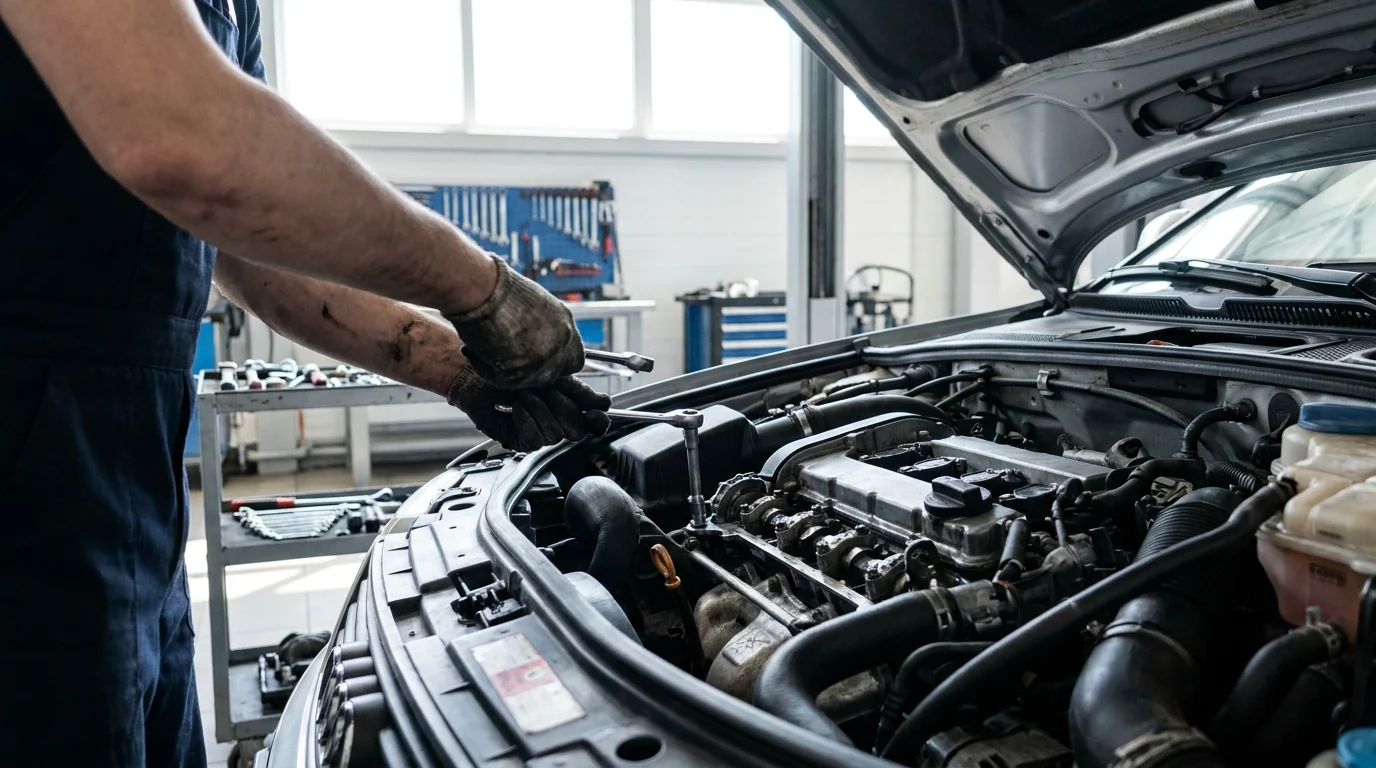
Do not try to 'treat' an engine knock with oil additives. If there is mechanical wear, an additive will not fix it, but only mask the problem for a short time, which can lead to even more serious consequences.
Squealing, Humming, and Whining: When Are Belts and Pulleys to Blame?
A high-pitched squeal that appears when starting the engine, especially in damp weather, or when you press the gas pedal sharply, is a classic sign of a problem with an accessory belt (alternator, air conditioner, power steering). The cause could be wear, stretching, low tension, or contamination from fluids. Although the belt itself is inexpensive, if it breaks, it can immobilize the car: the alternator will stop working (the battery will die), the water pump will fail (the engine will overheat), and the power steering will go out (the steering wheel will become 'stone-heavy').
A hum or whine that changes pitch with engine RPM usually indicates a worn bearing. This could be the bearings in the alternator, water pump, A/C compressor, or tensioner/idler pulleys. To locate the source, a mechanic uses a stethoscope or sequentially removes the load from each component (for example, by removing the belt). Ignoring such a hum is dangerous, as a seized bearing can cause the belt to snap, with all the ensuing consequences.
A separate case is a hum that appears or intensifies when turning the steering wheel. This is a characteristic symptom of a failing power steering pump. Most often, the cause is a low level of fluid, worn-out fluid, or air in the system. If not addressed in time, the pump can fail, and its replacement is much more expensive than a simple fluid top-off or change.
An engine rarely dies in silence. It always gives a warning with a knock, a squeal, or a vibration. Your job is to hear it in time, and ours is to understand it correctly.
If you hear an unusual sound, try to record it on your phone. A video where the sound can be heard changing with RPM can greatly help the mechanic at the shop to locate the problem faster during diagnosis.
Vibration and Rough Running: From Misfires to Worn Mounts
Vibration that is felt at idle and causes the engine to 'misfire' (run unevenly) is most often related to the ignition or fuel system. This means one or more cylinders are not working effectively. The most common causes are faulty spark plugs, high-voltage wires, ignition coils, or fuel injectors. This problem not only reduces power and increases fuel consumption but can also damage the catalytic converter due to unburned fuel entering it. The first step in finding the cause is computer diagnostics, which will show which cylinder is misfiring.
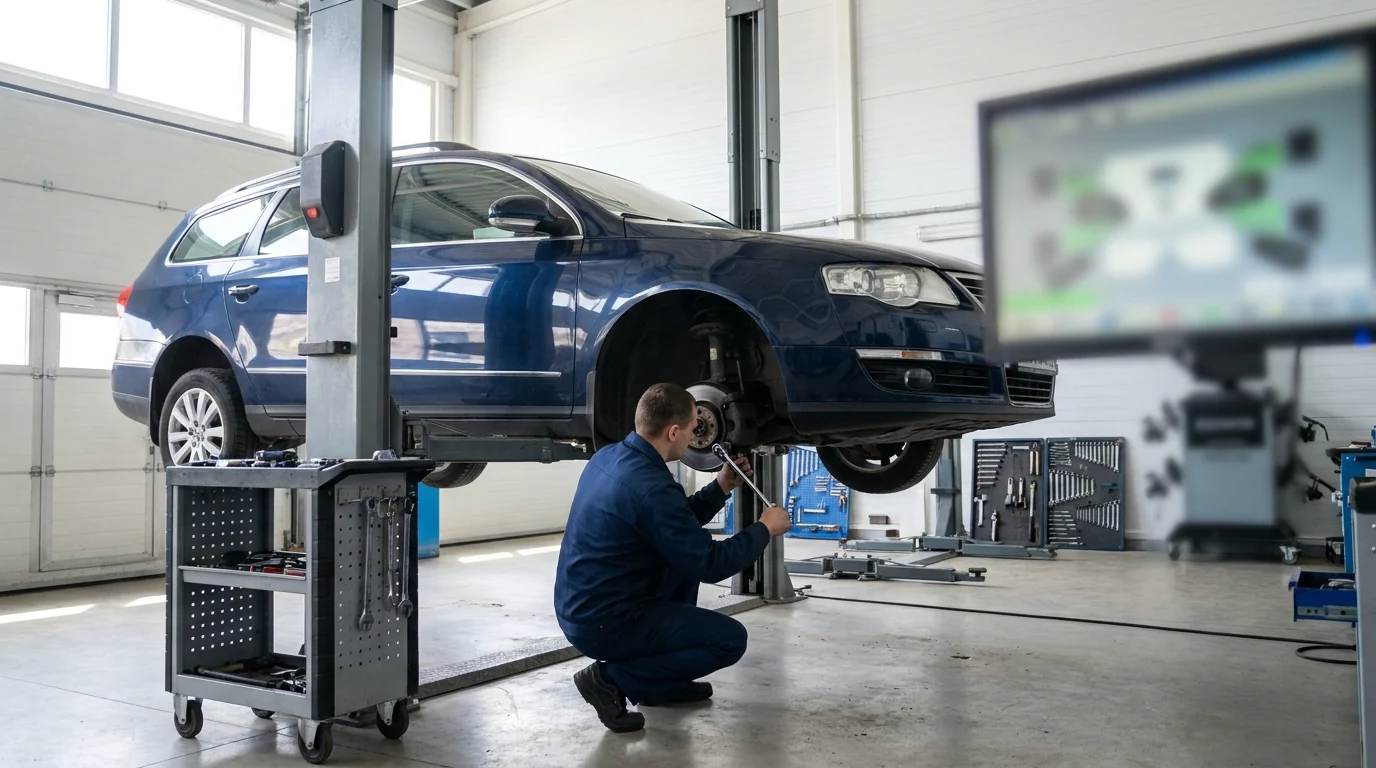
Another type of vibration is one that is transmitted to the car's body, steering wheel, and gear shifter, especially when starting from a stop, shifting gears, or accelerating hard. If the engine itself is running smoothly, the culprits are most likely worn engine or transmission mounts. Their job is to dampen the vibrations from the running engine. Over time, the rubber in the mounts cracks and tears, and the engine begins to make contact with the body, transferring all the vibration to it.
It's important to distinguish between engine vibration and vibration related to the chassis. If the vibration only appears at a certain speed (for example, above 80 km/h), the problem is likely not with the engine but with wheel imbalance. If the vibration is present even when the car is stationary (at idle), then the source of the problem must be sought in the engine or its mounts. Correctly identifying the source is the key to not wasting money on unnecessary repairs.
What Can You Check Yourself Before Visiting the Shop?
Before heading to the service center, you can perform a few simple checks that will help you better describe the problem to the mechanic. First, open the hood and check the level and condition of the main fluids: engine oil and coolant. A low oil level can cause knocking, and a strange color (like a light emulsion) can be a sign of serious problems with the head gasket. Also, inspect the accessory belts for cracks and delamination.
Second, try to locate the sound by ear. Start the engine when the car is cold and listen carefully to where the sound is coming from: top, bottom, from the side with the belts, or from the transmission side. Does the sound change when you press the gas pedal? Does it only appear under load, or is it constant? Is there a difference between a cold and a warm engine? The more information you can provide to the mechanic, the faster they will find the cause.
Third, pay attention to accompanying symptoms. Is the Check Engine light on? Has the car's performance or fuel consumption changed? Is there smoke of an unusual color coming from the exhaust pipe? All these details are important parts of the overall picture. However, remember: a self-inspection is not a diagnosis. Don't buy parts based solely on advice from the internet. The final conclusion must be made by a specialist after a full inspection.
How We Find the Exact Cause: The Stages of Professional Diagnostics
When you come to us at Tyraspilska, 12, we don't just start taking the engine apart. Professional diagnostics is a systematic process of elimination. It all starts with a conversation with you. We ask in detail when and under what circumstances the sound appeared, what preceded it, and how the car is behaving. This gives us the first clues on where to start looking.
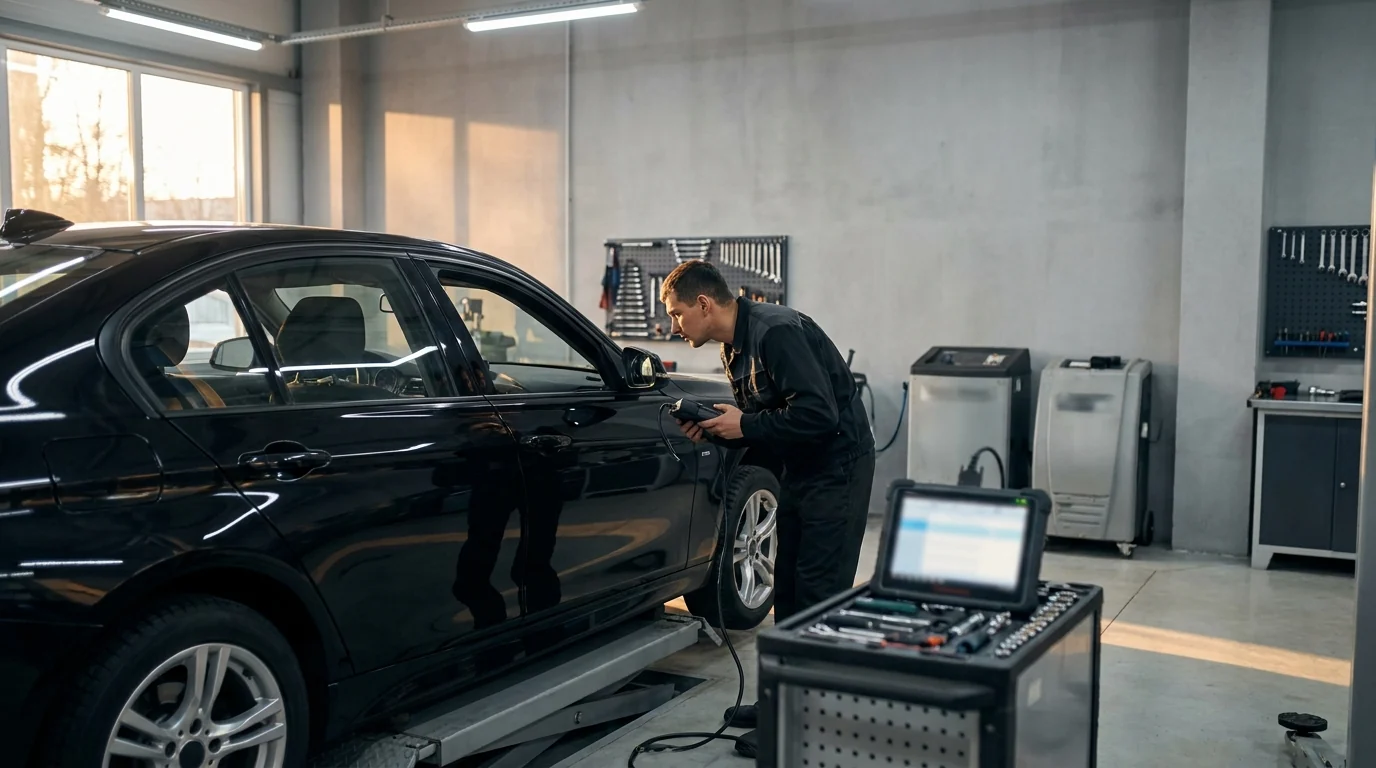
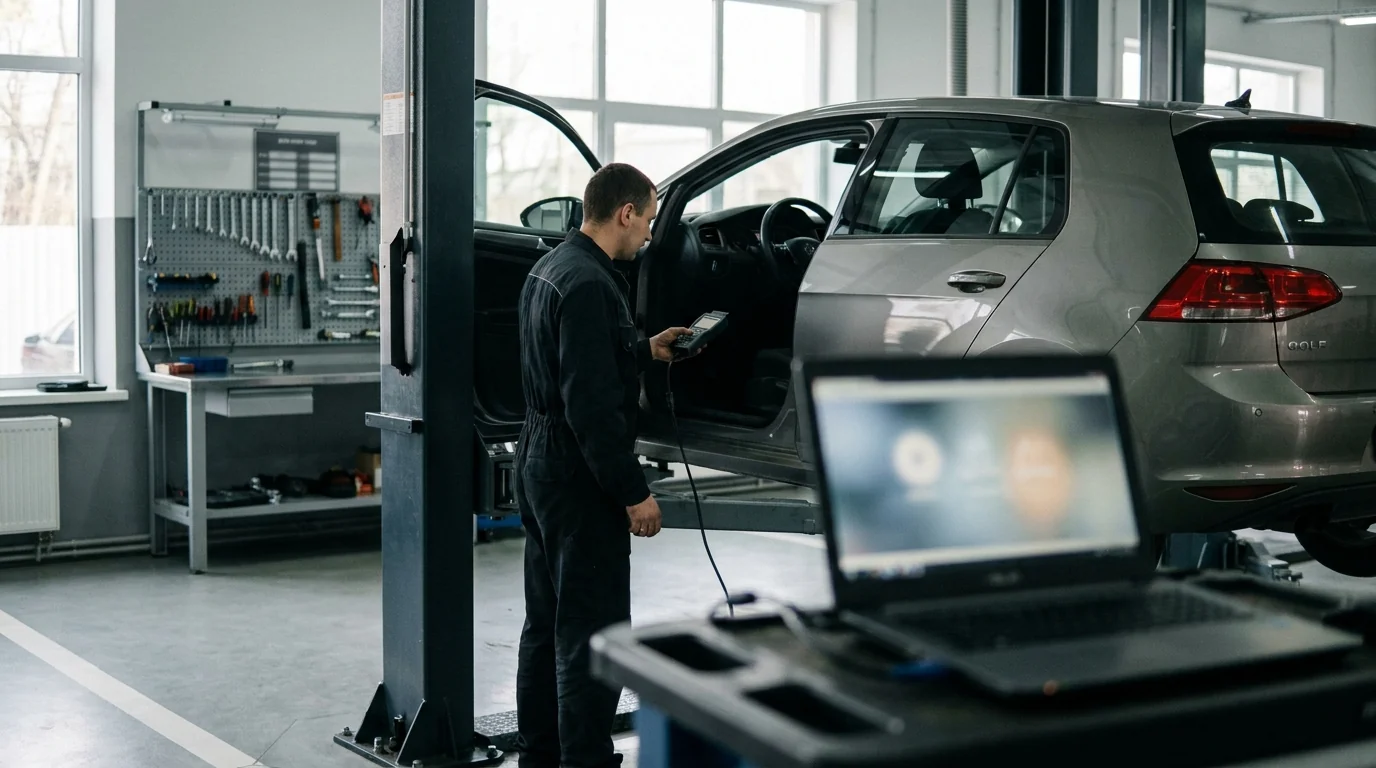
The next step is computer diagnostics. We connect a scanner and read the error codes, as well as analyze the engine's real-time operating parameters: fuel trims, ignition timing advance, data from oxygen sensors, and cylinder misfire counts. This allows us to identify problems in the electronic control systems that could be causing rough running or detonation.
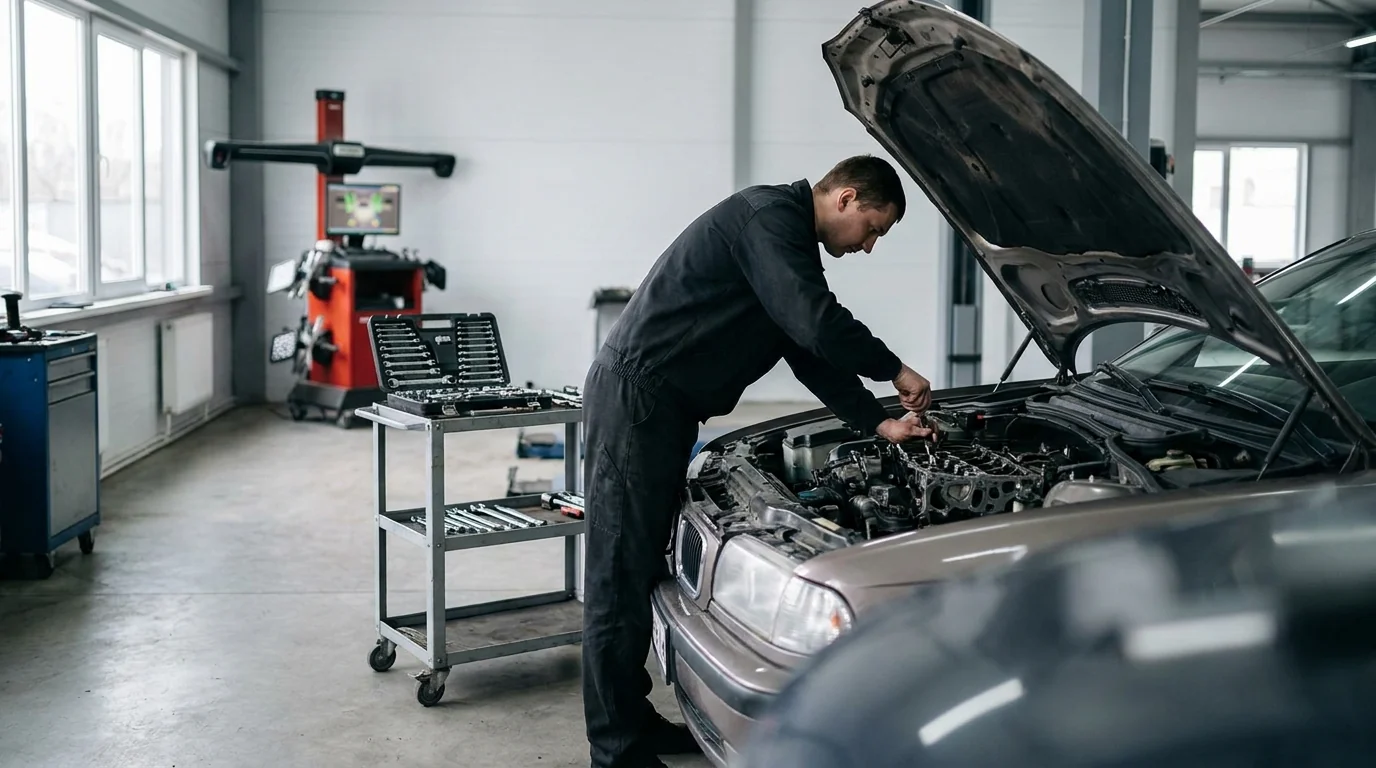
If the computer shows no deviations, we move on to instrumental diagnostics. Using a professional stethoscope, we can pinpoint the source of a mechanical knock. We also measure key parameters: compression in the cylinders and oil pressure in the system. Low compression in one cylinder points to problems with the valves or piston group, while low oil pressure indicates a worn pump or bearings. A full engine diagnostics at our shop costs from 900 ₴ and usually takes 30–45 minutes, allowing us to accurately determine the cause before starting any work.
Ignore or Repair: When a Noise Is a Harbinger of Expensive Repairs
Any strange noise is the language your car uses to talk about a problem. Ignoring these signals almost always leads to much more serious and expensive consequences. For example, a squealing belt, which seems like just an annoying trifle, can end with that belt snapping. If it's the timing belt, the result will be the valves 'meeting' the pistons, requiring a major cylinder head overhaul.
A light ticking from hydraulic lifters on a cold start might seem non-critical. But if you continue driving like that for months, it will lead to wear on the camshaft lobes, and then you'll have to replace not just the lifters but the expensive camshaft as well. The same goes for vibration from misfires: prolonged driving with this problem will inevitably kill the catalytic converter, the cost of which can be very high.
The most striking example is a connecting rod bearing knock. If ignored, it is guaranteed to end with a broken connecting rod that punches a hole through the cylinder block (a 'thrown rod'). After such damage, repairing the engine becomes impossible or economically unfeasible—only a replacement will do. The cost of an engine replacement is many times greater than the cost of a timely bearing replacement. Therefore, the main rule of a mechanic is: the earlier a problem is found, the cheaper it will be to fix.
The Bottom Line
Strange engine noises are not a death sentence, but a symptom that requires attention. Knocking, squealing, or vibration points to specific problems, from a worn belt to critical wear of mechanical parts. Timely and professional engine diagnostics is the cheapest and most reliable way to avoid an expensive engine overhaul. If you hear something unusual, don't delay—come in for an inspection.
Frequently asked questions
Book in a minute —
Leave your number and we'll call back. Or share the details so the technician can prepare.
Book nowWhat clients say.
Honest Google reviews. Unedited.