Car window tinting is primarily about comfort and protecting your interior, not just about looks. A quality film effectively blocks ultraviolet rays, saving plastic and upholstery from fading, and also significantly reduces how much the cabin heats up on sunny days. This lets you use the air conditioner less and makes drives more pleasant. Plus, tinting conceals your car's contents from prying eyes, adding privacy and security. At yeMekhanik, we perform window tinting meticulously, without dust or bubbles, selecting a film that meets both your preferences and legal requirements. The procedure usually takes about 2 hours, and the cost starts from 2 800 ₴.
Why tint your car and what types of film are there?
The main goal of tinting isn't to black out the car completely, but to create a comfortable microclimate. A properly chosen film serves several functions: it protects against ultraviolet radiation, which damages interior plastic parts and leather upholstery; it reflects some of the infrared (heat) radiation, so the cabin heats up less in the sun; it increases privacy by concealing passengers and personal belongings; and in the event of an accident, it holds glass fragments together, preventing them from scattering throughout the cabin.
There are three main types of films. Simple dyed films are the most budget-friendly option, providing only a visual darkening effect, but they fade over time. Metallized films have a thin layer of metal that reflects heat better but can interfere with radio and GPS signals. The most effective are athermal (ceramic) films. They are nearly transparent but are excellent at blocking heat radiation, don't interfere with electronics, and are the best choice for the windshield and for those who don't like heavy tinting.
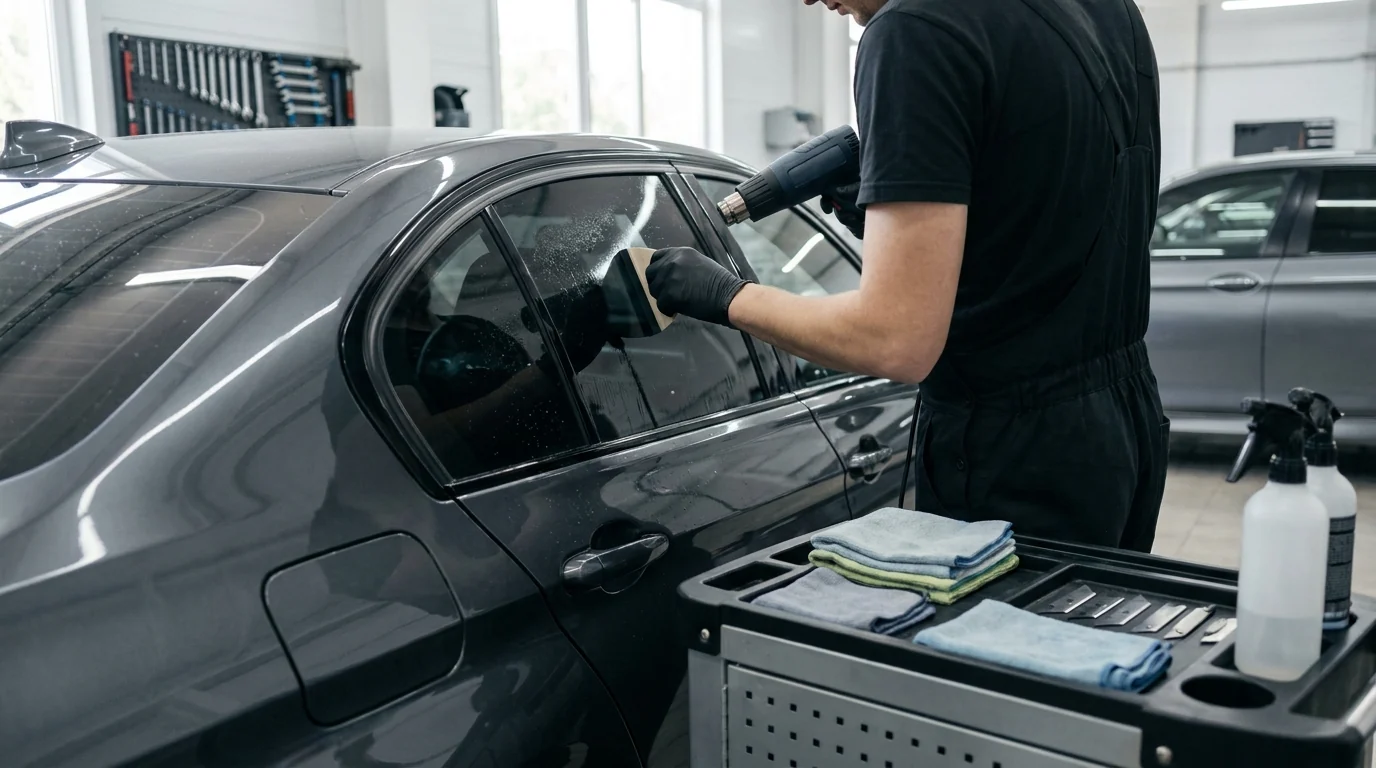
After tinting, you must not roll down the side windows for several days until the film has completely dried. We will provide you with detailed instructions after the work is completed.
What does the law say: what tinting is allowed in Ukraine?
This is a key question where it's easy to make a mistake. The law clearly regulates the light transmittance of the front half of the vehicle. The windshield and front side windows must be transparent enough to ensure good visibility, especially at night and in bad weather. The tinting of rear side windows and the rear window is generally not as strictly restricted.
We never advise clients to apply a 'blackout' tint to their front windows. It's not just a risk of getting a fine, but a direct threat to safety. An experienced technician will always suggest a film that provides comfort without violating established regulations. It's better to save money and nerves by choosing a legal option than to have problems on the road later.
Cheap film will fade in a season and start to bubble. It's better to do it right once than to re-tint it every year, throwing money away.
Athermal film isn't a magic bullet for heat; it won't replace your air conditioner. But it noticeably reduces the 'greenhouse effect' in the sun, and the steering wheel won't burn your hands. It's an investment in comfort, not a miracle.
How is tinting done and what's important to know after application?
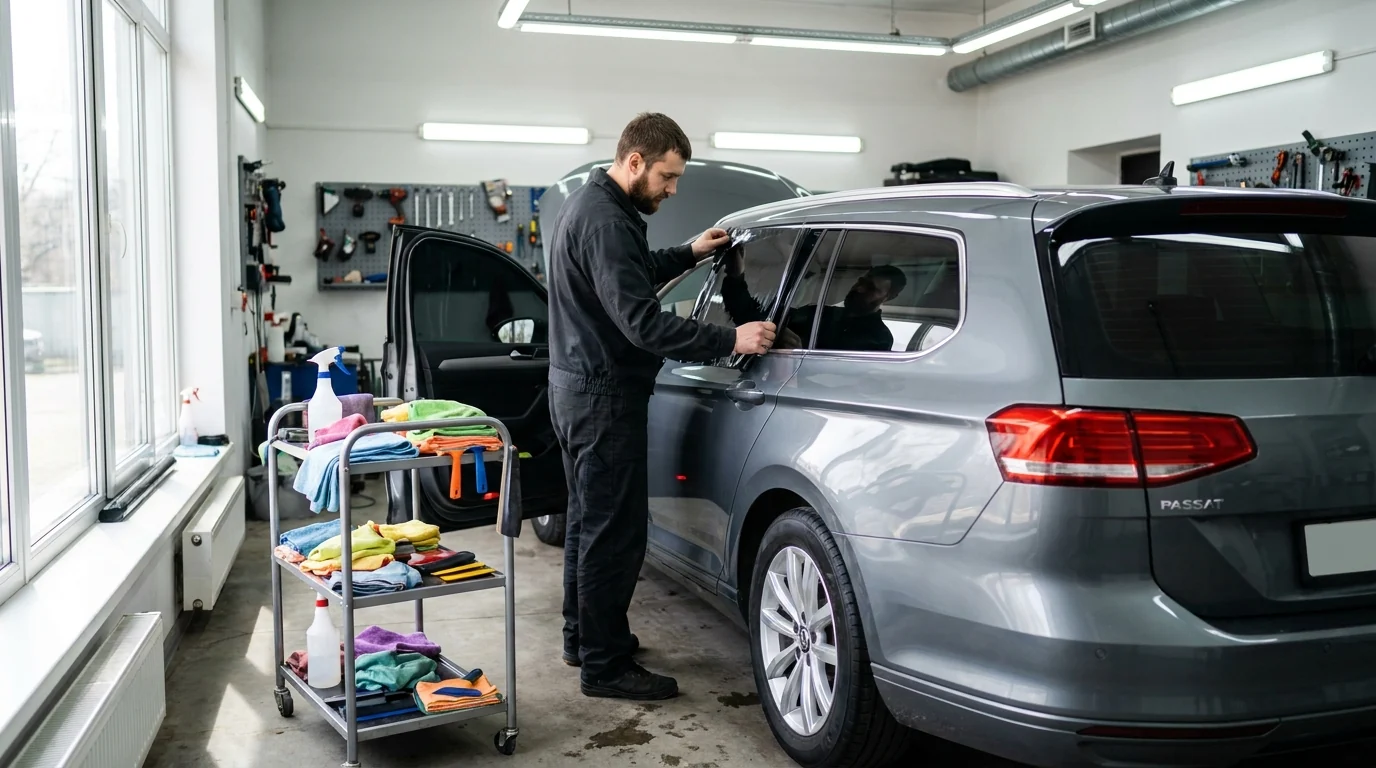
Quality car window tinting is a meticulous job that requires cleanliness and precision. The process begins with thoroughly cleaning and degreasing the glass on both sides. Next, the technician cuts the film using templates for the specific car model, applies it to the inner surface of the glass with a special solution, and carefully squeegees out all the liquid and air. The smallest speck of dust that gets under the film will stay there forever, which is why we work in a clean bay.
After application, the film needs time to fully set and dry. This usually takes a few days. During this period, you absolutely must not roll down the side windows, or you risk peeling up the edge of the film. You might notice small water spots under the film—this is normal, and the moisture will evaporate on its own. We always give our clients clear aftercare instructions.
Tinting and other protection: what else is worth doing for your car?
Tinting protects the interior, but the car's body also needs attention. If you want to protect your paintwork from chips, scratches, and road chemicals, it's worth considering a comprehensive service. We've covered this in more detail in our guide, "Paint Protection Film for Your Car: Why and for Whom".
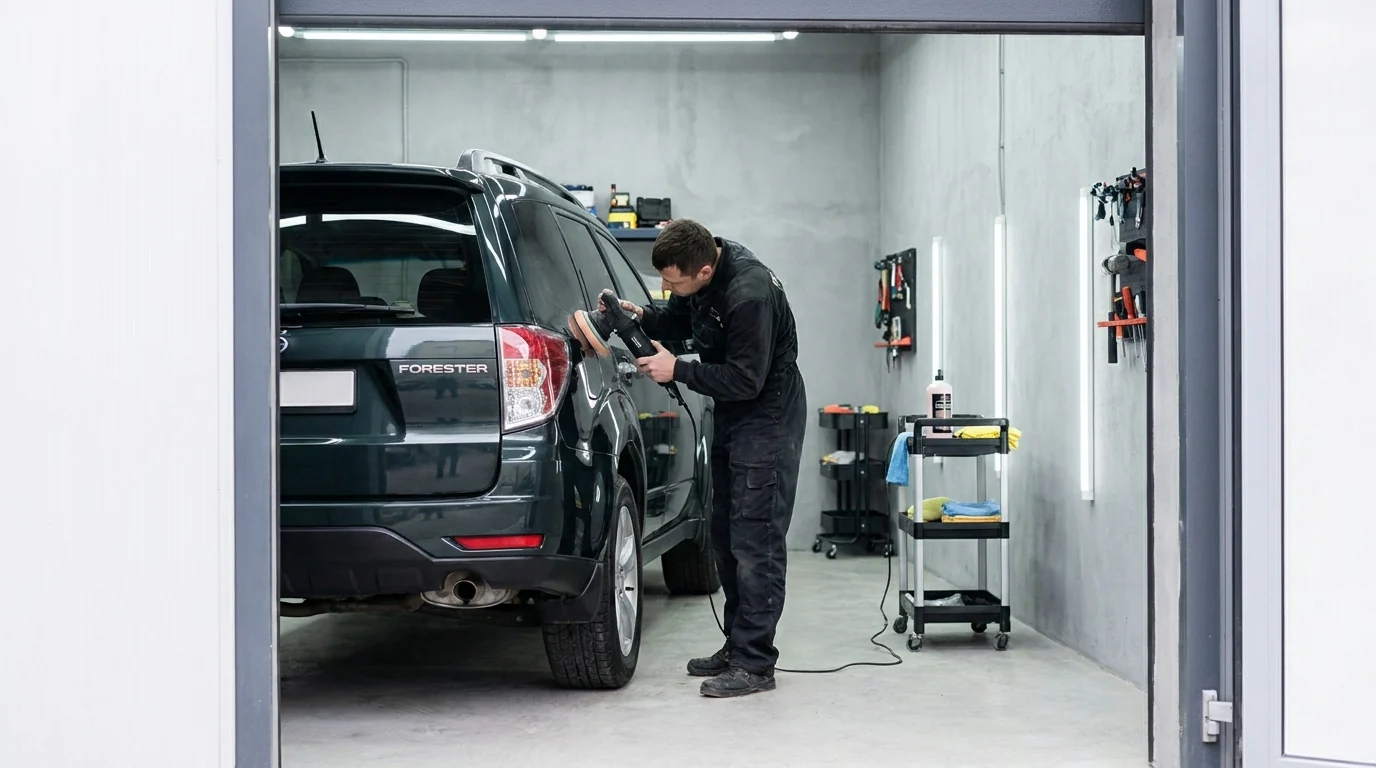
To achieve a perfect exterior look, tinting is often combined with body polishing. This removes minor scratches and restores the depth of color and shine, making a newly tinted car look much fresher and more well-maintained. A comprehensive approach always yields the best result.
The main points in brief
Tinting is an effective way to protect your car's interior from fading and overheating, but it's important to choose a film for the front windows that complies with legal standards. The quality of the job depends on the cleanliness and experience of the technician, and after application, the film needs time to dry completely, during which you should not roll down the windows.
Frequently asked questions
Book in a minute —
Leave your number and we'll call back. Or share the details so the technician can prepare.
Book nowWhat clients say.
Honest Google reviews. Unedited.