A pre-purchase inspection is a few hours that can save you from years of problems. Simply put: an independent mechanic inspects the car before you buy and tells you exactly what's wrong with it—hidden accident damage, rolled-back mileage, a 'tired' engine, corrosion, or electronic tampering. Why you need this: to avoid buying someone else's problem, to prevent getting stuck with a repair bill half the cost of the car, and to get rock-solid arguments to lower the price. At єМеханік, located at 12 Tyraspilska Street, a pre-purchase computer diagnostic costs 2 000 ₴ and takes about 1 hour. Compared to the price of a car, it's a small price to pay for peace of mind. The golden rule to remember forever: take the car to an INDEPENDENT service center, not one the seller recommended. A car that's 'already been checked and is perfect' is the first reason to take a closer look.
Checklist: What We Inspect Before You Buy
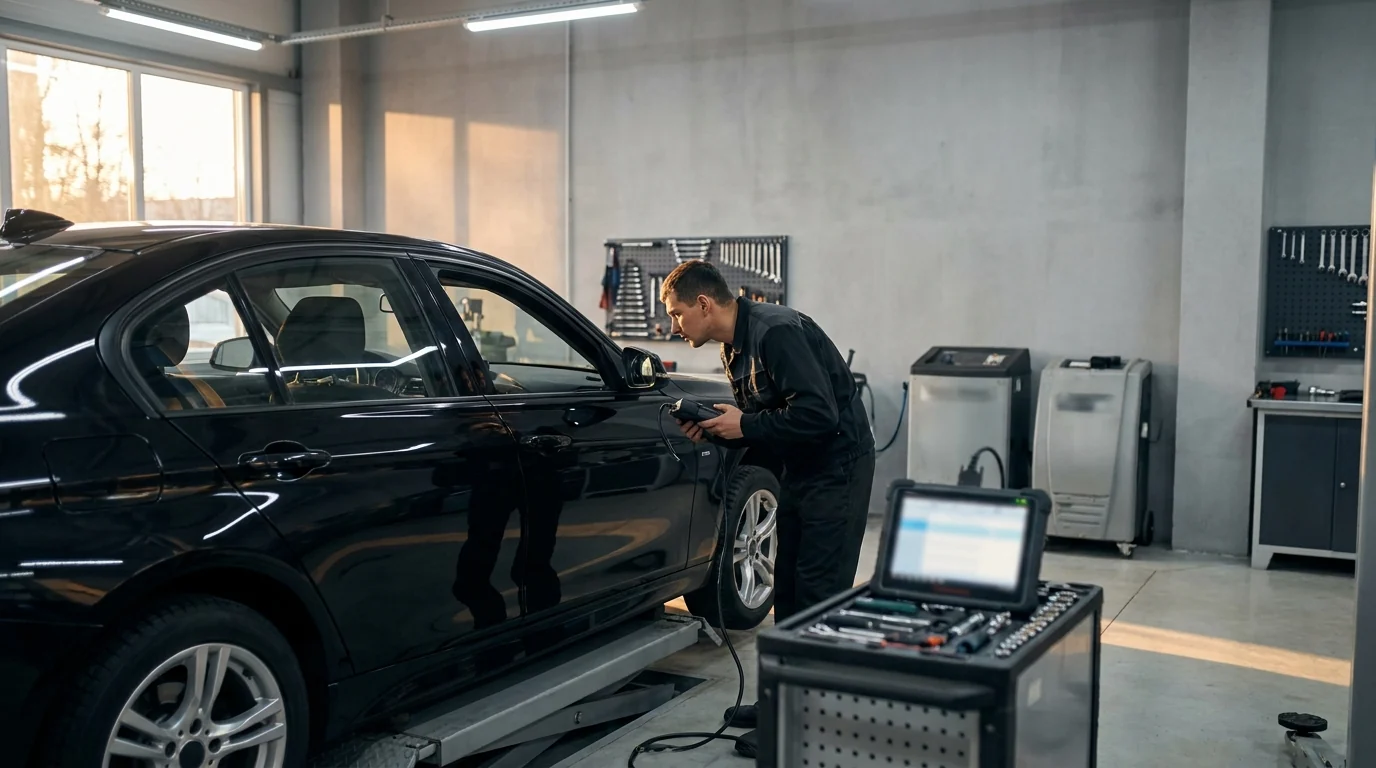
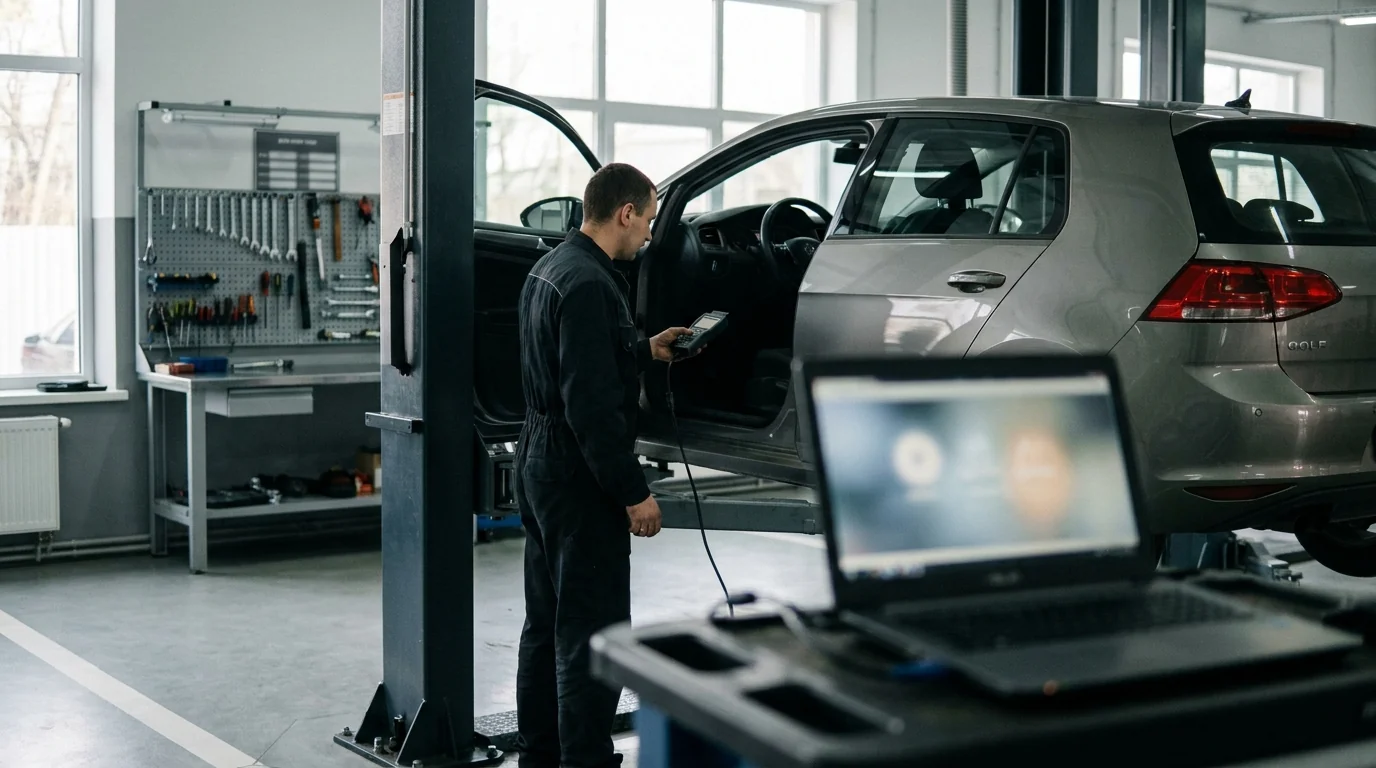
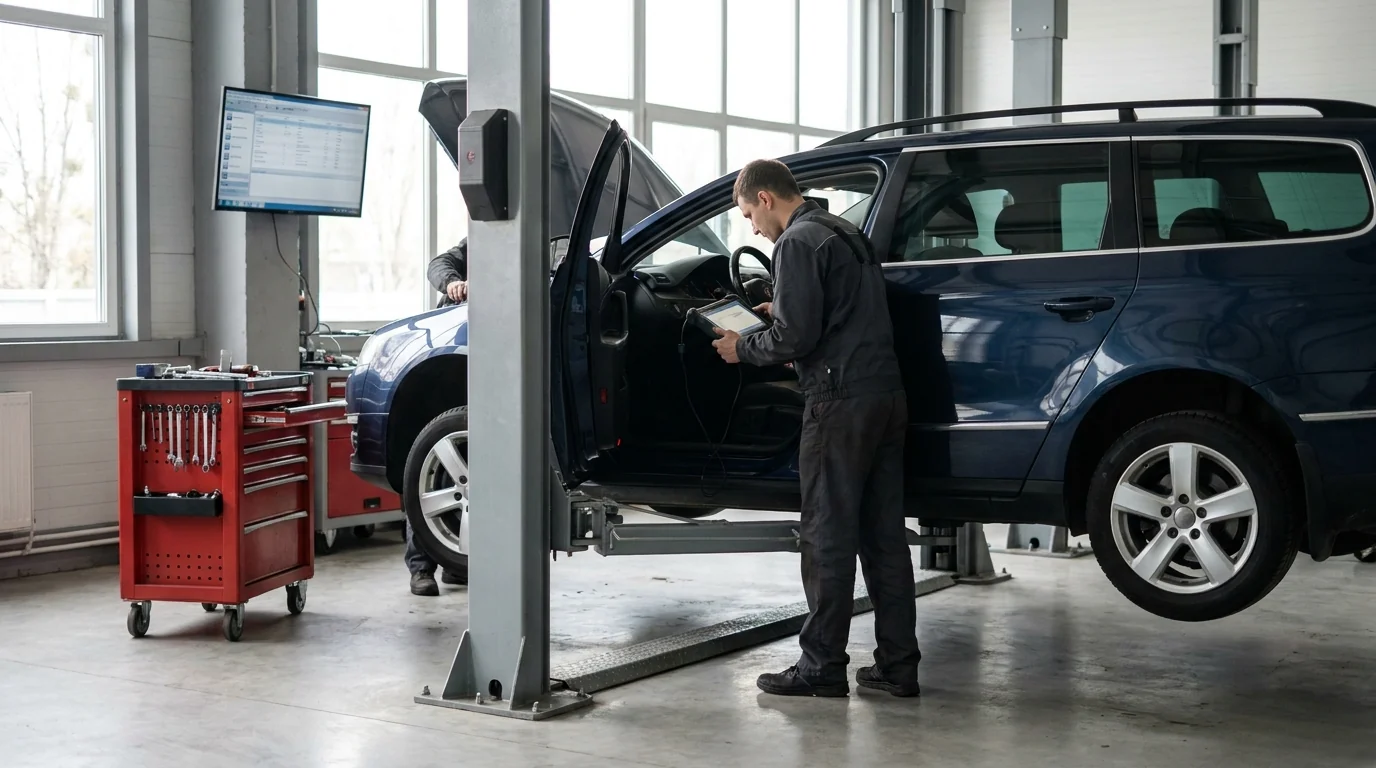
A full inspection is a system, not just 'listening to the engine.' Electronics: a computer scan of all control units for active and stored error codes, airbag status, ABS, engine performance, and fault history. Mileage: we cross-reference data from various modules (engine, steering, body control units)—discrepancies reveal a rollback.
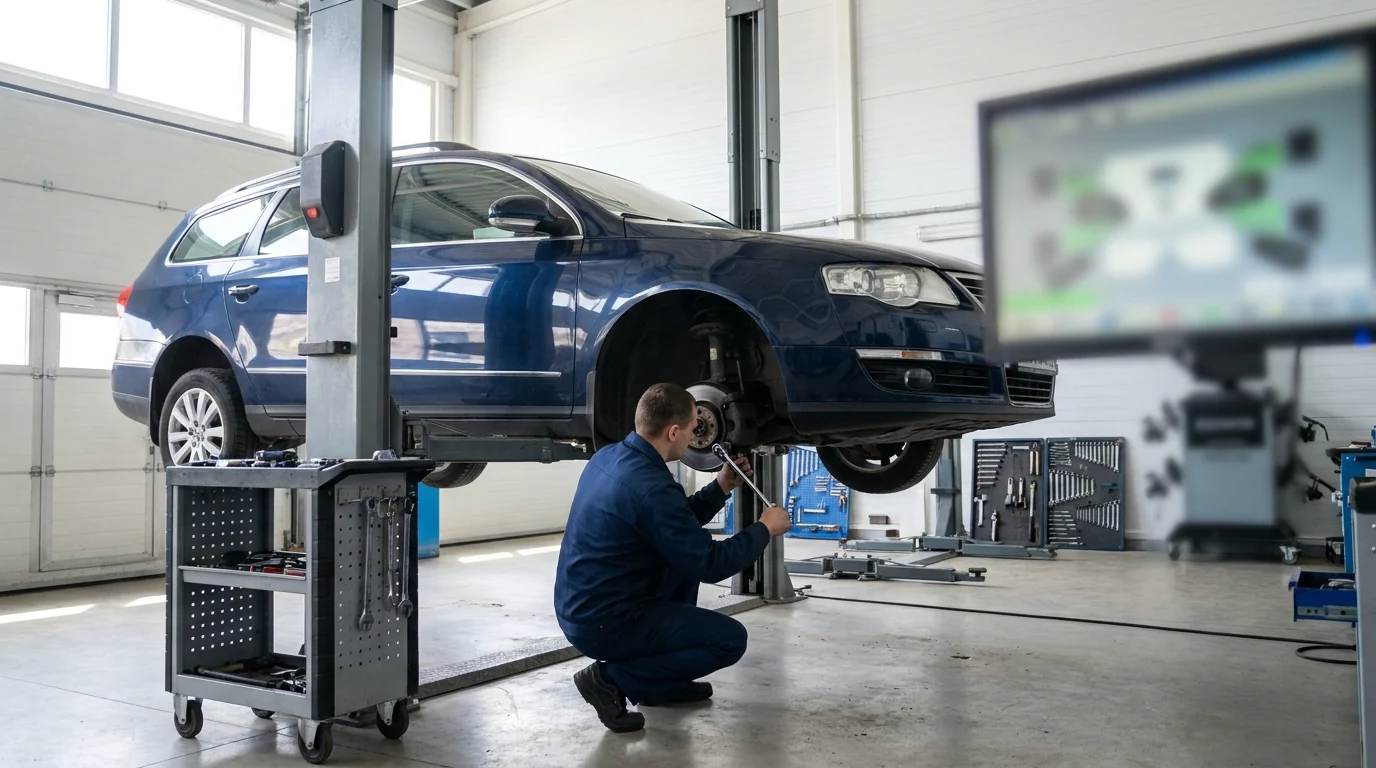
Body and Paintwork: we go over every panel with a paint thickness gauge. Factory paint thickness is typically around 100–150 µm; sharp spikes indicate repainting, body filler, and signs of an accident. Engine and Gearbox: we check for error codes, performance when cold and hot, leaks, and fluid conditions. Suspension—for play, knocks, and the condition of shock absorbers—is best checked during a lift inspection; and if the car pulled to one side or the wheel sat crooked on the test drive, it's worth knowing the signs of bad wheel-alignment angles. And always—documents and VIN: we check the number on the body against the documents and look for signs of tampering.
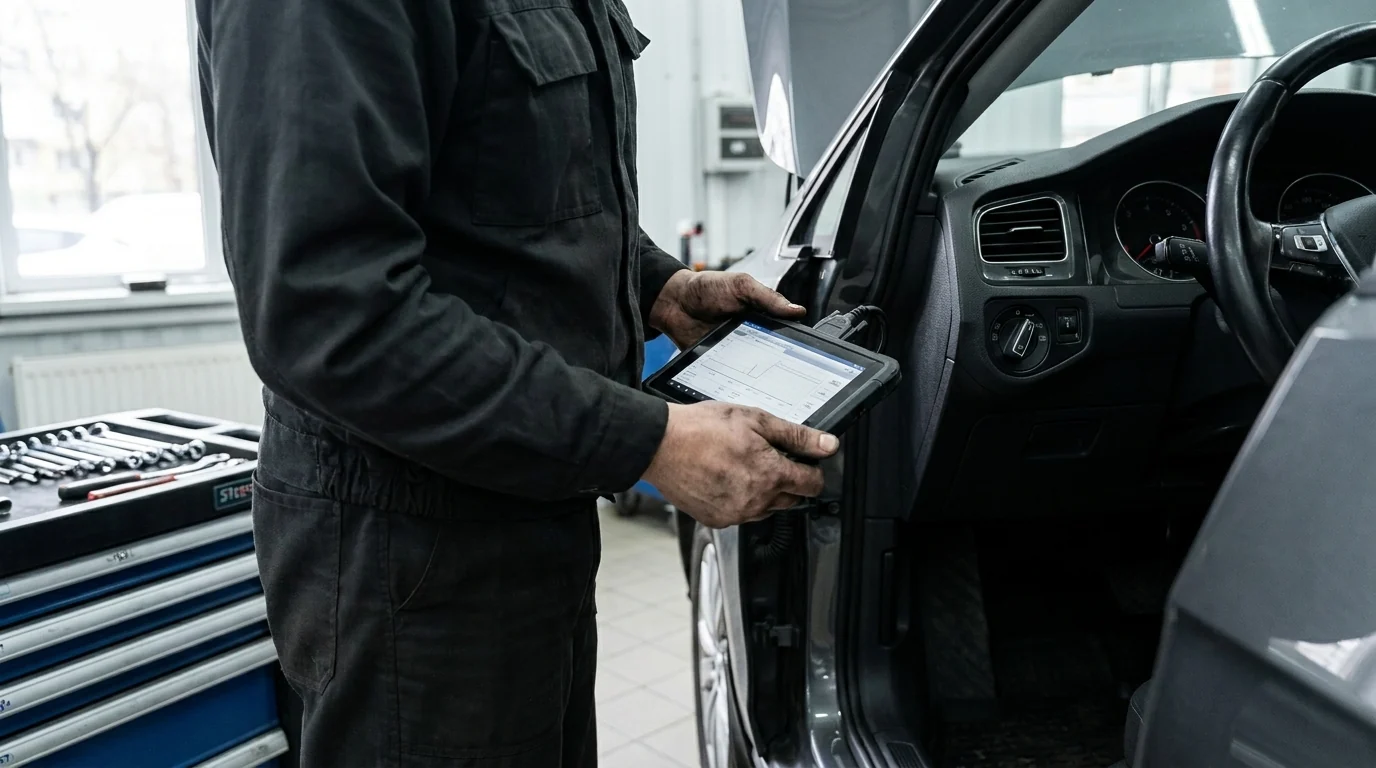
Always take the car to an independent service center, not the one recommended by the seller. A car that's 'already been checked and is perfect' is a reason to look closer.
Why a Visual Inspection Isn't Enough
A perfectly polished body and a clean interior can hide anything. Unlike the human eye, electronic equipment detects traces of accidents, replacements of key components, and odometer tampering. Control units store a history that is nearly impossible to erase without a trace—even if the seller cleared active error codes right before showing you the car.
This is why a 'clean' car with no error codes after a reset isn't always a good sign; sometimes, it's the opposite. A mechanic looks not only at what's currently wrong but also at stored codes and indirect signs of tampering. Your eye sees the polish—the equipment sees the history.
A few hours of pre-purchase diagnostics can save you tens of thousands on someone else's accident. The cheapest repair is the one you never have to make.
An inspection doesn't provide an absolute guarantee, but it uncovers hidden accident damage, mileage rollbacks, and corrosion that aren't visible during a standard viewing. A single discovered flaw can pay for the inspection through negotiation.
Red Flags: When to Walk Away
Some findings should make you think twice. A freshly painted engine bay or new bolts on the fender and hood mounts suggest a serious impact. If the paint thickness gauge 'jumps' all over one side, it points to a side impact or panel replacement. A mileage discrepancy between control units or a suspiciously new-looking interior for a 'low' mileage car indicates a rollback. A worn or tampered VIN, 'lost' documents, or a seller who is nervously rushing you are all stop signs in themselves.
It's important to be level-headed: a single red flag is a reason to negotiate, not always to run. However, signs of accident damage to the car's structural frame and problems with the VIN are in a different risk category. The decision is still yours, but you should make it with facts in hand, not based on the seller's words.
What You Get in Hand
The result is a clear report on the car's condition: what's critical, what can wait, and what's minor. For every defect found, you get a concrete reason to negotiate: an error code, a repainted panel, or worn suspension components are all specific arguments to lower the price. Most importantly, you get peace of mind, knowing you're making a decision based on measurements, not promises.
For a complete picture, the computer diagnostics should be combined with a mechanical inspection on a lift: a scan catches the electronic history (error codes, mileage, odometer tampering), while the lift reveals the hardware (corrosion, play, welding marks). Each part covers the other's blind spot. A real story from our shop: a 'perfect' Toyota, looking like it just left the showroom—the thickness gauge revealed a repainted quarter panel and body filler on a pillar; the car had been in a side-impact collision. The buyer didn't walk away, but he had leverage for a serious price reduction. Without the inspection, he would have simply overpaid for someone else's accident.
Frequently asked questions
Book in a minute —
Leave your number and we'll call back. Or share the details so the technician can prepare.
Book nowWhat clients say.
Honest Google reviews. Unedited.