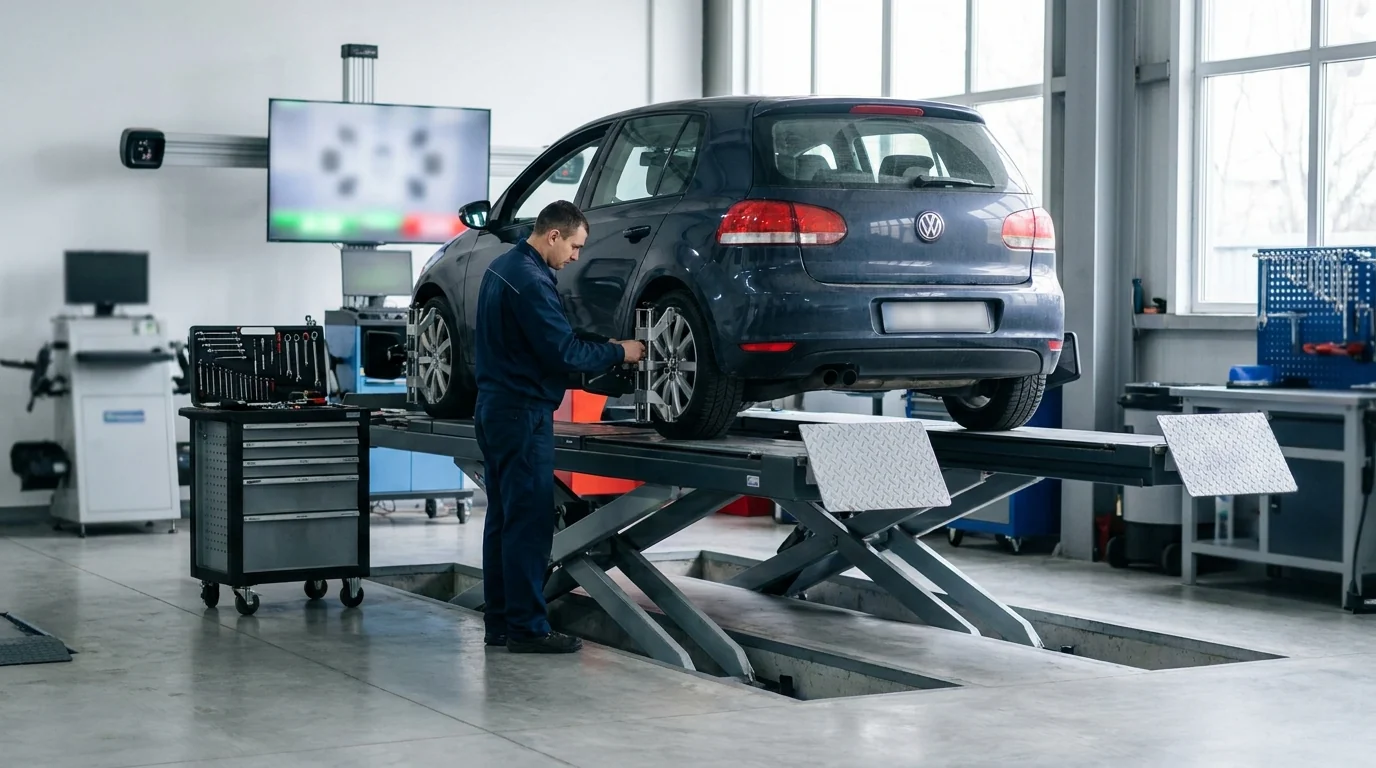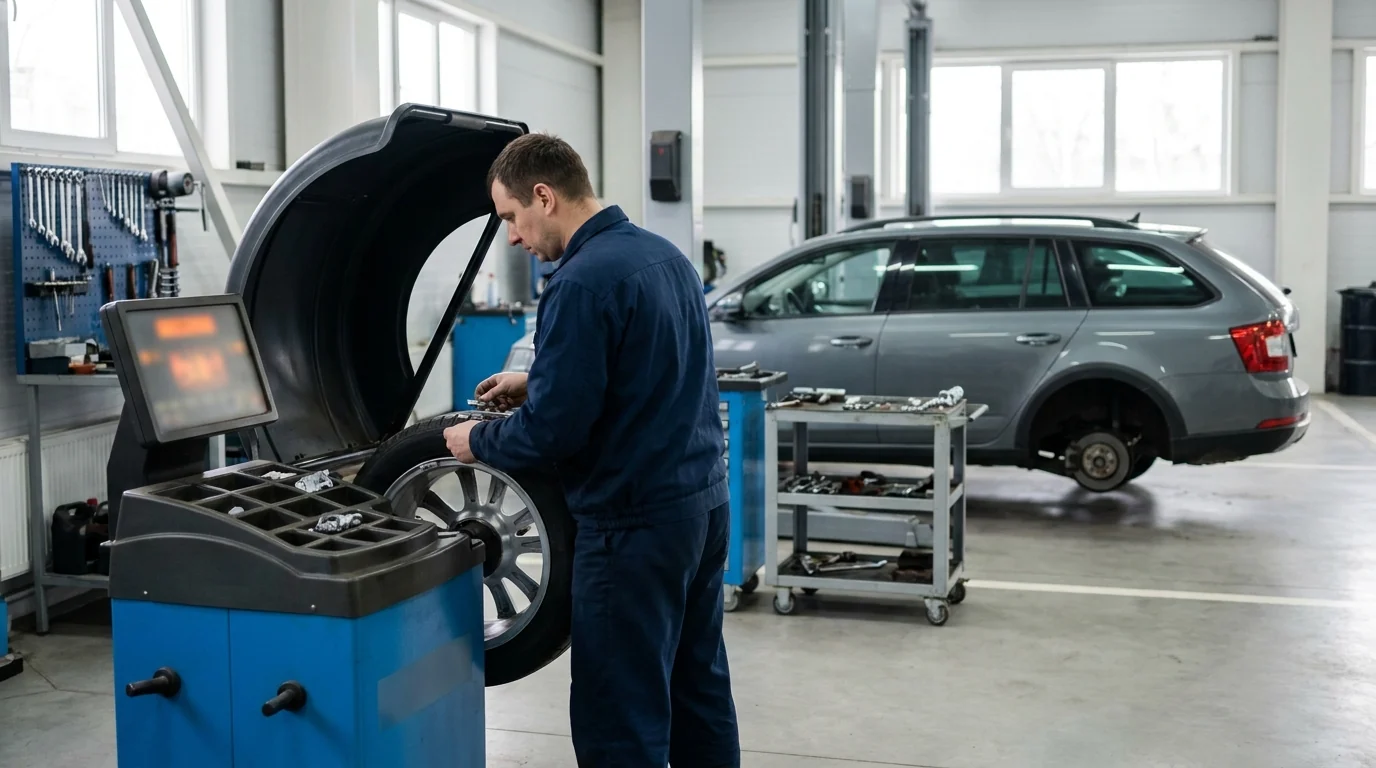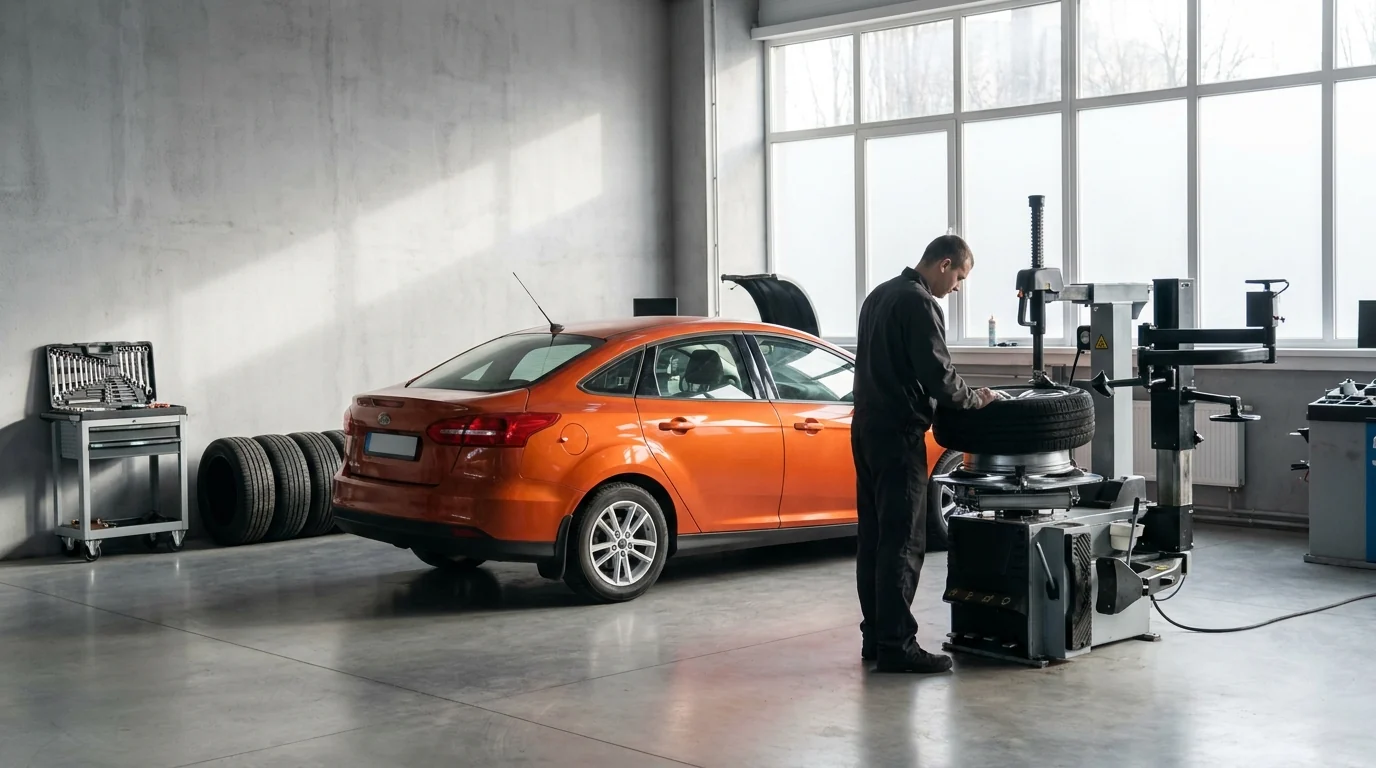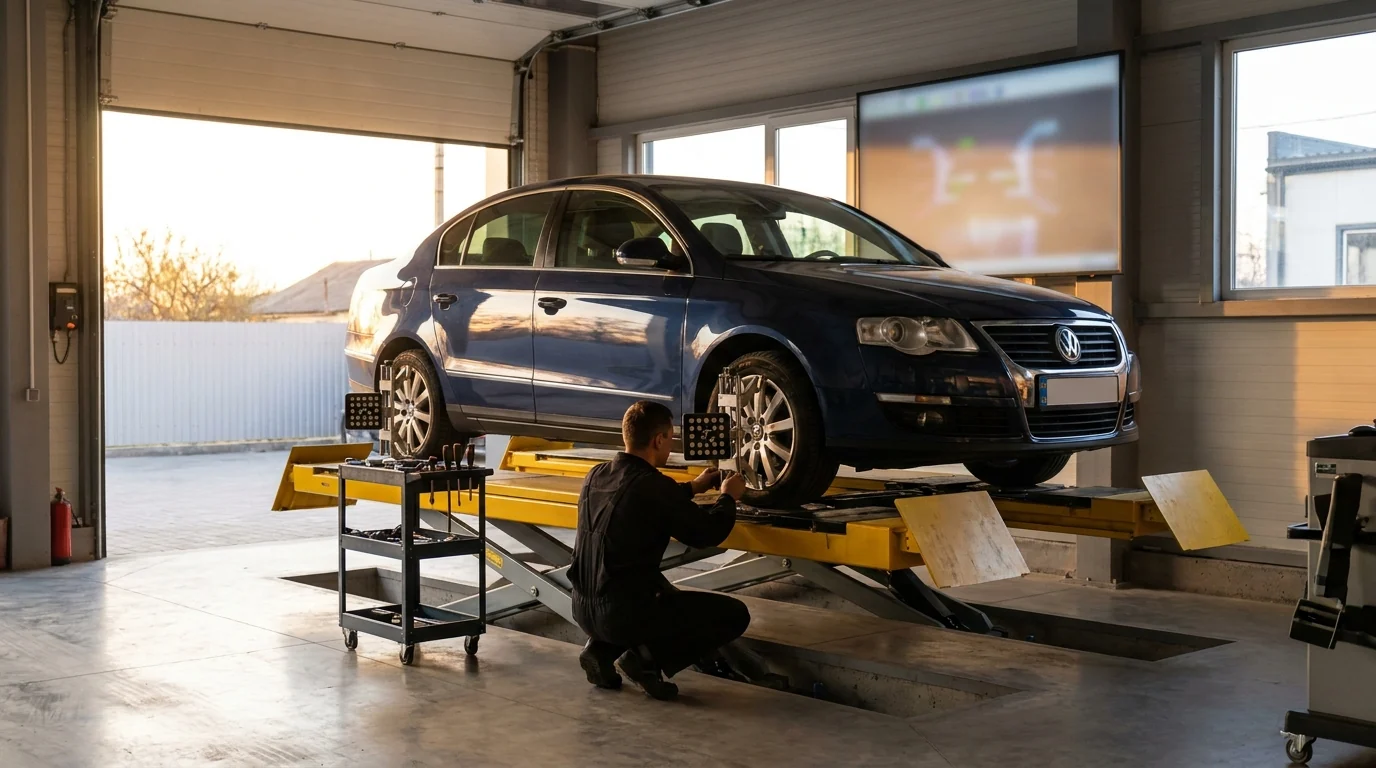
3D wheel alignment is a precise adjustment of wheel angles using a computerized rig with cameras. Unlike older methods, a 3D system creates a three-dimensional model of all wheel positions, compares it to your car's factory specifications, and allows the mechanic to set the angles with maximum accuracy. The main goal of the procedure is to ensure even tire wear, stable handling, and driving safety. If you notice your car pulling to one side, the steering wheel is off-center, or your tires are wearing on the edges, these are the first signs that it's time to adjust the geometry.
What is 3D Wheel Alignment and How Does the Rig Work?
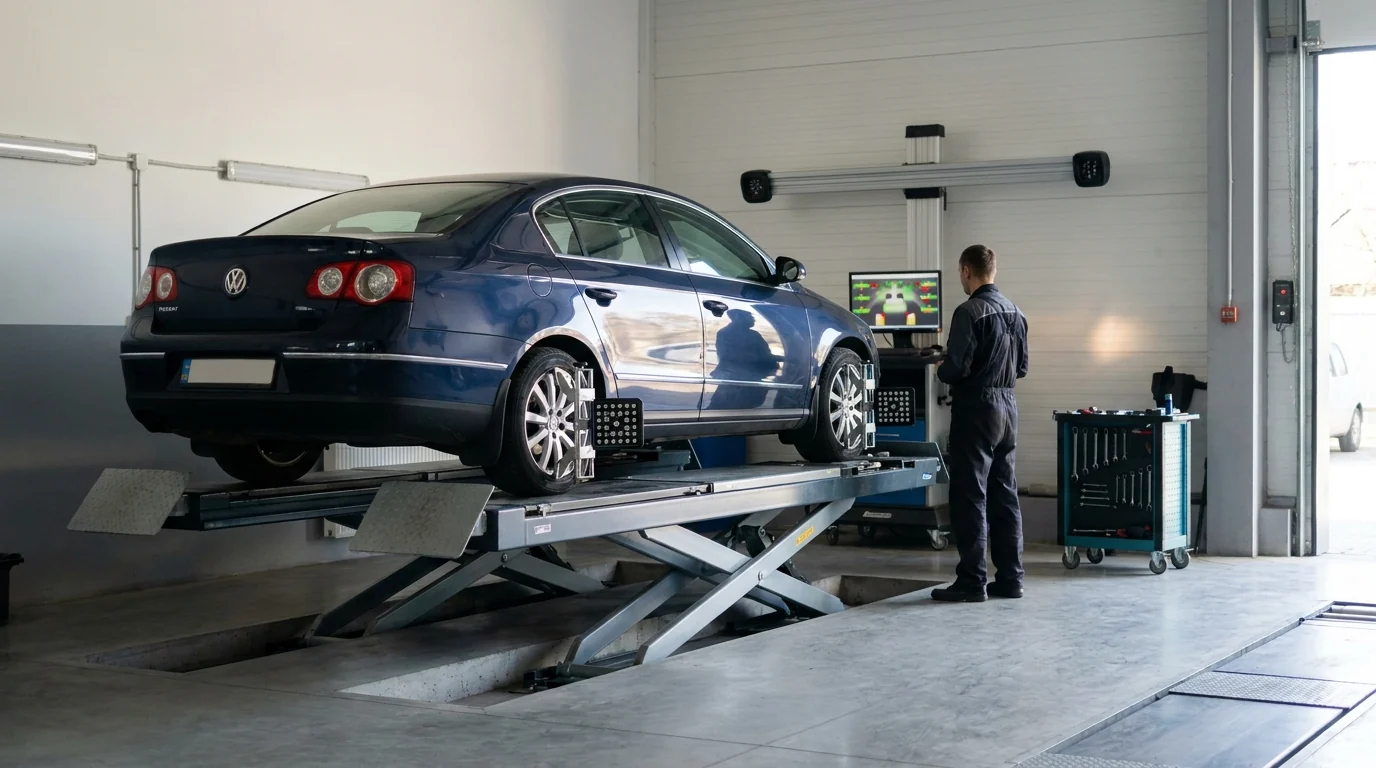
The procedure on a 3D rig, such as a Hunter, involves several steps. First, the car is driven onto a lift, and special targets with a high-contrast pattern are attached to each wheel. Next, cameras mounted on a post in front of the car read the position of these targets in space. A computer processes the data and builds an accurate 3D model of the chassis, showing the current values of the three main angles: toe, camber, and caster.
The mechanic sees any deviation from the manufacturer's standard on the screen and performs mechanical adjustments using special rods and eccentric bolts on the suspension. The advantage of 3D technology is that it accounts for all the interdependencies between the angles, allowing for a perfect balance that is impossible with outdated optical or laser methods. The result is a car that drives straight, a perfectly responsive steering wheel, and tires that last as long as possible.
A wheel alignment cannot be set correctly if there is play in the suspension. First, a diagnostic and repair of the suspension, then the alignment. Otherwise, it's money down the drain.
How Incorrect Wheel Angles 'Kill' Your Tires
Uneven tire wear is the most obvious and expensive consequence of misaligned angles. Each type of deviation leaves its own characteristic 'footprint.' For example, if you have excessive negative camber (wheels tilted in at the top, like a 'house'), the inner part of the tread will wear out much faster. With positive camber, the outer part wears. The situation is similar with toe: if the wheels point inward (positive toe), the outer edge of the tire will be 'eaten' away, and if they point outward, the inner edge will wear.
Ignoring these problems leads to the premature replacement of a set of tires, the cost of which is many times greater than the price of an alignment. This is a classic case where prevention is cheaper than a cure. If you're not sure whether you need an alignment, read more about the signs your car needs a wheel alignment, or simply stop by for a check during your seasonal tire fitting.
The most expensive tires are the ones ruined by bad alignment. An alignment is always cheaper than a new set of tires.
A 3D rig is a precision instrument, not a magic wand. It won't fix the consequences of a severe impact that bent a control arm or a steering knuckle. In such cases, a thorough suspension repair is needed first, followed by the alignment.
Why Aligning Wheels Without a Suspension Check is a Mistake
The most important rule any honest mechanic will tell you is this: performing a wheel alignment on a faulty suspension is throwing money away. If there is play in the control arms, bushings, tie rod ends, or ball joints, the adjusted angles will be off within a few kilometers. The wheels will wobble within the limits of this play, and no 3D rig, not even the most advanced one, can lock them in the correct position.
That's why we always perform a suspension diagnostic before an alignment. If we find worn parts, we first recommend a suspension repair. Only after eliminating all the play can we guarantee that the geometry settings will be accurate and long-lasting. This isn't an attempt to sell additional services; it's the only correct approach that saves you money in the long run.
The Bottom Line
3D wheel alignment is a high-precision adjustment of wheel angles for even tire wear and safe handling. The procedure is effective only on a healthy suspension, which is why it must always be preceded by a suspension system diagnostic.
Frequently asked questions
Book in a minute —
Leave your number and we'll call back. Or share the details so the technician can prepare.
Book nowWhat clients say.
Honest Google reviews. Unedited.