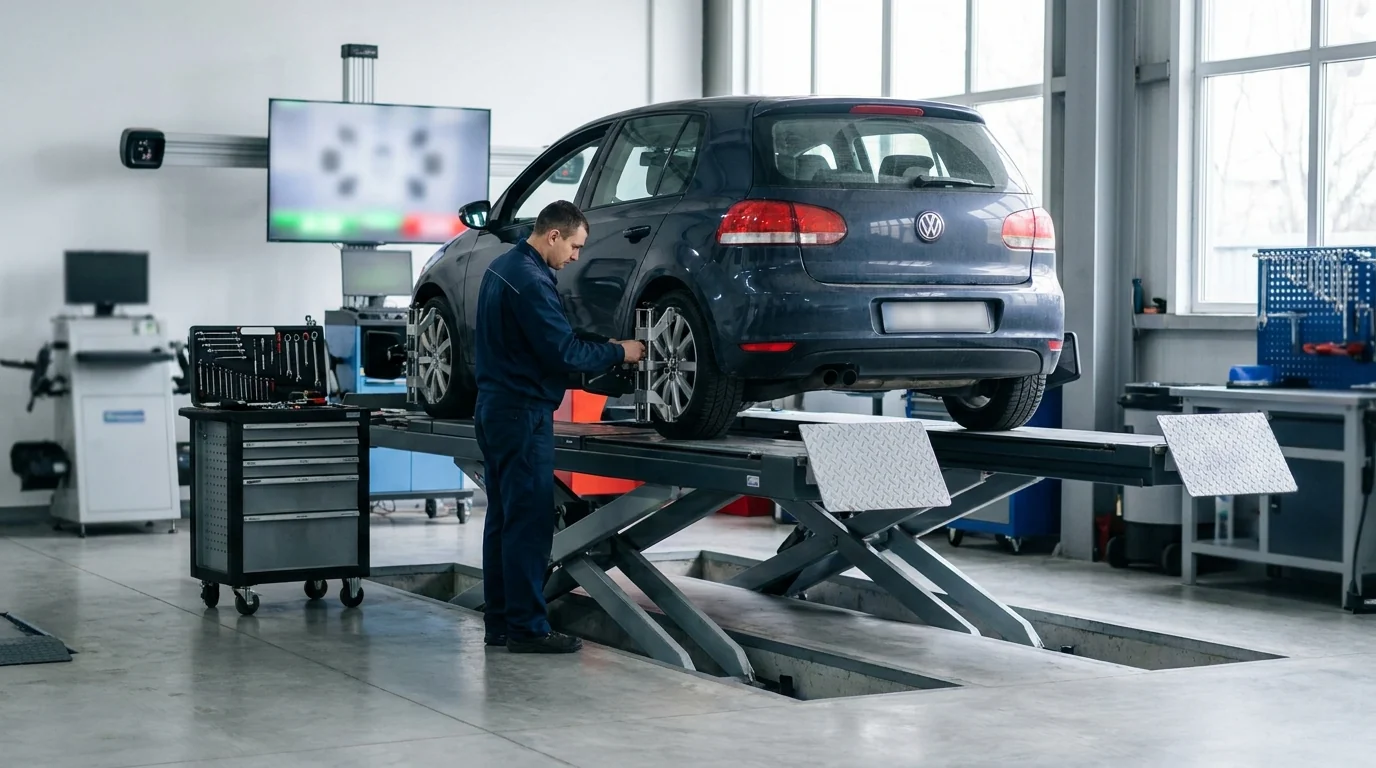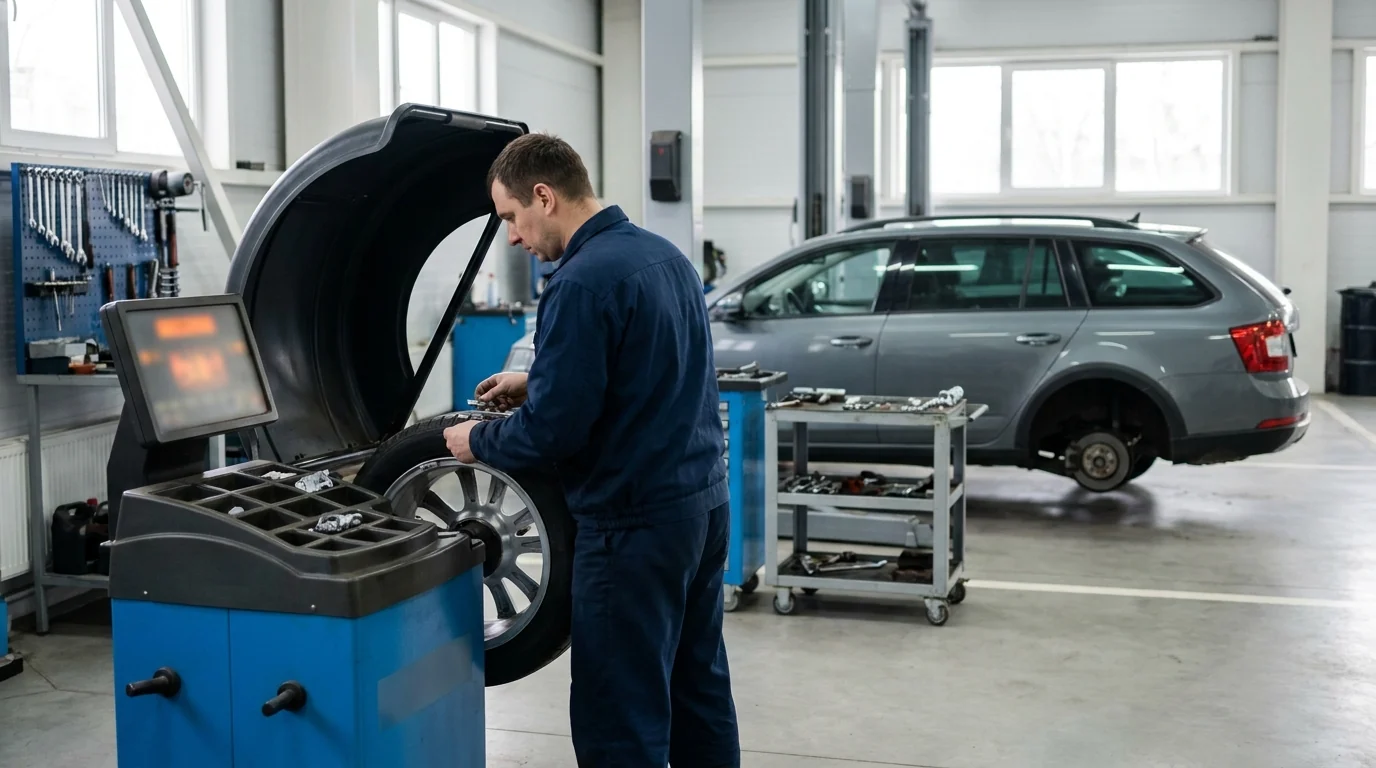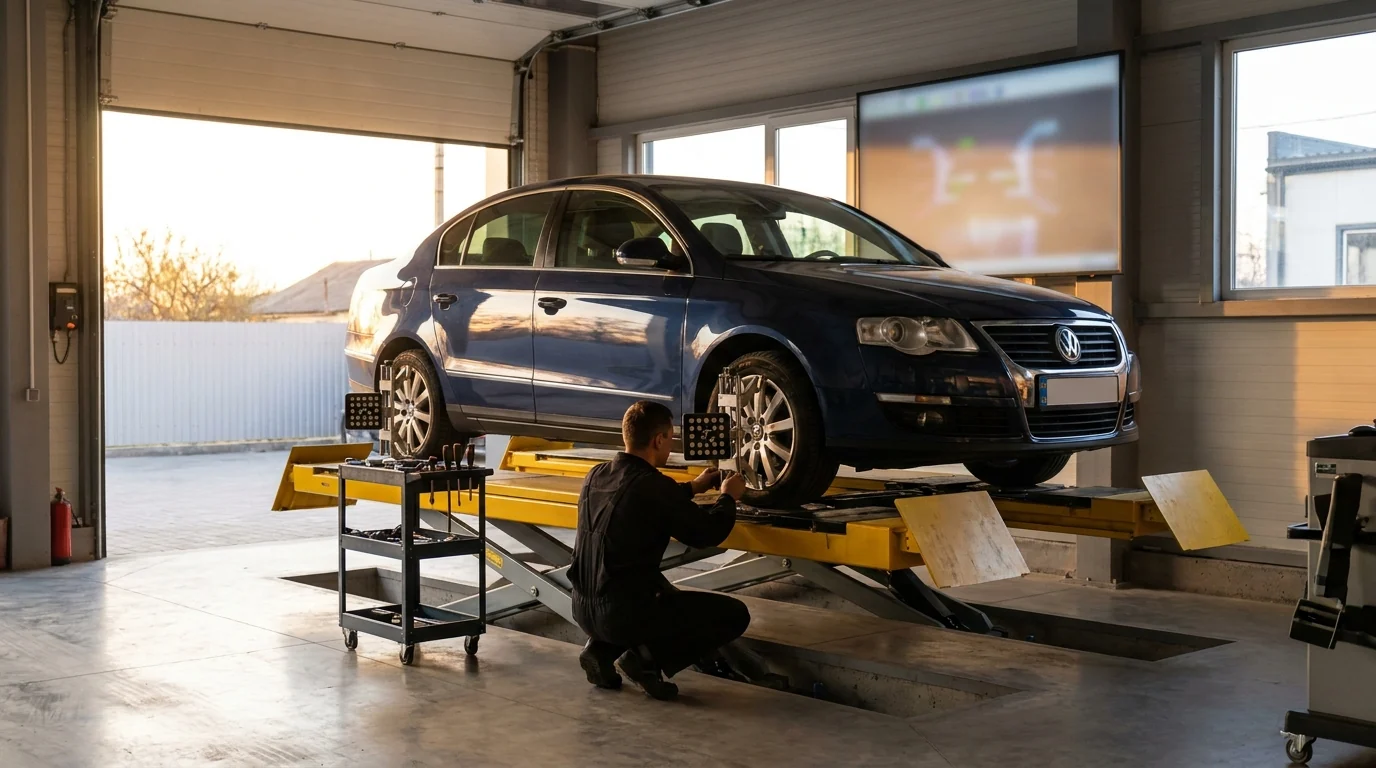
Tire fitting at a service center is not just a seasonal "tire swap"; it's a comprehensive technical procedure that directly affects your car's safety and handling. Unlike roadside stands, a professional service guarantees not only a tire change but also precise balancing, correct wheel tightening with a torque wrench, and a concurrent assessment of the suspension components. This is an opportunity to spot uneven tread wear, which indicates problems with suspension geometry, and prevent expensive repairs down the line. Quality tire fitting is an investment in the longevity of your tires and your own safety on the road.
What distinguishes a service center tire fitting from a basic swap
The main difference lies in the approach and equipment. A garage or mobile tire service often focuses on speed: wheels are removed and tightened with an impact wrench "by eye," balancing is done on an old machine, and no one looks at the condition of the brake discs or dust boots. It's a fast but risky path.
At a professional service center like eMechanic, the process is different. First, we use modern machines with protective plastic pads to avoid scratching your alloy wheels. Second, every wheel undergoes mandatory wheel balancing on calibrated equipment after mounting. Third, and this is critically important, the final tightening of wheel bolts or nuts is done exclusively with a torque wrench set to the force recommended by your car's manufacturer. Bolts over-tightened with an impact wrench are not just a risk of damaging the threads, but a danger on the road.
Furthermore, while the wheels are off, the mechanic has an opportunity to visually assess the condition of the brake pads, discs, hoses, and suspension elements. This is a free bonus that can identify a problem early and save you significant money. A simple tire fitting turns into a mini-suspension diagnostic.
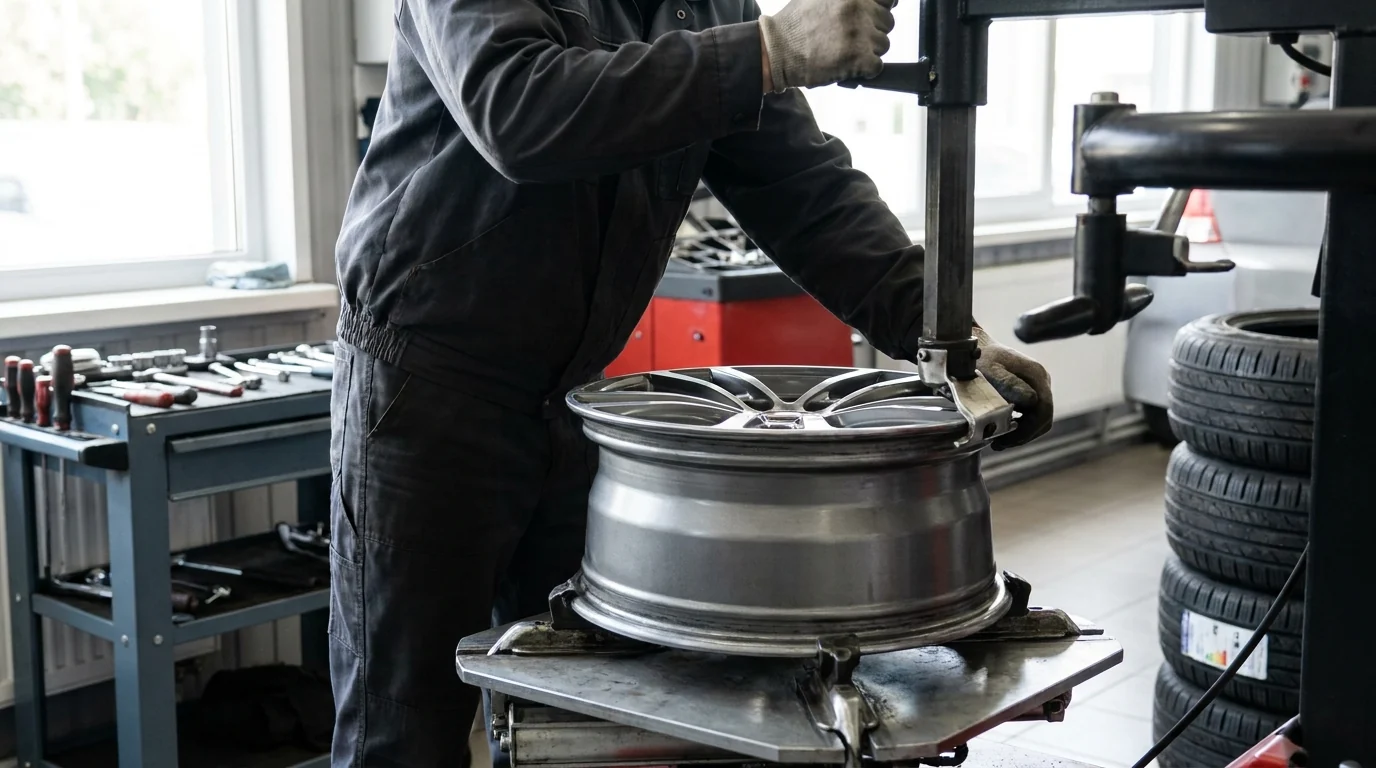
Never allow wheel bolts on alloy wheels to be fully tightened with an impact wrench. The correct procedure is: start them by hand, snug them up with the impact wrench on its lowest setting, and perform the final tightening exclusively with a torque wrench.
The quality tire fitting process: what a driver should look for
Even if you're not familiar with the technical details, there are several markers that distinguish quality work. Pay attention to cleanliness: before installing the wheel on the hub, its contact surface should be cleaned of dirt and rust. This ensures a snug fit for the wheel and prevents steering wheel wobble, which can be mistakenly blamed on poor balancing.
Observe the process of mounting the tire onto the wheel. The technician should lubricate the tire beads with a special paste so the rubber seats easily and without damage. Working "dry" can lead to micro-tears in the cord, shortening the tire's life. After mounting, the wheel is inflated to the recommended pressure, and the valve stem is checked for leaks.
And, of course, balancing. For alloy wheels, adhesive weights should be used, which are attached to the inner side of the wheel and don't spoil its appearance. For steel wheels, clip-on weights on the rim are acceptable. If you feel a vibration in the steering wheel at speeds of 80-100 km/h after a tire change, the balancing was done incorrectly.
A cheap tire change saves you money today, but a quality one saves you from much more expensive suspension repairs tomorrow.
Wash your car, and especially the wheels, before heading to your tire fitting appointment. It's easier and more pleasant to work with clean wheels, and most importantly, dirt won't get on the machine and affect the accuracy of the balancing.
When a tire change is a reason for a suspension diagnostic
A seasonal tire change is the perfect time to check your suspension geometry. When you bring in your removed set of wheels, carefully inspect the tread. If you see that one side of the tire (inner or outer) is worn significantly more than the other, it's a direct indicator that the car needs a wheel alignment. Ignoring this problem will cause your new set of tires to be "eaten up" just as quickly.
A typical situation: a car owner complains that their new, expensive tires started to make noise or wear unevenly after just a few thousand kilometers. The most common cause of this symptom is misaligned wheels, which are not visible to the naked eye but are clearly seen on the tread as a characteristic "saw-tooth" pattern along one edge. A timely suspension geometry check during tire fitting allows you to catch the problem before a new set of tires is ruined.
Don't wait for obvious symptoms. If you're not sure what uneven wear looks like, just ask the mechanic at the service center. An honest mechanic will always point out a problem, even if it wasn't part of your order. You can read more about the symptoms in our article on signs your car needs a wheel alignment, and about how often you should get a wheel alignment in a separate guide if the angles have been checked before.
Seasonal tire swaps: how to avoid queues and common mistakes
The main rule of seasonal tire fitting is not to wait for the first snow or the first frost. As soon as the average daily temperature drops below +7°C, summer tires lose their elasticity, and their grip deteriorates sharply. Booking an appointment at the service center in advance, a week or two before the expected peak, will allow you to avoid long queues and choose a convenient time.
A common mistake is improper storage of the second set of tires. Tires without wheels should be stored vertically, "standing up," and rotated periodically. Wheels that are assembled (on rims) should be stored horizontally, "stacked," or hung. Storing them in a damp place or under direct sunlight destroys the rubber.
Another point is pressure. After installing the wheels, be sure to check the pressure "cold" the next morning. The pressure set at the service center in warm tires may drop after sitting overnight in the cold. Incorrect pressure not only accelerates wear but also worsens handling and increases braking distance.
How much does tire fitting cost at a service center in Kyiv
At eMechanic, located at 12 Tyraspilska St., a comprehensive tire fitting for a set of four wheels costs from 1 600 ₴. This is the base rate for a passenger car with standard diameter wheels; for crossovers, SUVs, or large-diameter wheels, the price is higher, as these wheels are heavier and require more time on the machine. It's best to clarify the exact cost for your car when booking—it depends on the body type, wheel diameter, and whether new valve stems are needed.
The cost of a comprehensive tire fitting includes dismounting the old wheels, mounting the new or seasonal tires, mandatory balancing of each wheel, and final tightening with a torque wrench. This is the scope of work that distinguishes a service center from a roadside stand—where you usually pay for each operation separately, and balancing or checking the valves might be skipped.
The basic operation on the machine, including balancing one wheel, takes about 30 minutes. For a full set of four wheels, including a concurrent visual inspection of the brake system, it will take longer—it's best to clarify the estimated time when booking, especially during the busy season when the workload increases.
Tires with a reinforced structure—run-flat or off-road tires with a stiffer cord—should be considered separately. Dismounting and mounting such tires is technically more complex and physically harder on the equipment, so it may take more time than a standard operation. If your set is of this type, mention it when booking—this will allow the mechanic to allocate the appropriate time and prepare the machine's equipment.
How the appointment and the visit for tire fitting work, step by step
You can book an appointment by phone or through a request on our website—this way you'll immediately know the approximate appointment time and avoid queues. Before your visit, it's a good idea to check the condition of your other set of wheels: if you're bringing tires without rims, the mechanic will need a bit more time for mounting than if the wheels are already assembled.
At the service center, the process begins with checking in your car: the mechanic will ask if you have any complaints (steering wheel vibration, whistling, uneven wear)—this affects whether the tire fitting should be combined with a suspension geometry check. Then, the car is moved to the service bay, the wheels are removed, and the old tires are dismounted from the rims on a machine with protective pads.
After mounting the new or seasonal tires, each wheel is balanced individually and only then installed back on the car. The final stage is tightening the fasteners with a torque wrench to the torque specified by your car's manufacturer, and a final check of the tire pressure. This entire procedure is what you should ask any service about before entrusting them with your wheels.
Working with alloy, steel, and wheels with TPMS sensors
Alloy and steel wheels require different approaches to balancing. For alloy wheels, adhesive weights are used, which are attached to the inner surface and do not spoil the appearance of an expensive wheel. For stamped steel wheels, classic clip-on weights on the rim edge are acceptable—this does not affect aesthetics, as such wheels are usually covered by hubcaps.
More and more modern cars have a Tire Pressure Monitoring System (TPMS)—the sensors can be built into the metal valve stem. A mechanic works more carefully with such wheels: the machine's mounting head must not touch the sensor itself, otherwise there is a risk of damaging it. Rubber valve stems without sensors are generally replaced with every seasonal tire change—they are inexpensive, but they dry out over time and can start to leak air. Metal valve stems with pressure sensors are replaced only if they are damaged, as they are significantly more expensive.
If your car is equipped with TPMS, inform the mechanic when you book your appointment. It won't significantly lengthen the mounting process, but it will allow them to prepare the right tools and avoid a false pressure warning light after the wheel change.
After installing wheels with pressure sensors, on some models the TPMS system needs to be "relearned"—linking the new pressure values to the control unit. Otherwise, the indicator on the dashboard may continue to light up even with the correct tire pressure. This is a normal procedure, not a sign of a malfunction, and a mechanic who regularly works with such wheels knows which brands require this extra step and on which the system adjusts automatically after a few kilometers of driving.
What cars we work with
The machines at eMechanic regularly service both mass-market models and premium segment vehicles: BMW, Mercedes, Audi, Volkswagen, Toyota, Skoda, Lexus, Land Rover, Volvo, Porsche, MINI, Honda, Nissan, Ford, Hyundai, Subaru, Mitsubishi, Renault, Peugeot, Infiniti, Chevrolet, Seat, Mazda, Kia. This is important not just as a list of brands—different cars have different requirements for tightening torque, wheel types, and the sensitivity of their electronics to external interference.
On premium models (Porsche, Land Rover, Mercedes with air suspension), precision is especially critical: large, heavy wheels, low-profile tires, often with factory pressure sensors or even tread wear monitoring systems. Such wheels are installed with maximum attention to the tightening torque, as the manufacturer specifies a narrower range of acceptable values than for budget models.
If you have a non-standard or rare wheel size, it's best to confirm its compatibility with the mechanic when booking—this saves time for both you and the service. In any case, the working principle remains the same: protecting the wheels from scratches, mandatory balancing, and final tightening with a torque wrench, regardless of the car's brand.
The same applies to crossovers or light SUVs—Land Rover, Volvo XC, Subaru with all-wheel drive: larger and heavier tires require more precise balancing, as an imbalance on a heavy wheel is felt more strongly in the steering wheel than on a light passenger car wheel. Therefore, for such vehicles, balancing is not a formality but a real factor for comfort and safety at speed.
The bottom line
Tire fitting at a service center is not just a tire swap, but an important safety procedure that includes precise balancing, correct wheel tightening, and the opportunity for a timely suspension diagnostic. A comprehensive service for four wheels in Kyiv at 12 Tyraspilska St. costs from 1 600 ₴ and takes about 30 minutes per wheel. Choose a service that uses a torque wrench and takes care of your wheels and TPMS sensors—it will save you money in the long run. If you notice uneven tire wear, don't postpone your visit—check for available times and book an inspection.
Frequently asked questions
Book in a minute —
Leave your number and we'll call back. Or share the details so the technician can prepare.
Book nowWhat clients say.
Honest Google reviews. Unedited.