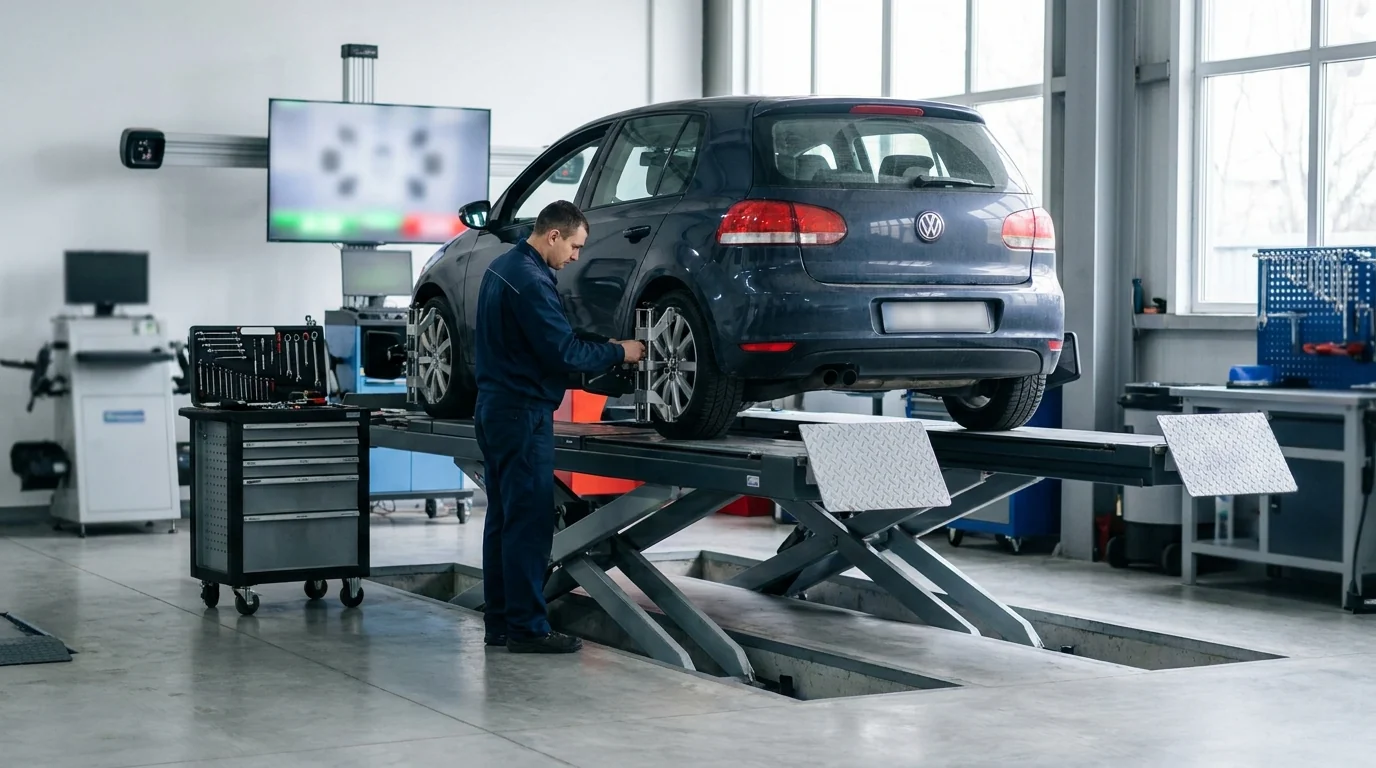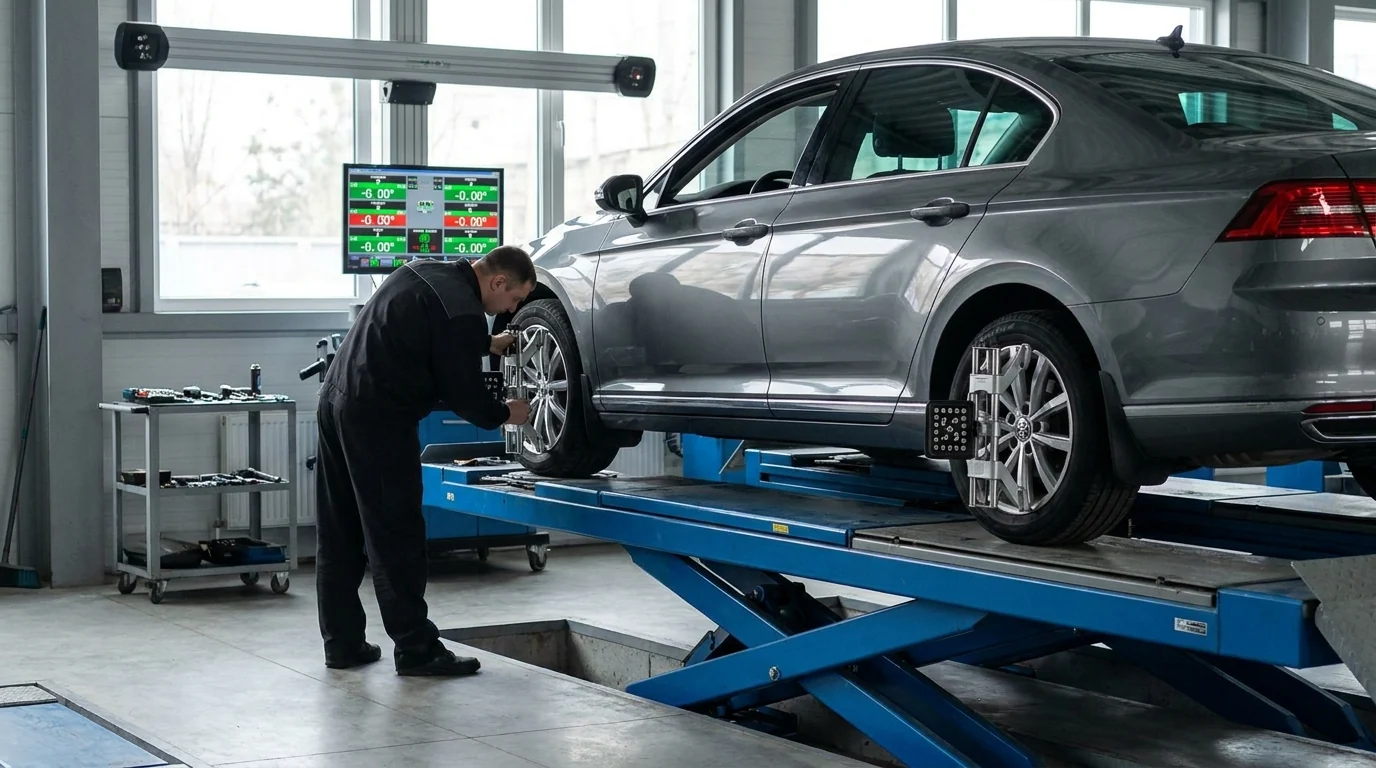
A car almost always tells you when its alignment is off—you just need to know how to read the signs. The main symptoms: the car pulls to one side on a flat road, the steering wheel is crooked when you're driving straight, and—the most reliable signal—the tires are wearing unevenly, on one edge or with a 'saw-tooth' pattern. Additionally, the car might not hold a straight line as well, or it might respond to turns sluggishly or, conversely, too nervously. This often appears after suspension repairs, hitting a pothole, or a seasonal tire change. But there's a catch every mechanic knows: the exact same symptoms can be caused by a worn suspension, incorrect tire pressure, or unbalanced wheels. That's why at єМеханік, we don't start with an adjustment, but with suspension diagnostics at Tyraspilska, 12—from 700 ₴, so we don't 'fix' with an alignment what an alignment can't fix.
Tire Wear—The Most Honest Indicator: How to Read Your Tread
A tire stores the entire history of its alignment angles, and you can read it even when the car is parked. A worn inner edge typically means the wheel is tilted too far inward (negative camber) or the wheels are pointing apart (toe-out). A worn outer edge means the opposite—excessive toe-in. Even wear in the center but not the edges isn't about alignment; it's an overinflated tire. Worn edges with an intact center mean it's underinflated.
A separate and very telling sign is 'feathering': run your hand across the tread. If it's smooth in one direction but the tread blocks catch on their edges in the other, your toe is off. This test is more reliable than the feel of the steering wheel because your hand can feel what the eye can't see. Patches or spots of wear, on the other hand, usually point to an imbalance or runout, not geometry.
Before a diagnostic, check the pressure in all your tires. A low tire can mimic both pulling to the side and uneven wear—and can confuse even an experienced eye.
Car Behavior: Pulling, Drifting, and Tramlining
The second set of signs is how the car behaves on the move. On an empty, flat, straight road, loosen your grip on the steering wheel for a second: if it consistently pulls to one side, it's likely a toe or camber issue (or simply different tire pressures). If the steering wheel is crooked when the wheels are straight, that's a classic sign of bad toe. If the car 'tramlines' by following ruts in the road and reacting to every imperfection, it's often due to excessive camber or wide tires.
A steering wheel that's slow to return to center after a turn is an issue with the caster angle. Before blaming everything on alignment, rule out the simple things: check your tire pressure and think about whether the steering wheel vibrates at speed—that's almost always a balancing issue, not an alignment one. A technician on an alignment rack can distinguish the cause in minutes.
Uneven tire wear on one edge is the most honest proof of bad alignment. The steering wheel and pulling can lie; the tread doesn't.
Steering wheel vibration at speed is almost always a balancing issue, while pulling to the side on a straight road points to alignment. A technician on an alignment rack can tell the difference in minutes.
Why Knocking Isn't About Alignment, and Why Diagnostics Come First
The most common confusion is linking strange noises from under the car to wheel alignment. In reality, knocks, creaks, and humming are signs of wear on specific suspension components: ball joints, bushings, stabilizer links, tie rod ends. The angles have nothing to do with it, and adjusting them when there's play in the parts is pointless—the settings will be thrown off the moment you drive out of the shop.
That's why the rule at any qualified service center is one: diagnostics first, then alignment. We lift the car, check every component, and only if the suspension is sound do we set the angles. If there's wear, we first provide a list of parts to be replaced. And for more on how often you should check your geometry in general, read our separate guide: how often to get a wheel alignment.
A Typical Case from the Shop
A driver comes in, annoyed: 'I just had an alignment done, but the steering wheel is crooked again.' We lift the car—there's play in a steering tie rod end. The alignment had nothing to do with it: the angles won't hold on a worn part, no matter how many times you adjust them. First, replace the tie rod end, then put it on the rack—and the steering wheel is straight again.
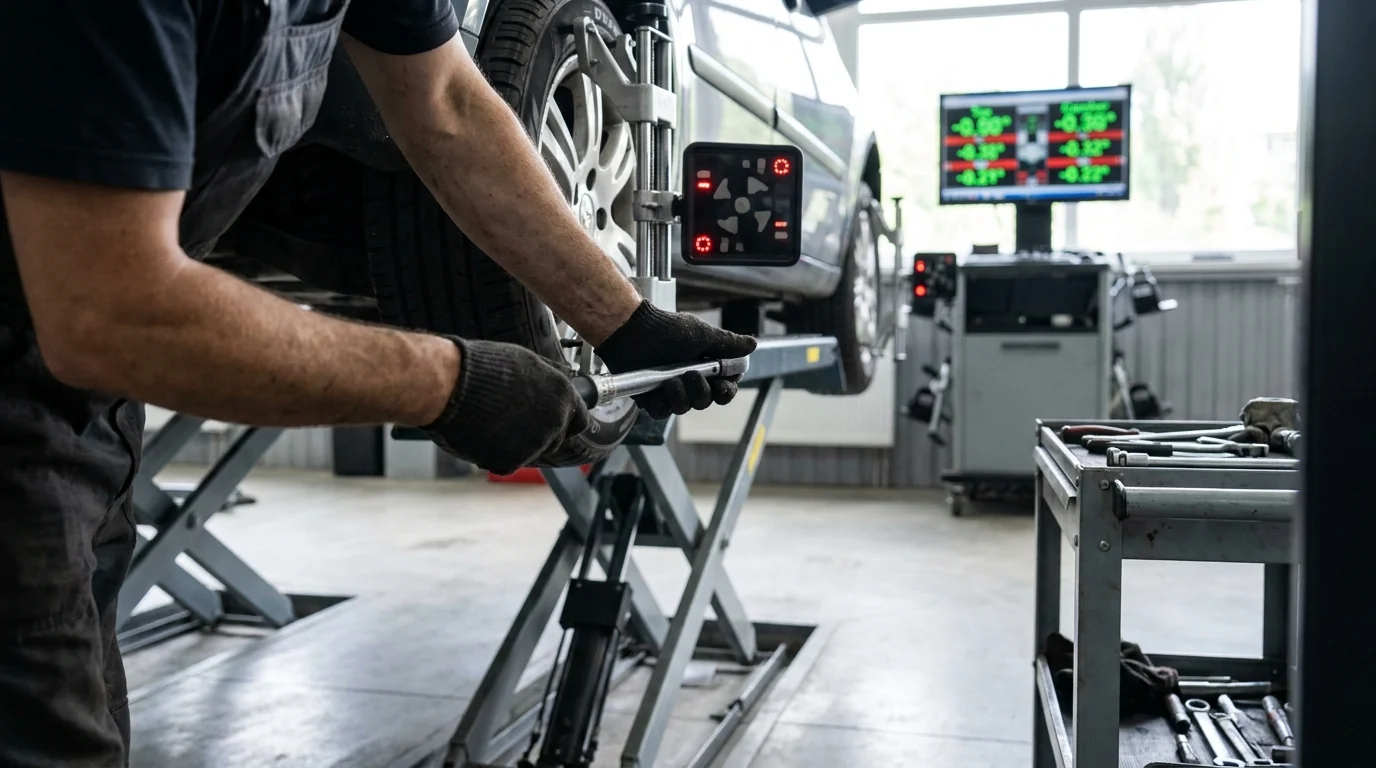
The moral is simple: the 'crooked steering wheel' symptom is real, but the cause isn't always the alignment angles. The signs you notice on your own are a reason to come in for diagnostics, not a ready-made diagnosis. The actual diagnosis is made on the alignment rack and the lift.
Frequently asked questions
Book in a minute —
Leave your number and we'll call back. Or share the details so the technician can prepare.
Book nowWhat clients say.
Honest Google reviews. Unedited.