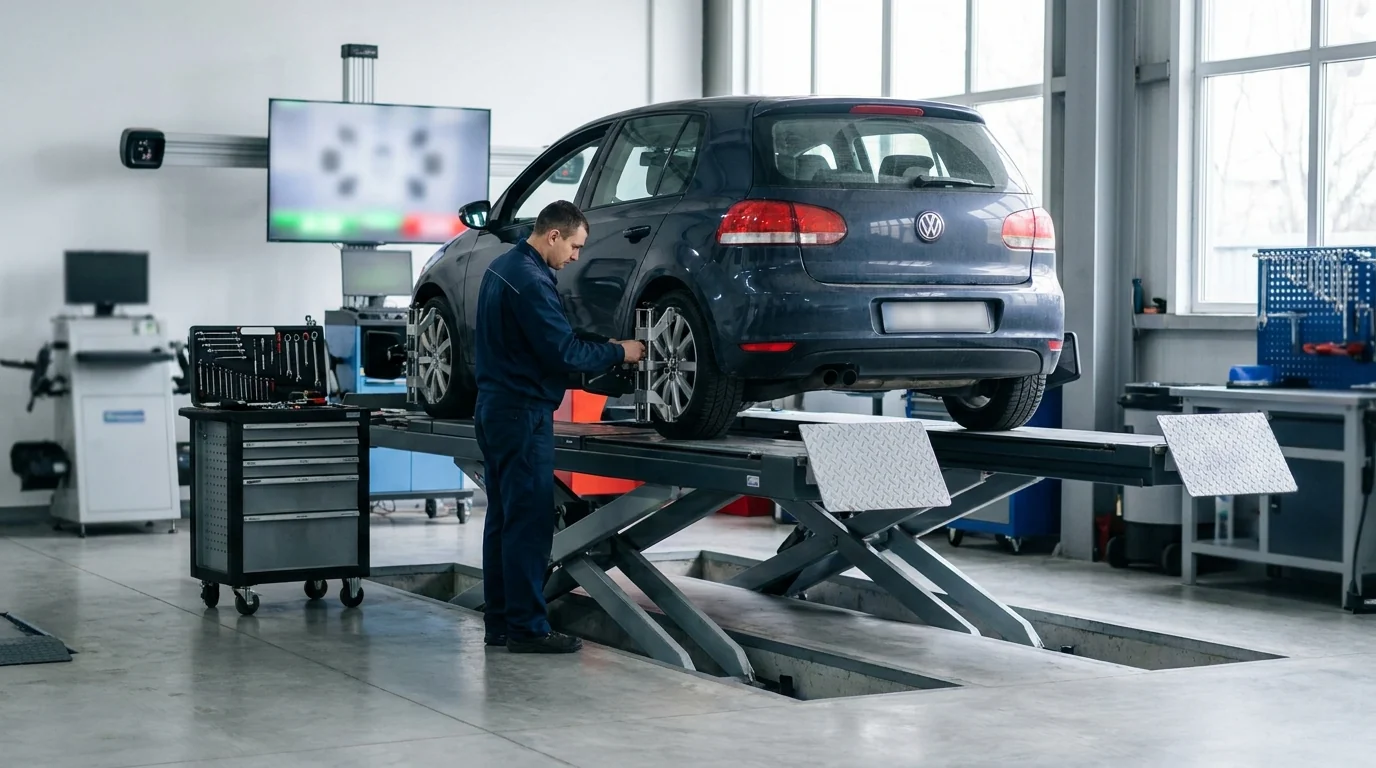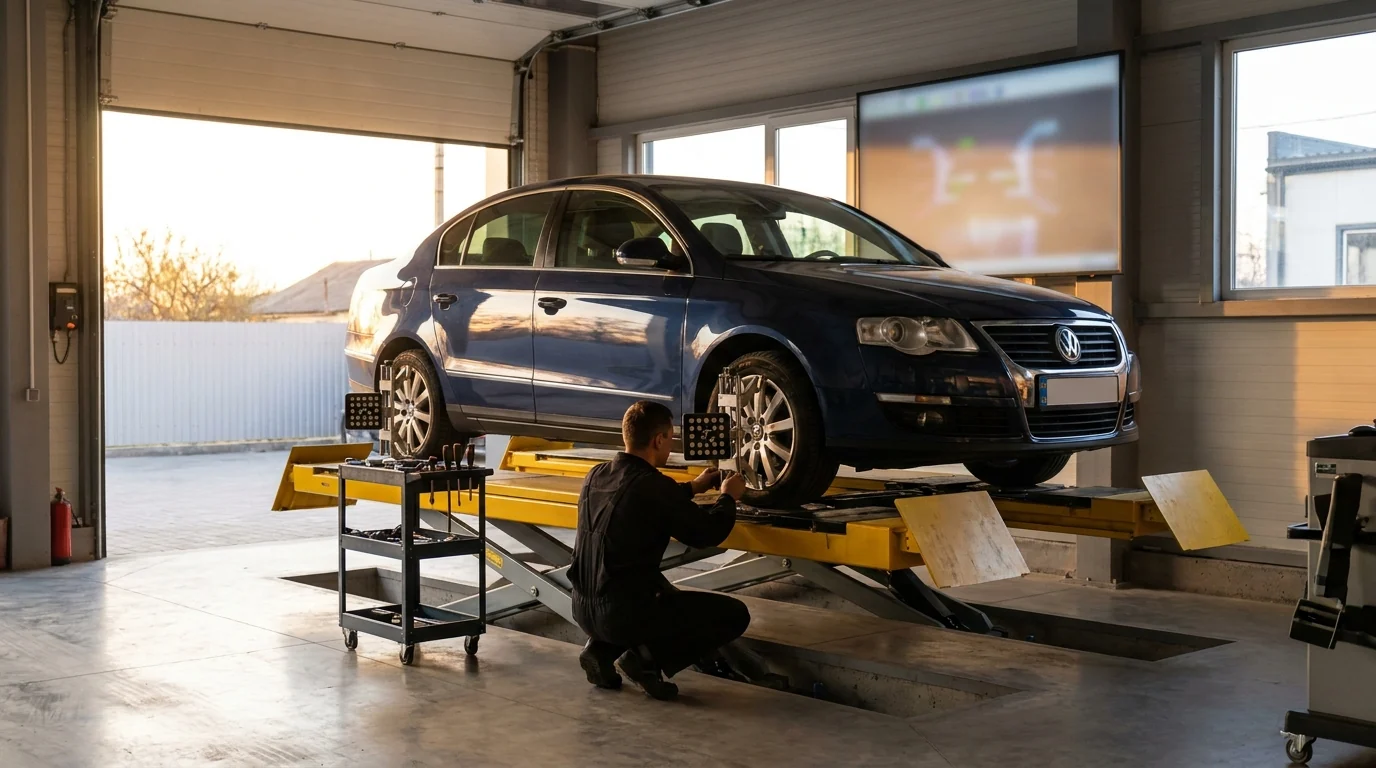
Steering wheel vibration at speed is most often caused by wheel imbalance. This means the mass of the wheel and tire assembly is not distributed evenly. As it spins at high speed, centrifugal force creates a wobble that is transferred to the steering wheel and car body. Proper wheel balancing is the process of compensating for these irregularities with small lead or zinc weights. This completely eliminates the vibration, makes driving comfortable and safe, and prevents premature wear on tires and suspension components. It's a fast and inexpensive procedure that is a mandatory part of any quality tire service.
What is wheel imbalance and why does it cause the steering wheel to shake?
Imagine a small but heavy piece of mud stuck to one spot on your wheel. At low speeds, you won't notice it. But when the wheel spins up to a high speed, this piece creates a powerful centrifugal force that pulls the wheel to the side with every rotation. This is an imbalance. The wheel starts to 'hop' and vibrate, and since it's rigidly connected to the suspension and steering mechanism, these oscillations are transferred directly into your hands. The higher the speed, the stronger this vibration becomes.
There are two types of imbalance: static and dynamic. Static imbalance is when one part of the wheel is simply heavier than another. If you suspend such a wheel, it will always rotate with the heavy spot facing down. Dynamic imbalance is more complex: the weight may be distributed unevenly across the width of the wheel. This creates an oscillation that causes the wheel to 'wobble' from side to side. Modern balancing machines detect both types of imbalance and precisely indicate where to install a weight of a specific size to achieve perfect compensation.
The causes of imbalance are varied. It could be an imperfection in the tire or wheel from the factory, the result of hitting a pothole which slightly deformed the rim, or even uneven tread wear. The most common situation is losing a balancing weight that was previously installed. It could have flown off during a high-pressure car wash or on impact. Therefore, even if you haven't changed your tires, vibration can appear suddenly.
Vibration in the steering wheel usually indicates an imbalance in the front wheels. If the whole car body vibrates but the steering wheel is relatively calm, the problem is most likely with the rear wheels. This will help to locate the problem faster.
How Balancing Works: From the Machine to a Perfect Spin
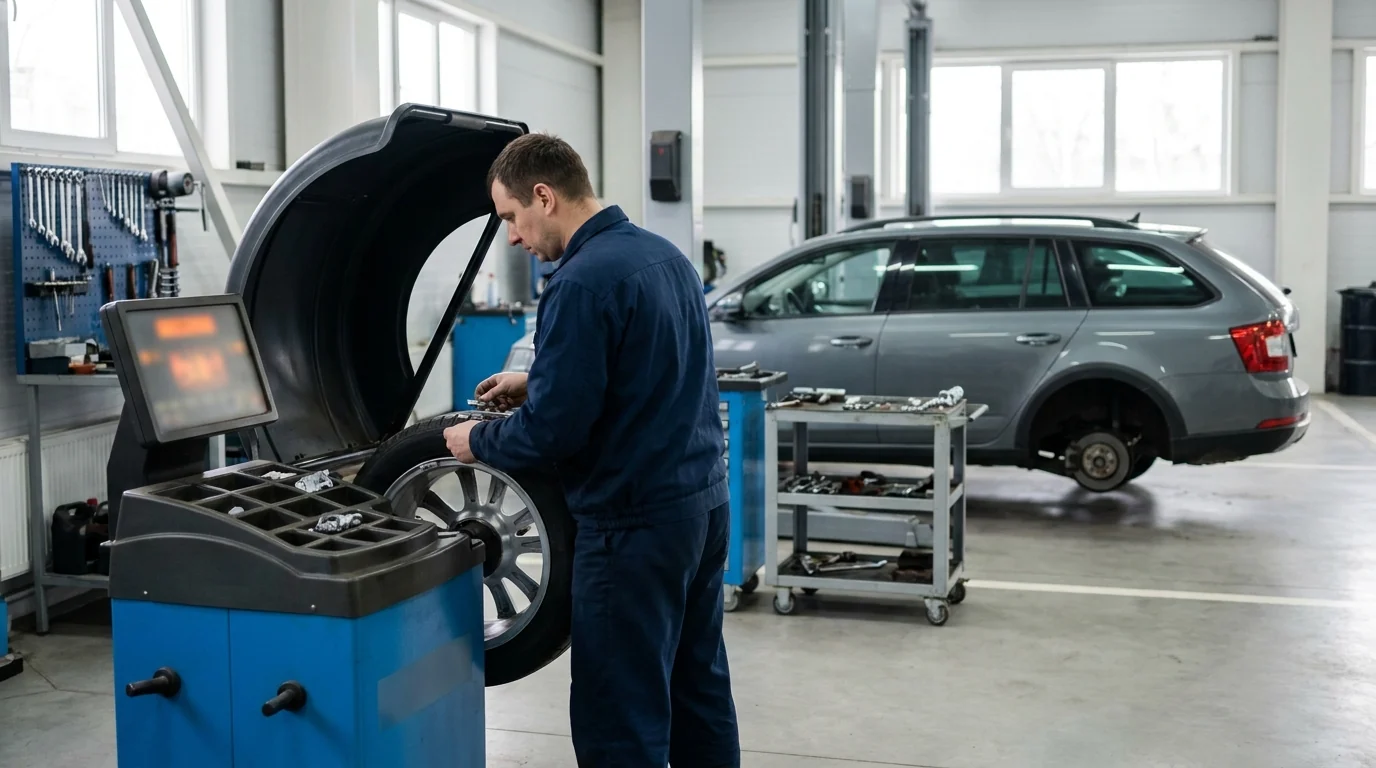
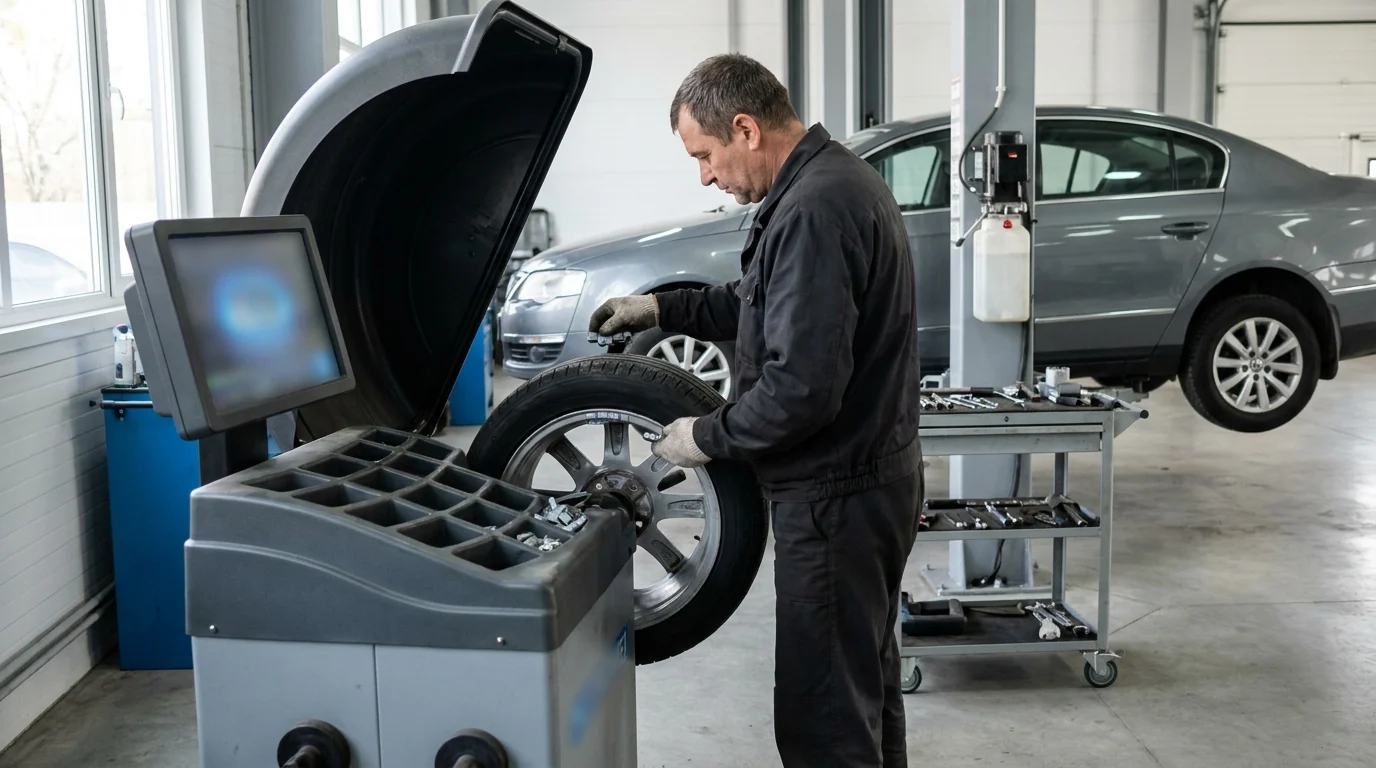
The wheel balancing procedure at our shop at 12 Tyraspilska St. is precise and well-practiced. First, the mechanic removes the wheel from the car and thoroughly cleans it of dirt, stones, and old balancing weights. This is a critical step, as even a few grams of dirt can affect the accuracy of the measurements. Then, the wheel is mounted on the shaft of the balancing machine and securely fastened.
Next, the machine spins the wheel at high speed, and sensitive sensors measure any oscillations of the axle. A computer analyzes this data and displays exactly where and how many grams are needed for a perfect balance. The technician takes weights of the required size and places them at the indicated points. For steel wheels, clip-on weights are usually used, which attach to the edge of the rim. For alloy wheels, adhesive weights are used, which are hidden on the inner side so as not to spoil the wheel's appearance.
After the weights are installed, a control spin is performed. The machine should show zero imbalance. Only then is the wheel considered balanced and ready to be installed on the car. The entire procedure for a set of four wheels usually takes about 30 minutes. The cost of the service starts from 650 ₴ per set, which is a small investment in your comfort, safety, and the longevity of your suspension.
Most of the time, steering wheel vibration isn't a death sentence for your suspension, but simply a wheel's 'cry for help.' Ignoring it is more expensive than addressing it promptly.
Balancing is not a cure-all. If the vibration remains afterward, an honest mechanic won't balance the wheels a third time but will look for the real cause in a bent rim, a bulge on the tire, or worn suspension. Don't pay for unnecessary repeat work.
Not Just Balancing: Other Common Causes of High-Speed Vibration
An honest mechanic will always tell you: balancing helps in the vast majority of cases, but it's not a cure-all. If the vibration persists or only partially diminishes after a quality balancing job, the cause must be sought elsewhere. One of the most common problems is a defect in the wheel's geometry. This could be a bent rim after a hard impact or a 'bulge' (bubble) on the sidewall or tread of the tire. Such a wheel will never spin true, no matter how many weights are attached to it.
Another group of causes is related to the condition of the suspension components. Worn wheel bearings, play in the tie rods or ball joints can create a vibration very similar to an imbalance. A wobble can also arise from problems with the braking system, such as warped brake rotors. In this case, the vibration will intensify specifically during braking. If you notice such symptoms, it's worth checking the wheel angles, which means getting a wheel alignment.
Sometimes the problem lies in the improper mounting of the wheel. For example, if dirt gets on the mounting surface between the wheel and the hub, the wheel can sit at a slight angle. Even if perfectly balanced, it will create a wobble. That's why it's important for the technician not only to balance the wheel but also to perform the full tire fitting cycle correctly. If you have doubts about the cause of the vibration, it's useful to read our material on what are the signs your car needs an alignment? to better understand related issues.
When is Balancing Mandatory? A Checklist for Drivers
There are situations where wheel balancing is not just recommended, but mandatory. Neglecting this procedure can lead to discomfort and unnecessary expenses in the future. Here is a simple checklist to help you determine when it's time to visit the service center:
1. Seasonal tire change. This is the most important rule. Every time you swap from summer to winter tires and vice versa, balancing is an essential part of the procedure. Even if you are changing complete wheel assemblies that were stored from last season, their balance could have changed.
2. After any tire or wheel repair. If you've had a puncture or a sidewall cut repaired, or had a rim straightened, the wheel's balance is guaranteed to be off. Installing a patch or a weld seam changes the mass distribution, and this must be compensated for.
3. After a hard impact. If you hit a deep pothole or struck a curb with your wheel, even if there is no visible damage, the balance may have been disturbed, or a weight may have flown off. If vibration appears after such an incident, this is the first thing to check.
4. When installing new tires. No new tire or wheel is perfectly balanced from the factory. Therefore, when buying a new set of tires, balancing is an integral part of the installation.
5. When vibration appears. This is an obvious symptom. If everything was fine before, but suddenly the steering wheel starts to 'shake' at a certain speed, it's a direct signal to check the wheel balance.
How to Tell if the Problem is Really Wheel Balancing
Although only a technician with a machine can perform an accurate diagnosis, there are several signs that strongly point to an imbalance. The first and most important is the nature of the vibration. An imbalance usually manifests itself within a specific speed range, most often while driving on the highway. At lower speeds, it may not be present, and at higher speeds, it may disappear or turn into a barely noticeable hum. If the vibration is present at all speeds, including the lowest, the cause is likely something else (for example, a 'bulge' on the tire).
The second important point is the location of the vibration. If the shaking is felt mainly in the steering wheel, it almost always indicates a problem with the front wheels. If the vibration is felt throughout the entire car body, through the seat and floor, then the rear wheels are most likely out of balance. This simple observation will help the mechanic find the source of the problem more quickly.
Finally, try to rule out other possible causes. If the vibration appears or significantly worsens only when you press the brake pedal, the problem is likely not with the balance but with warped brake rotors. Also, inspect your tires: are there any visible bulges, 'bubbles', or unevenly worn spots on the tread? The presence of such defects indicates that simple balancing will not solve the problem.
Why You Shouldn't Ignore Steering Wheel Shake: The Consequences for Your Car and Your Wallet
Some drivers consider steering wheel vibration a minor inconvenience and continue to drive, simply avoiding the 'uncomfortable' speed. This is a big mistake that eventually leads to much more serious and expensive problems. Constant vibrations are impact loads that destroy your car's suspension components. The first to suffer are the wheel bearings, which are not designed for such operating conditions and fail much earlier than their expected service life.
Next, the load is transferred to the shock absorbers, ball joints, tie rod ends, and bushings. All these elements begin to wear out at an accelerated rate. Replacing a single wheel bearing can cost several times more than balancing all four wheels. Thus, saving money on a simple procedure turns into significant expenses for suspension repairs in the future.
Besides the financial aspect, there is also the issue of safety. A constantly vibrating wheel has poorer contact with the road. This worsens handling, especially in emergency situations, and increases braking distance. Imbalance also leads to uneven, 'patchy' wear of the tire tread. As a result, an expensive set of tires can become unusable long before the end of its service life. The easiest and cheapest repair is the one you do on time, without waiting for a cascade of consequences.
The Bottom Line
Steering wheel vibration at speed is most often a sign of wheel imbalance, which can be easily and quickly corrected with balancing. Ignoring this problem leads to tire wear and expensive suspension repairs. If the shaking doesn't disappear after balancing, a deeper cause must be sought in the wheels, tires, or suspension. If you notice a vibration, don't delay—schedule a diagnostic.
Frequently asked questions
Book in a minute —
Leave your number and we'll call back. Or share the details so the technician can prepare.
Book nowWhat clients say.
Honest Google reviews. Unedited.