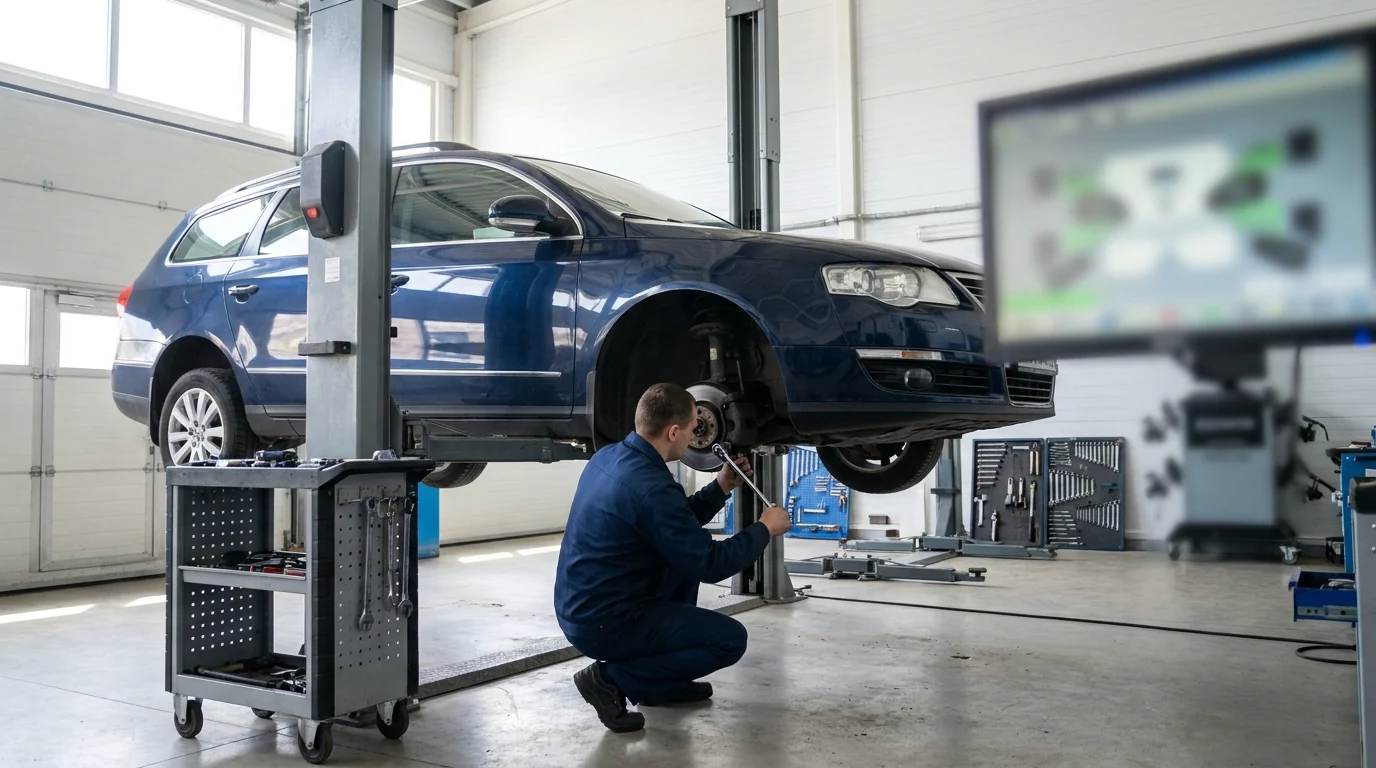
If your car won't start, the cause is usually one of three things: a dead battery, a failed starter, or a fault in the electrical circuit. The main difference is in the symptoms. A weak battery reveals itself with dim headlights and a slow, "heavy" engine crank or rapid clicking. A faulty starter usually makes a single loud click but doesn't turn the engine, while all other electronics work fine. Complete silence when you turn the key or chaotic electronic glitches point to deeper problems—from a poor terminal connection to a broken wire or module failure.
First Step: How to Tell a Battery Problem from a Starter Failure
The easiest way to distinguish between these two problems is to pay attention to how other electronics behave during startup. The battery is the heart of the system, delivering a huge current to crank the engine. If its charge is low, there won't be enough power for everything. Try turning on the headlights: if they are barely lit or dim significantly when you turn the key to the "start" position, the battery is almost certainly the culprit. A dead battery is also indicated by a slow, sluggish crankshaft rotation or rapid clicking from a relay under the hood—this is the starter trying to engage but not having enough voltage.
With the starter, it's a different story. If the battery is charged, the headlights are bright, the radio works, but when you try to start the car you hear only a single loud click from under the hood and nothing else happens—this is a classic symptom of a faulty starter. That click means the solenoid has engaged, but the starter's electric motor hasn't begun to spin. Sometimes you might hear a whirring sound—this means the motor is spinning freely but isn't engaging with the flywheel. In any case, if the entire electrical system is working but there's no crank, the starter is the prime suspect.
It's important to understand that a severely discharged battery can mimic a starter failure, also producing a single weak click. Therefore, before condemning the starter, you should verify the battery's charge. The simplest test is to try jump-starting from another vehicle. If the car starts right up with a donor battery, your problem is with your battery or its charging system (the alternator). If you still hear the same click even with a jump-start, then it's time to deal with the starter or check the heavy-gauge wiring leading to it.
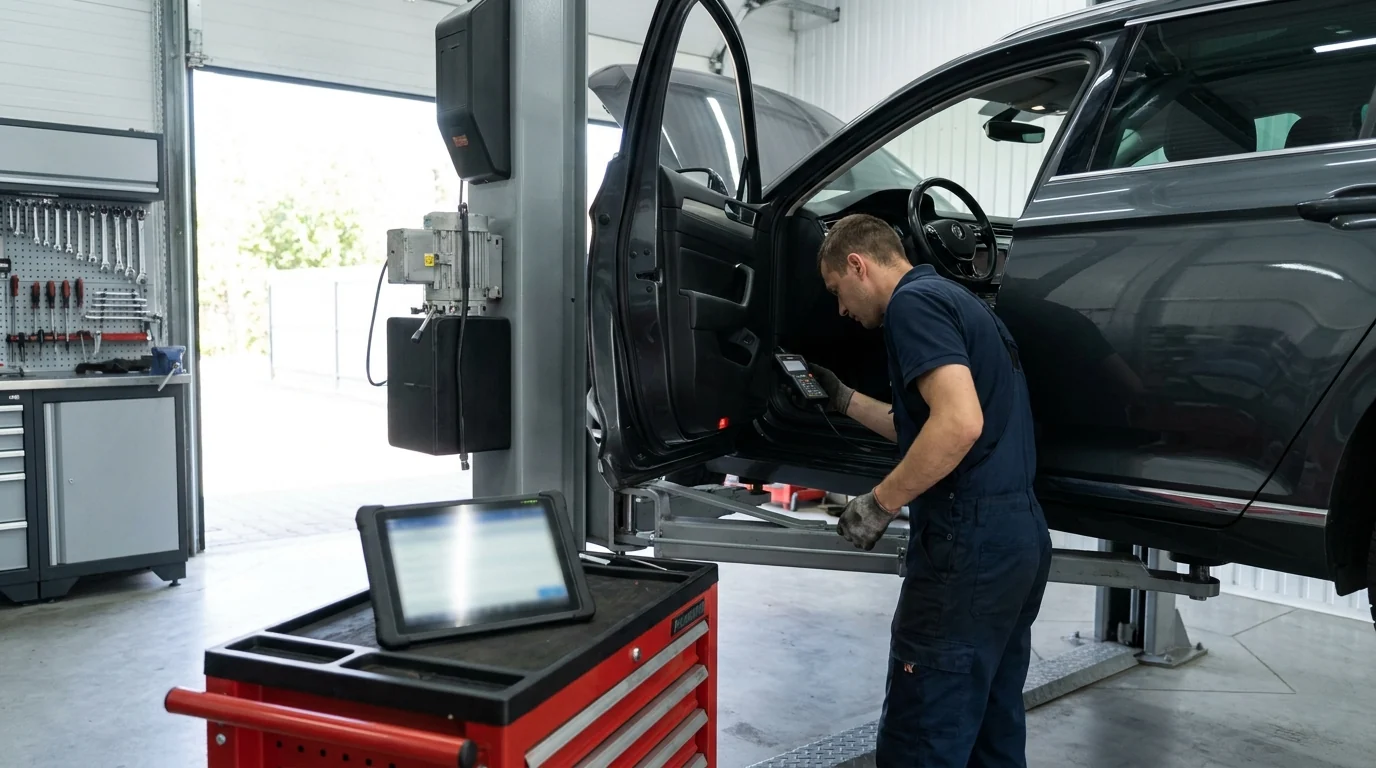
Before calling a tow truck, check the battery terminals. Often, the reason for complete silence is just a poor connection that can be fixed in a minute by tightening a nut.
It Clicks But Won't Crank: Detailed Starter Diagnostics
When you hear one solid click, it means the electrical circuit to the starter solenoid is working. The solenoid performs two functions: it pushes out the Bendix drive gear to engage with the flywheel ring gear, and it closes the contacts to supply power to the starter's electric motor. That click is what you're hearing. If the motor doesn't spin after that, the problem could be in one of three areas: the electric motor's brushes are worn out, the high-current contacts inside the solenoid are burnt, or there's a break or poor connection on the thick positive cable running from the battery to the starter.
Worn brushes are the most common cause of failure. They are a consumable part and simply wear down over time, losing contact with the armature's commutator. Sometimes, an old-timer's trick can temporarily help: gently tap the starter housing with a hammer or a pry bar. The vibration might momentarily restore contact for the brushes, and the car will start. But this is not a repair, just a way to get to the service center. If it worked once, it might not work the next time. This symptom is a direct indication that the starter needs to be removed and repaired or replaced.
Another common problem is the burning of the copper contacts in the solenoid. A massive current passes through them, and over time they get covered in carbon, which impairs contact. The solenoid clicks, but current doesn't flow to the motor. This is also repairable, usually by replacing the contact set. Less common are mechanical failures, like a broken Bendix fork. In any case, an accurate diagnosis is only possible once the unit is removed. Getting under the car yourself without experience is dangerous and not very effective.
The most expensive repair is replacing perfectly good parts by guessing. Before buying a new battery or starter, be sure of the diagnosis.
If you jump-started your car and it started, don't rush to turn off the engine. Let it run for a while so the alternator can charge the battery a bit. But this doesn't solve the problem—the battery or alternator still needs to be checked.
Complete Silence or Erratic Glitches: When It's an Electrical Fault
If absolutely nothing happens when you turn the key—the dashboard doesn't light up, you don't hear any clicks, just complete silence—the problem is likely not the starter, but the main power supply. The first thing to check is the battery terminals. Corroded or loose terminals are the most common cause of a sudden failure of all electronics. Even if they look fine, try to wiggle them. If they move, the connection is poor.
The second suspect is the main fuse or a bad ground connection (the negative wire from the battery to the chassis and engine). The ground wire can corrode at its attachment point over time, and while there might be enough voltage for the lights, the connection is insufficient for the starter. This creates intermittent faults: it starts today, but not tomorrow. Other possible causes for complete silence include a faulty ignition switch or problems with the alarm or immobilizer, which can block the starting circuit.
Chaotic glitches, where the dashboard flickers, gauges jump, and the car sometimes starts and sometimes doesn't, are almost always a sign of serious electrical problems. This could be a parasitic drain that slowly discharges the battery overnight, or a short circuit in one of the circuits. Finding such a fault on your own is practically impossible. This requires professional electrical diagnostics, where a technician systematically checks the circuits under load. Often, such symptoms are mistaken for control module failures, leading to unnecessary expenses.
Step-by-Step DIY Diagnostics: What You Can Check Yourself
Before calling a service center, you can perform a few simple checks to help pinpoint the problem. This simple inspection won't take much time and could save you money on a tow truck. Start with the basics: turn the ignition on and look at the instrument panel. Are the indicator lights on? Try turning on the high beams. If the indicators are barely glowing or not on at all, and the headlights don't turn on, the problem is the battery or its terminals.
Step two: under-the-hood inspection. Open the hood and carefully inspect the battery terminals. They should be clean, without any white or green deposits, and tightened securely. Try to twist them by hand—if there's any movement, tighten the nuts with the appropriate wrench. Often, this is enough to restore the connection. Also, inspect the thick negative wire that goes from the battery to the car's body. Make sure its attachment point is not rusty and is securely fastened.
Step three: listen to the sounds. Ask someone to try to start the car while you listen under the hood. Complete silence points to power supply issues. Rapid, chattering clicks mean a discharged battery. A single loud click most likely means the starter. A whirring sound without the engine cranking indicates a problem with the starter's Bendix drive. If possible, check the main fuses responsible for the ignition and starter. Their location is specified in your car's manual. If these simple steps don't help, it's best to entrust further troubleshooting to specialists.
Why Finding a Parasitic Drain or Wiring Break is a Job for a Pro
You can only diagnose obvious problems on your own, like a dead battery. But if the battery is new and still drains overnight, or the car refuses to start for no apparent reason, you're dealing with a hidden fault. Most often, this is a parasitic current drain or an intermittent open circuit. Finding these without special equipment and knowledge is like looking for a needle in a haystack. A parasitic drain means some consumer (stereo, alarm, control unit) isn't "going to sleep" after the ignition is turned off and continues to draw power.
To find a drain, an auto electrician connects an ammeter in series with the battery circuit and measures the quiescent current. If it exceeds the norm, a methodical search begins: fuses are pulled one by one until the current reading drops to normal. This allows them to identify which circuit is "stealing" the power. Then, they search for the specific culprit within that circuit. This is painstaking work that requires an understanding of the vehicle's wiring diagrams.
An even more complex situation is an intermittent open circuit. This is when a connection is lost only under certain conditions: when cold, when hot, in damp weather, or with vibration. A standard computer diagnostic scan is useless here, as the fault may not be stored in memory. The electrician has to check the circuit under load, wiggle wiring harnesses, and simulate the conditions under which the fault occurs. This is why the cost of such diagnostics is not fixed. At our service center at 12 Tyraspilska Street, electrical diagnostics start at 1 000 ₴, and we are honest if the search might take more time. This is much cheaper than replacing expensive, working modules one by one.
A Case Study: How We Found an Intermittent Fault
A typical situation we see: a car intermittently refuses to start. The owner has already replaced the battery, sometimes even the starter, but the problem returns, especially after rain or sitting for a long time. And, of course, when the car gets to the service center, it starts perfectly.
In such cases, we don't start by replacing parts, but by taking measurements. Our approach is to check key points under load. We connect a voltmeter to the battery terminals and ask the owner to try to start the car. If the voltage drops significantly, the problem is the battery. If the voltage is normal, we move one probe of the voltmeter to the engine block and the other to the negative battery terminal. During startup, the voltage drop here should not be substantial. In the typical case mentioned, we see a significant spike—a direct indication of a bad engine ground.
From there, the search becomes much simpler. We inspect the attachment points of the negative cable to the chassis and from the chassis to the engine. Often, we find barely visible corrosion under the mounting bolt or broken strands inside the insulation. This defect is not visible to the naked eye and cannot be detected by a standard multimeter without a load. After cleaning and securely fastening the connection, the problem disappears completely. This is a clear example of why in-depth vehicle electrical diagnostics is more important than hastily replacing expensive components.
The Bottom Line
If your car won't start, pay attention to the symptoms: dim headlights and a slow crank point to the battery; a single loud click with bright headlights points to the starter; and complete silence or chaotic electronic glitches suggest wiring problems. Don't rush to buy new parts; an accurate diagnosis will save you money. If you're unsure of the cause, it's best to consult specialists—book a diagnostic appointment with us at 12 Tyraspilska Street.
Frequently asked questions
Book in a minute —
Leave your number and we'll call back. Or share the details so the technician can prepare.
Book nowWhat clients say.
Honest Google reviews. Unedited.