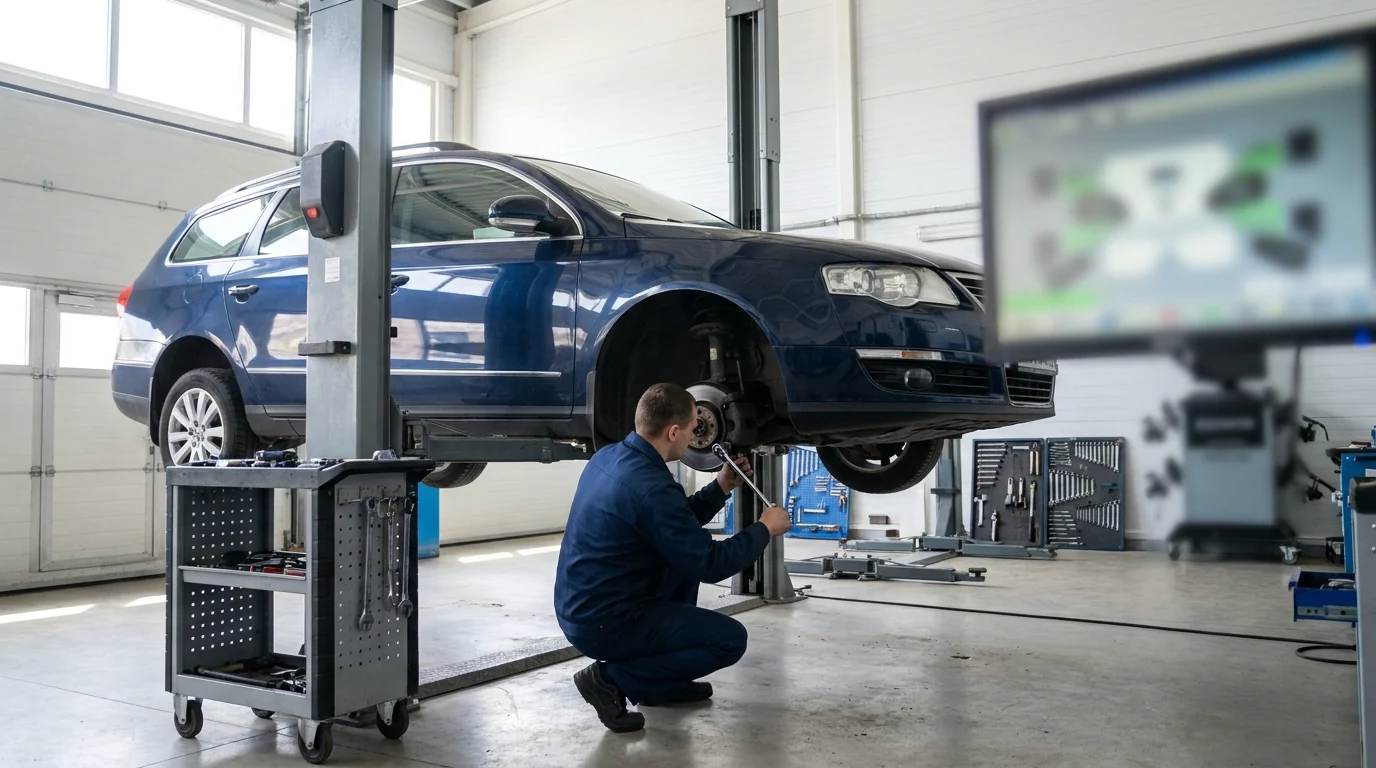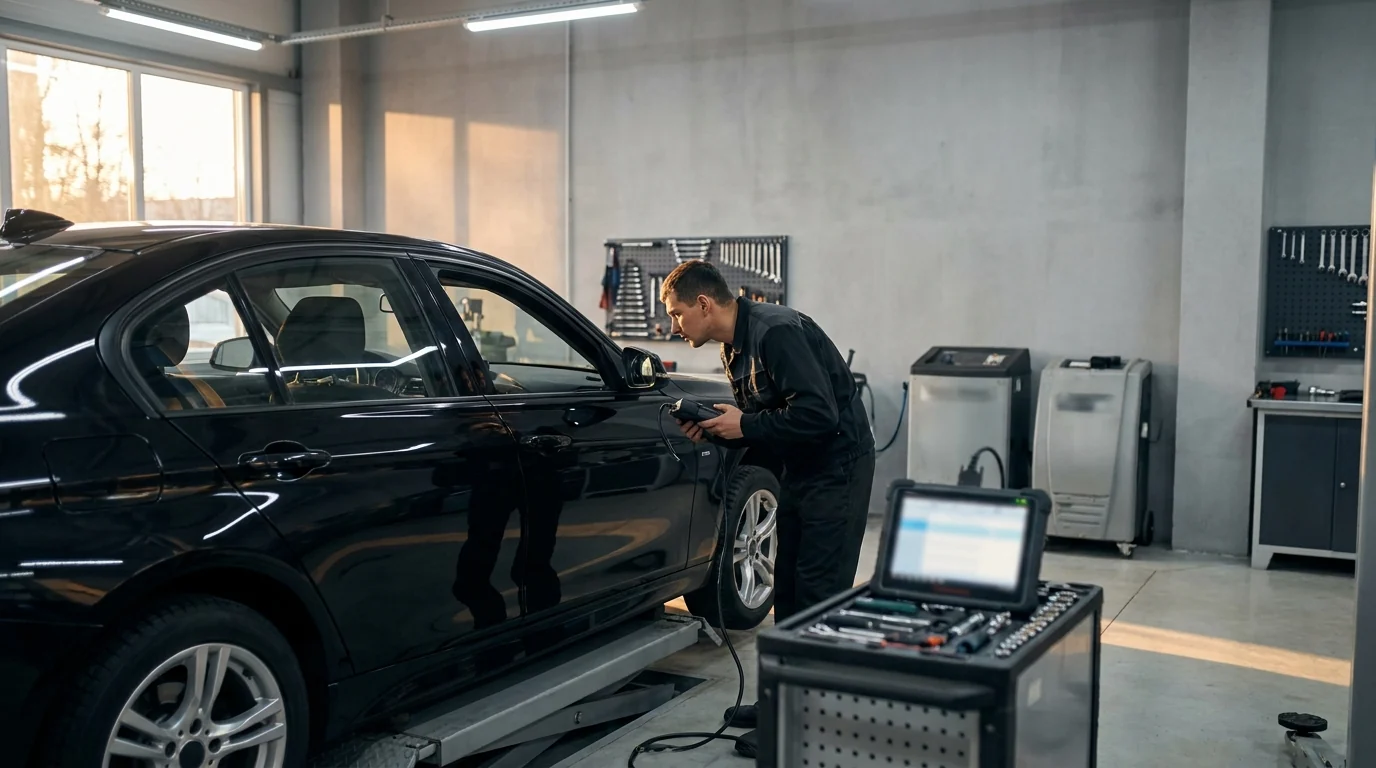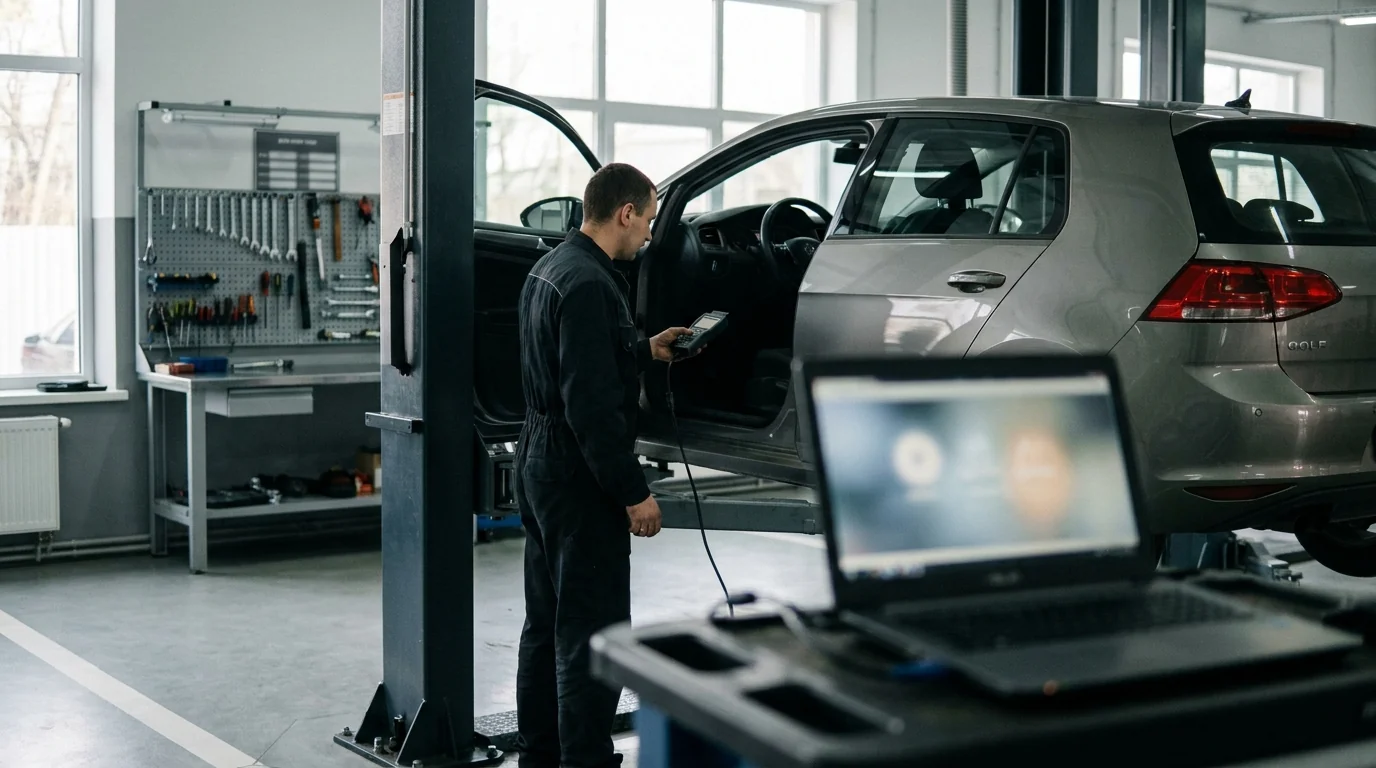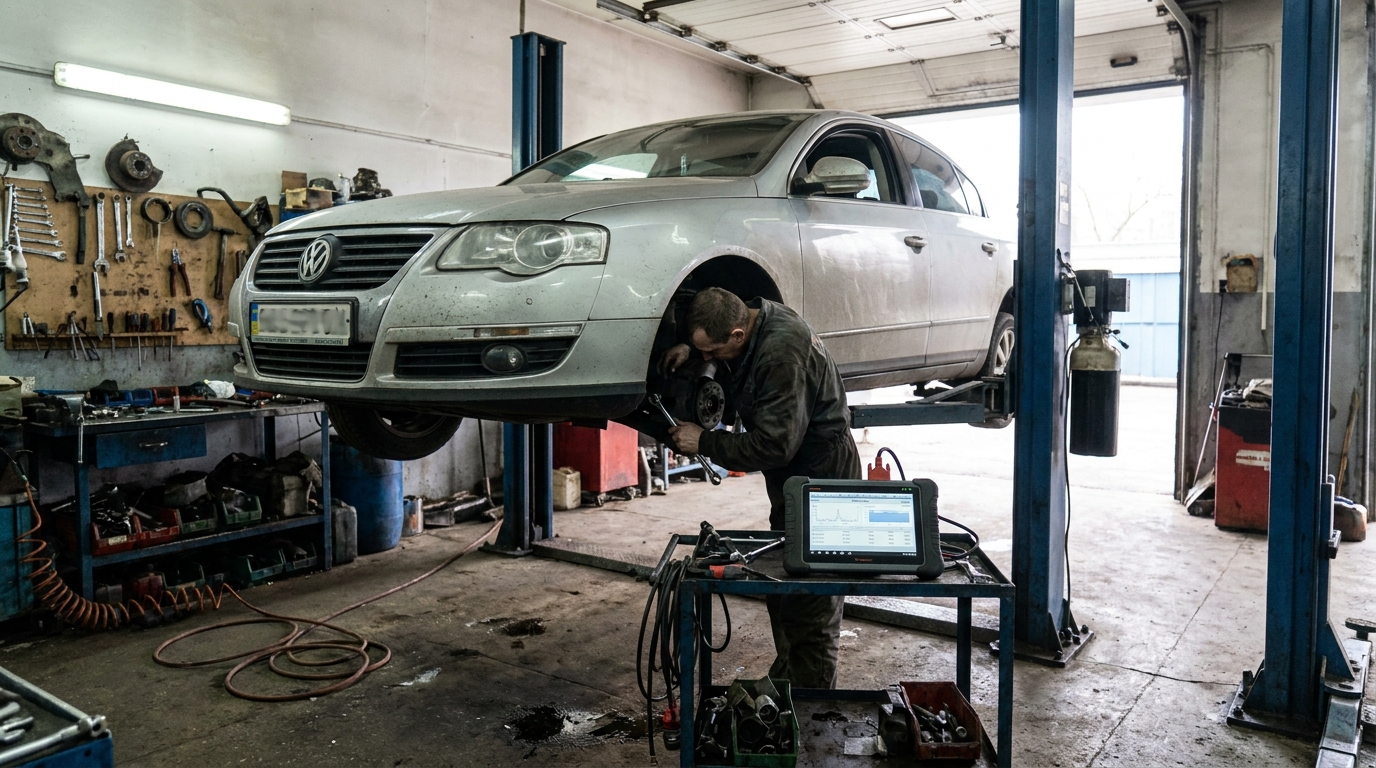
Problems with car electronics arise when a vehicle starts to 'have a mind of its own': it won't start for no reason, the battery drains quickly, errors randomly appear on the dashboard, or the lights, multimedia, or power windows fail. A modern car is a complex system with dozens of control units, hundreds of sensors, and kilometers of wiring. Trying to find the cause by 'trial and error,' replacing parts randomly, is a waste of money. The correct approach is precise diagnostics to find and eliminate the root of the problem, not just its symptoms. Initial fault finding and minor repairs at our service center in Kyiv cost from 1 300 ₴. Ignoring minor signals is more expensive than it seems: a fault that's easy to fix at an early stage can eventually lead to the failure of other related systems.
When to Visit an Auto Electrician: Key Signs of a Fault
Electronics rarely fail suddenly and completely. Usually, they 'hint' at a problem for a long time with minor glitches that many drivers ignore. Don't wait for your car to stop in the middle of the road. Come in for a diagnosis if you notice at least one of these symptoms:
Don't mistake a minor glitch for a serious fault on sight—both can look equally alarming to an inexperienced driver. That's why the only reliable way to understand the scale of the problem is computer diagnostics, not trying to determine what's acting up 'by ear.'
• Starting problems. The starter turns, but the engine doesn't 'catch,' or conversely, nothing happens when you turn the key.
• The battery drains quickly. A new or healthy battery goes dead overnight or after a few days of being parked. This is a clear sign of a current leak.
• Errors on the dashboard. The Check Engine, ABS, ESP, or Airbag light is constantly on or blinks intermittently.
• Incorrect equipment operation. The headlights, wipers, power windows, central locking, air conditioning, heated seats, or multimedia system fail or work erratically.
• Intermittent faults. The problem appears and disappears for no apparent reason. For example, everything works when the car is cold, but glitches start after it warms up. These are the most difficult cases that require professional intervention.
A typical situation with such 'intermittent' faults: the electronics in a door periodically fail—the power window, light, or central lock. In such cases, other service centers often immediately suggest replacing the entire door control unit. But the most common real cause is more mundane and cheaper: a frayed wire in the rubber boot between the door and the body, where the wiring constantly bends when opening and closing. An hour of work with a soldering iron instead of replacing the unit—and the fault is gone, with the repair cost being a fraction of the price of a new module.
There is no universal rule for 'how long you can drive with this error'—it all depends on the specific code and system. But the safety rule is simple: if the error relates to the brakes (ABS), airbags (Airbag), or stability control (ESP), you should not postpone diagnostics under any circumstances, even if the car seems to drive normally.
Don't rush to buy a new battery if the old one drains quickly. Often, the problem isn't the battery itself, but a current leak from a faulty component or damaged wiring. Diagnostics first.
How We Find the Root of the Problem: Diagnostics Instead of Guesswork
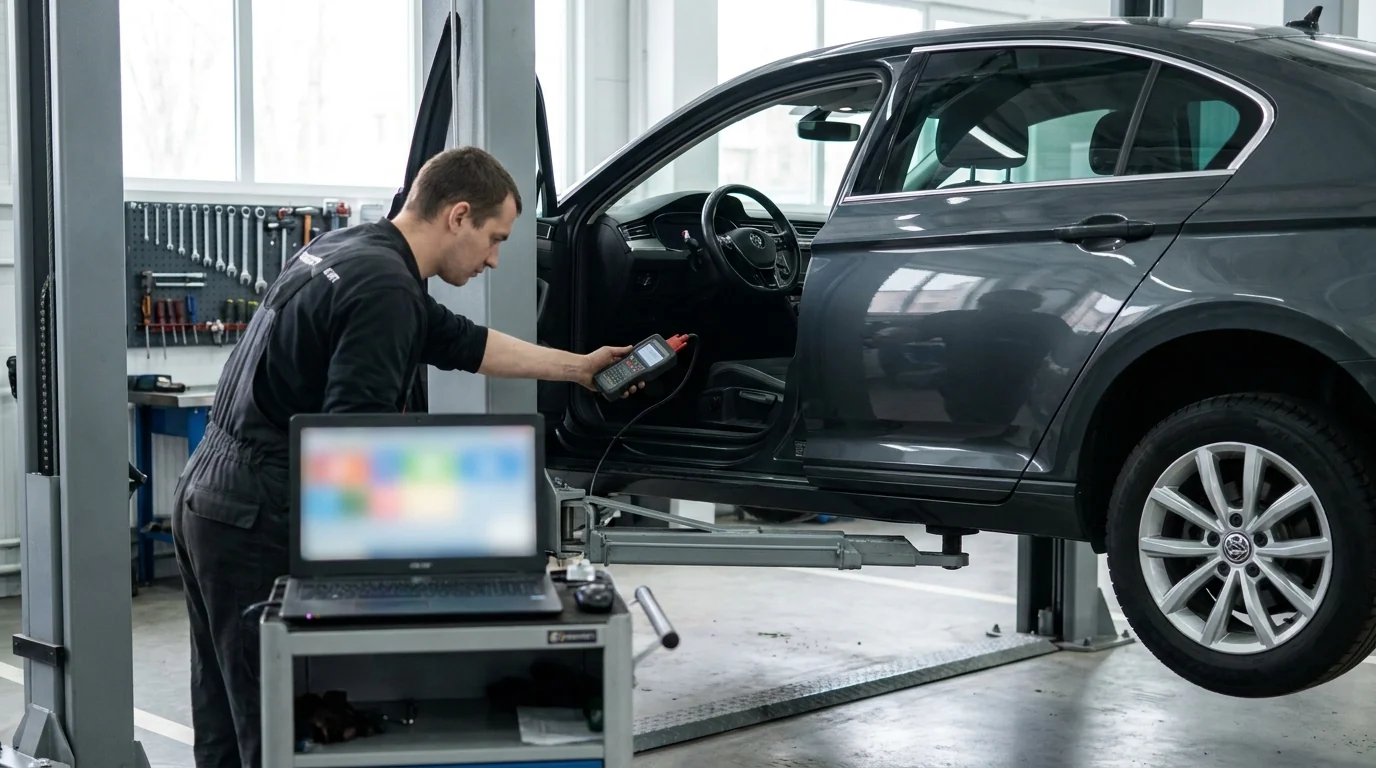
Electrical repair starts not with a screwdriver, but with a diagnostic scanner. The first step is computer diagnostics, which allows us to read fault codes from the control units. But this is just the tip of the iceberg. A fault code often points to the symptom, not the cause. For example, an oxygen sensor error doesn't always mean the sensor itself is faulty—the problem could be in its wiring or even a vacuum leak in the intake manifold. You can learn more about what computer diagnostics show and when it should be done separately from electrical repairs in our guide to car computer diagnostics.
After reading the codes, the real work of an auto electrician begins: checking circuits with a multimeter, inspecting wiring harnesses for damage, and checking contacts and grounds (connections to the car body). For complex 'intermittent' faults, we use an oscilloscope, which allows us to see the operation of sensors and signals in real time. This methodical auto electrical repair allows us to find the exact location of a break or short circuit and repair it precisely. It's especially important to detect such hidden defects in time, which is one of the reasons why a pre-purchase inspection is necessary.
Fuses and relays deserve a separate mention—the cheapest and most frequently overlooked element of an inspection. A blown fuse or a stuck relay can mimic the symptoms of a much more serious fault: the complete failure of a component looks scary, but the cause sometimes costs a few hryvnias and a minute to replace. An experienced electrician always checks these simple things BEFORE tackling more complex diagnostics—this saves both time and your money.
Often, an electrical problem isn't a burnt-out module, but a bad connection. The cheapest repair is finding that connection, not replacing expensive parts at random.
Intermittent faults are the most difficult. Sometimes, finding the cause can take more time than the repair itself. We always warn you about this so the cost doesn't come as a surprise.
Repair or Replace? An Honest Approach to Auto Electrics
Our main principle is to repair, not replace. Replacing an entire control unit, wiring harness, or expensive sensor is a last resort. In most cases, the problem lies in the details: an oxidized contact, a frayed wire, a faulty fuse. The cheapest repair is one that is done on time and addresses the actual issue.
There's a myth that modern electronics are unrepairable. This is not true. We restore wiring, re-solder contacts, and clean connections. A module replacement is only necessary when it is physically damaged (e.g., after water ingress) or a microchip that cannot be replaced has burned out. We are not interested in selling you the most expensive part. Our goal is to solve the problem reliably and for a reasonable price, so you return to us with trust, not with a new problem.
A telling example of why diagnostics are more important than guesswork: the common complaint 'the battery drains quickly' has at least three different causes in practice—a current leak from a faulty component (most often an old or improperly connected alarm system), an alternator that doesn't provide enough charge under load, or simply a worn-out battery that has reached the end of its life. The symptom looks the same, but the repair costs are completely different: from replacing a fuse to replacing the alternator. That's why 'buy a new battery just in case' is bad advice without a diagnosis.
This doesn't mean we never replace modules. If a microchip has physically burned out after water damage or a high-current short circuit, it's impossible to restore it—replacement is the only option here. The difference is in the approach: we first prove that a repair is impossible, rather than offering a replacement as the first and only option when the cause is still unknown.
How Much Does Auto Electrical Repair Cost and What Affects the Price
Fault finding and minor repairs at our service center in Kyiv start from 1 300 ₴, and the process itself—from reading codes to fixing the cause—usually takes 1–2 hours. This is the starting price for the simplest cases: a single clear error, an accessible break in the wiring, or an oxidized contact that is visible immediately after diagnosis.
The final cost depends on the complexity of the search, not on 'how many parts were replaced.' An 'intermittent' fault that only appears when the engine is cold or after several hours of driving requires more time for oscilloscope diagnostics and several test drives to reproduce the symptom—and this is honestly factored into the labor time, not into the price of non-existent parts.
We service the electronics of BMW, Mercedes, Audi, Volkswagen, Toyota, Skoda, Lexus, Land Rover, Volvo, Porsche, MINI, Honda, Nissan, Ford, Hyundai, Subaru, Mitsubishi, Renault, Peugeot, Infiniti, Chevrolet, Seat, Mazda, and Kia—we always quote the exact cost after reading the codes and performing a basic check, not blindly over the phone.
You can book an appointment right away with a description of the symptom—this helps us prepare the necessary diagnostic equipment and estimate the time before your arrival. However, we provide the final conclusion and exact cost only after a real, on-site diagnosis: it's impossible to honestly assess an 'intermittent' fault over the phone, and any price quoted blindly is either a low-ball lure or an unjustifiably high hedge against the unknown.
The Bottom Line
Electronics rarely break instantly—they 'hint' at problems for a long time with minor glitches: slow starting, a quickly draining battery, errors on the dashboard. The right path is computer diagnostics to find the cause, not replacing parts at random; in most cases, the problem turns out to be cheaper than expected—a bad contact or a frayed wire, not a burned-out control unit. Book a diagnostic appointment as soon as you notice the first symptom. Computer diagnostics show the real cause of the failure, not a guess, so electrical repair always starts with it.
Frequently asked questions
Book in a minute —
Leave your number and we'll call back. Or share the details so the technician can prepare.
Book nowWhat clients say.
Honest Google reviews. Unedited.