You should have your brakes inspected routinely during every scheduled maintenance service, or at least once a year. An emergency check is needed as soon as you notice the first signs of a problem. These signs include strange noises (grinding, squealing), vibrations in the steering wheel or pedal, a change in brake pedal travel, the car pulling to one side during braking, or warning lights on the dashboard. The braking system is a key element of your safety, so its condition cannot be ignored. Even seemingly minor changes in its performance can indicate a serious problem that requires immediate diagnosis. Visiting a service center in a timely manner not only ensures your safety but also often helps you avoid much more expensive repairs down the road. After all, replacing worn pads is cheaper than replacing both the pads and the discs they've managed to damage.
Scheduled Inspection vs. Emergency Check: When to Look at Your Brakes?
There are two approaches to monitoring the condition of your braking system: scheduled and unscheduled. A scheduled inspection is a preventive measure that should be combined with regular vehicle maintenance, such as an oil change. The recommended interval is at least once a year or according to your car's service schedule. During such an inspection, a mechanic visually assesses the thickness of the brake pads and discs, checks the hoses for cracks and leaks, and monitors the level and condition of the brake fluid. This approach allows for the detection of wear at an early stage and helps prevent sudden failures.
An unscheduled or emergency check is needed immediately as soon as you notice any deviation in your brakes' performance. Unlike a scheduled inspection, the reason for visiting the auto shop here is a specific symptom. Gradual component wear often goes unnoticed by the driver, who gets used to changes in the car's behavior. However, the sudden appearance of grinding, vibration, or a "soft" pedal is a direct signal of a malfunction. It is dangerous to ignore such symptoms. The easiest repair is the one you didn't miss, so it's better to have the system checked early than to wait for a critical situation on the road.
It's important to understand that the brakes are a system where the failure of one component quickly leads to the wear of others. For example, pads worn down to the metal can destroy a brake disc in just a few braking applications, significantly increasing the cost of repair. Therefore, regular diagnostics is not an unnecessary expense, but a smart saving. At our service center at 12 Tyraspilska Street, we always start with a thorough inspection to accurately determine the cause of the problem and offer the optimal solution, not just replace everything in sight.
Changing the brake fluid every two years is not a recommendation, but a safety requirement. Old fluid that has absorbed moisture can boil during intense braking, leading to complete brake failure.
Five Key Signs of Braking System Failure
1. Strange noises: squeaking, grinding, whistling. This is probably the most common symptom. A light squeak can be caused by dust or moisture and often disappears after a few braking applications. But a loud and persistent squeal or a metallic grinding sound is an alarming sign. Often, this is the "squealer" at work—a special metal tab on the brake pad that warns you when it has reached its minimum allowable thickness. If you hear grinding, it may mean that the friction material has worn away completely, and the metal backing of the pad is rubbing against the disc, destroying it.
2. Vibrations and shuddering in the steering wheel or pedal. If you feel a pulsation in the pedal or vibration in the steering wheel when braking, the most likely cause is warped brake discs. This happens due to overheating and sudden cooling, for example, when driving through a puddle after intense braking. This shudder not only creates discomfort but also reduces braking efficiency and accelerates the wear of suspension components.
3. Change in brake pedal behavior. Has the pedal become too "soft" and sinks deeper than usual? This could indicate air in the system (which needs to be bled) or a brake fluid leak. If, on the contrary, the pedal has become too "hard" and requires significant effort to brake, the problem may be with the vacuum brake booster or seized calipers. Any change in pedal travel is a reason for immediate diagnostics.
4. Car pulling to one side. If the car pulls to the right or left during braking, it means that the brake mechanisms on the wheels of one axle are working unevenly. The most common cause is a seized piston in one of the brake calipers. As a result, one wheel brakes more effectively than the other, creating a dangerous turning moment. This is especially hazardous on a slippery road.
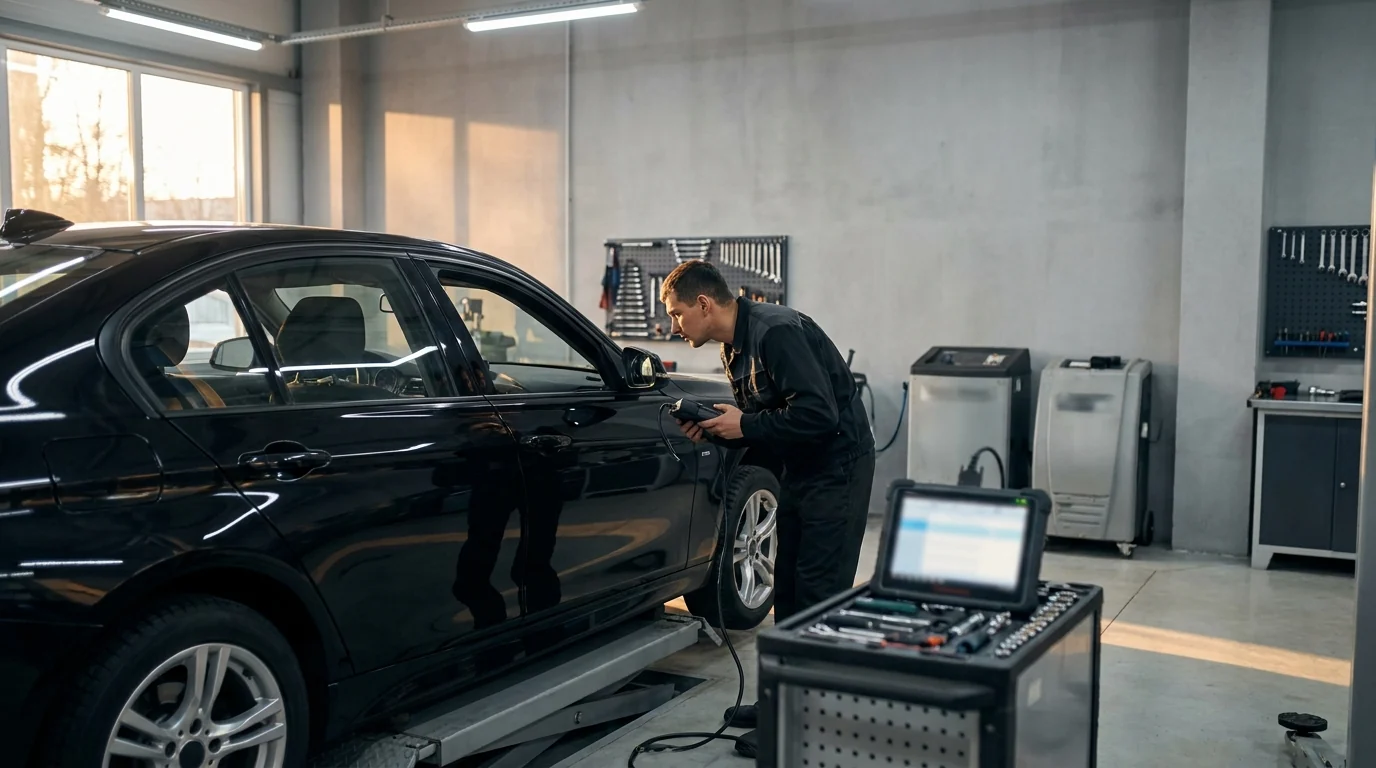
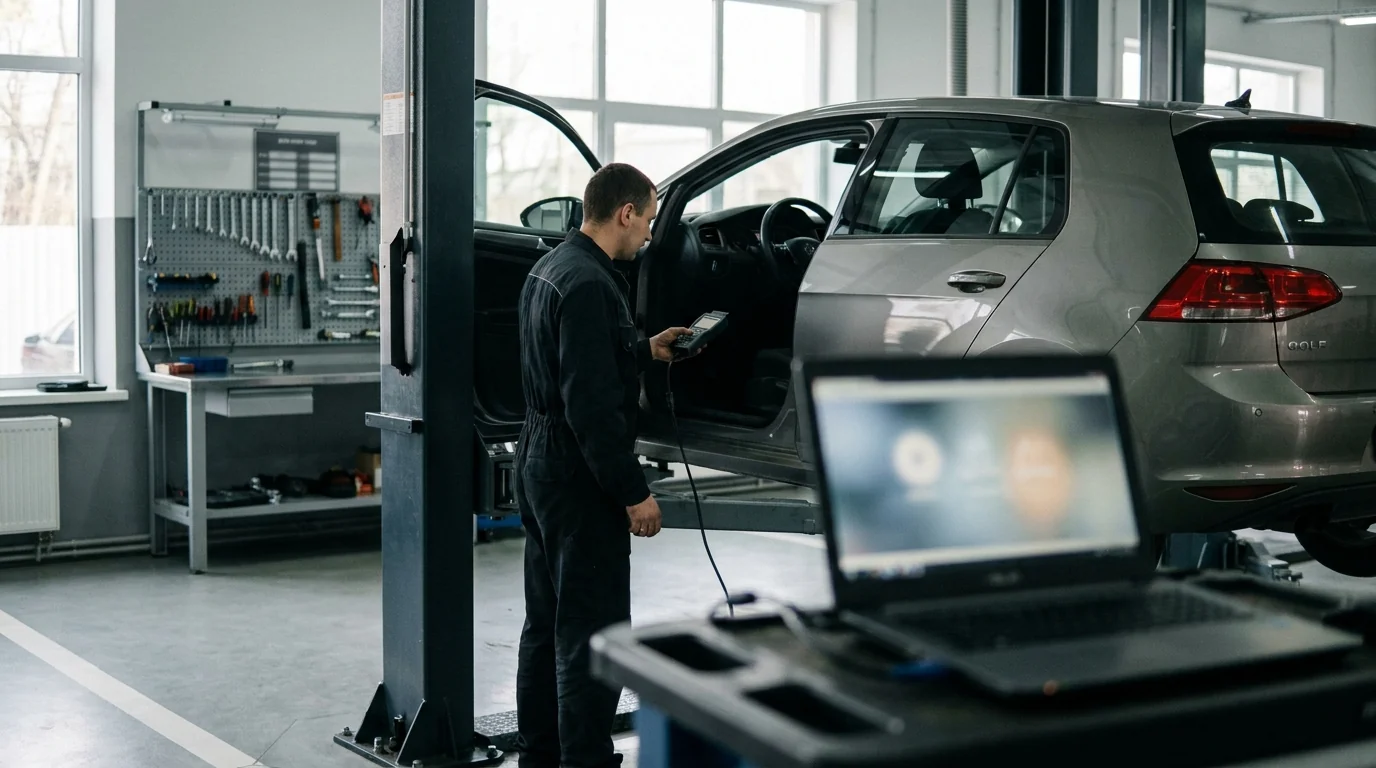
5. Warning lights on the dashboard. Modern cars are equipped with self-diagnostic systems. A red indicator with an exclamation mark or the word BRAKE may signal a low brake fluid level or an engaged parking brake. A yellow ABS, ESP, or traction control system indicator points to a malfunction in the electronic assistance systems. In this case, computer diagnostics will help determine the exact cause.
The best brake repair is the one done on time, not when the pedal has already hit the floor.
The cheapest brake pads are often a waste of money. They can be relentlessly noisy, leave a lot of dust on the wheels, and, worst of all, wear out your brake discs faster. Sometimes it's better to install quality components once than to pay for labor twice and replace your discs ahead of schedule.
What You Can Check Yourself, and When It's Definitely Time for the Shop?
There are some basic things a driver can and should monitor themselves. First and foremost is the brake fluid level in the reservoir under the hood. The reservoir has MIN and MAX marks; the level should be between them. If the fluid level drops rapidly, it indicates a leak in the system. Also, pay attention to its color: fresh fluid is usually light yellow and transparent, while old fluid is dark and cloudy. This is a sign that it's time to change it.
The second aspect of a self-check is acoustic and visual inspection. Periodically, while driving at low speed next to a wall or fence with the window open, listen to your brakes. This makes it easier to hear strange noises. Also, when inspecting your car, look at the inner side of the wheel rims—greasy spots may indicate a brake fluid leak from a hose or caliper. Check the operation of the parking brake, especially if you rarely use it. It should hold the car securely on a slope.
However, a self-check has its limits. You cannot assess the thickness of the pads and discs without removing the wheels, you can't check the mobility of the pistons in the calipers, and you can't measure the moisture content in the brake fluid. Therefore, if you notice any of the symptoms described above, or if the fluid level has dropped, it is a clear reason to go to an auto shop. A professional brake system diagnostics on a lift will allow for an accurate determination of the cause of the malfunction. You should not try to repair the brakes yourself without the proper knowledge and tools, as the price of a mistake is too high.
Diagnostics at the Shop: What and How a Mechanic Checks
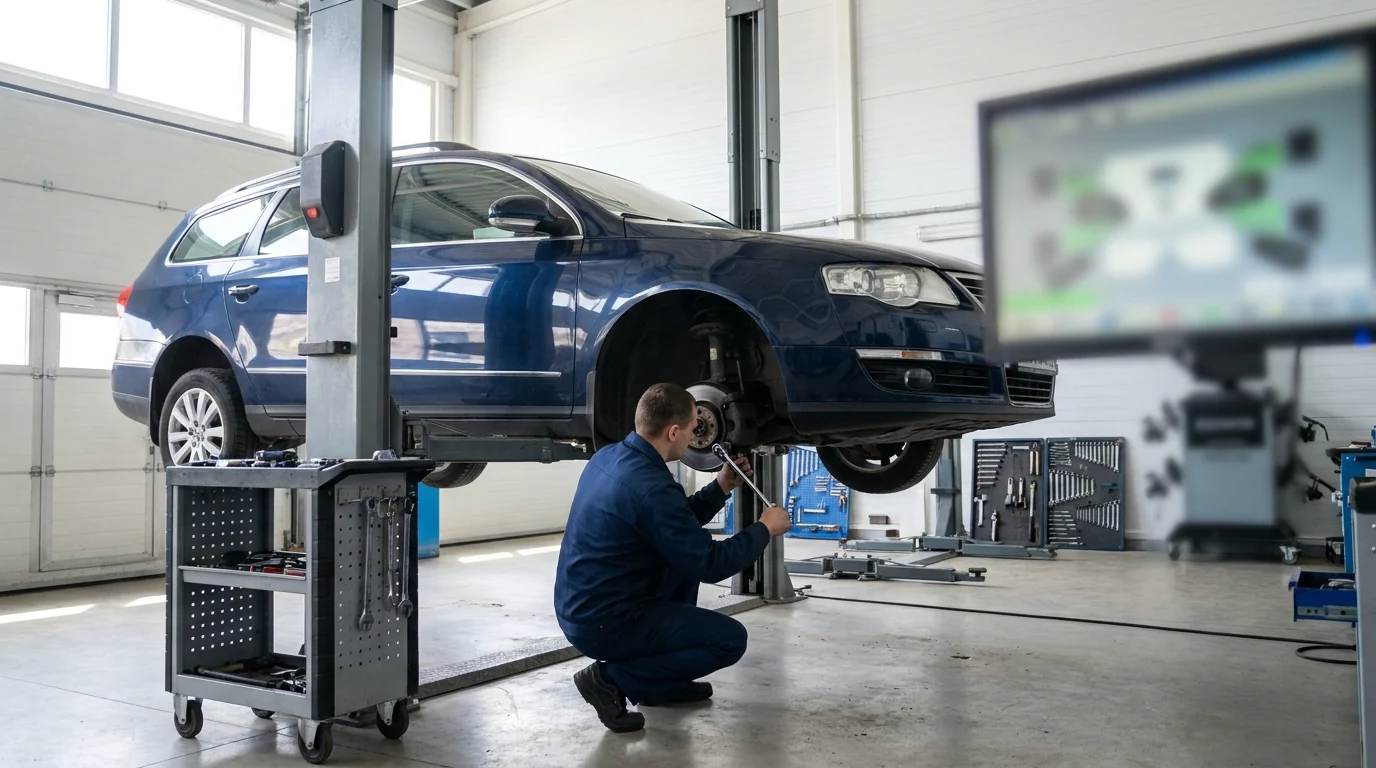
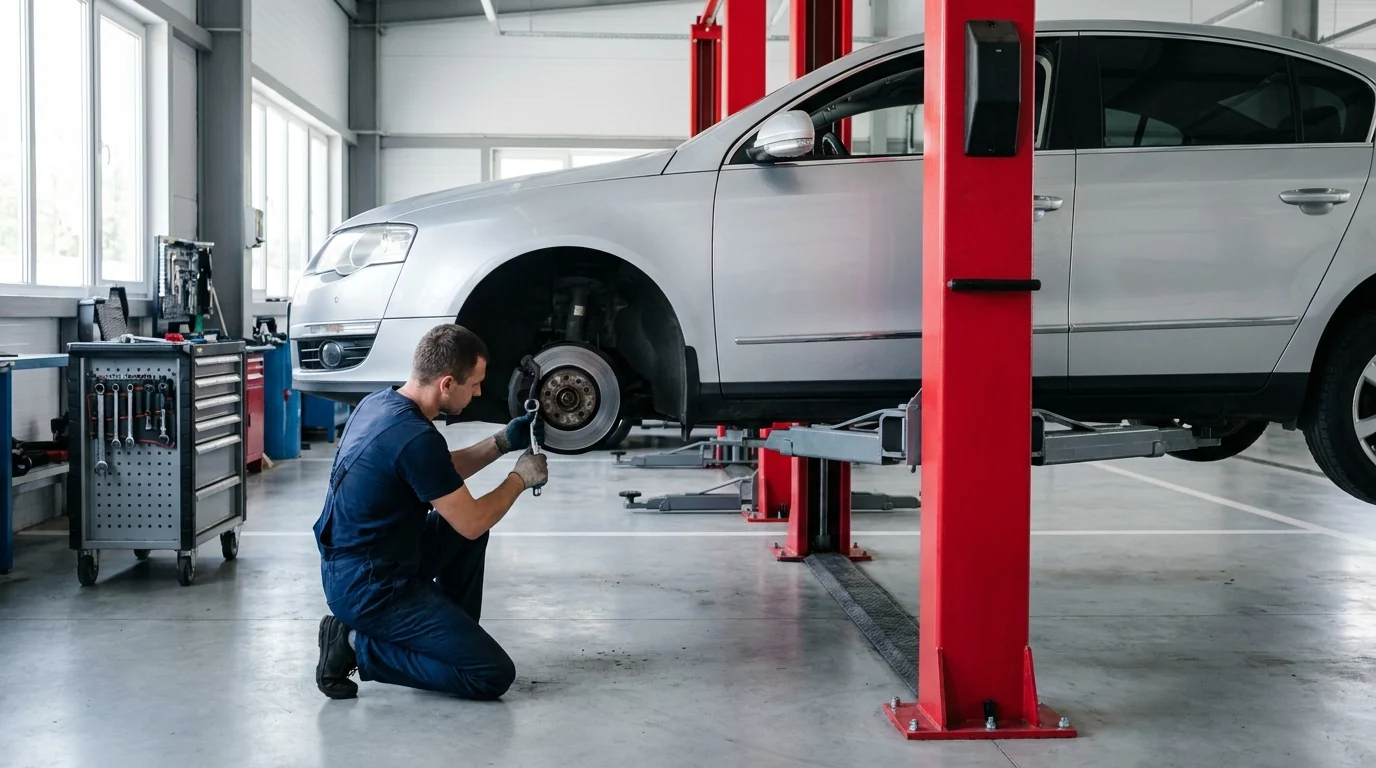
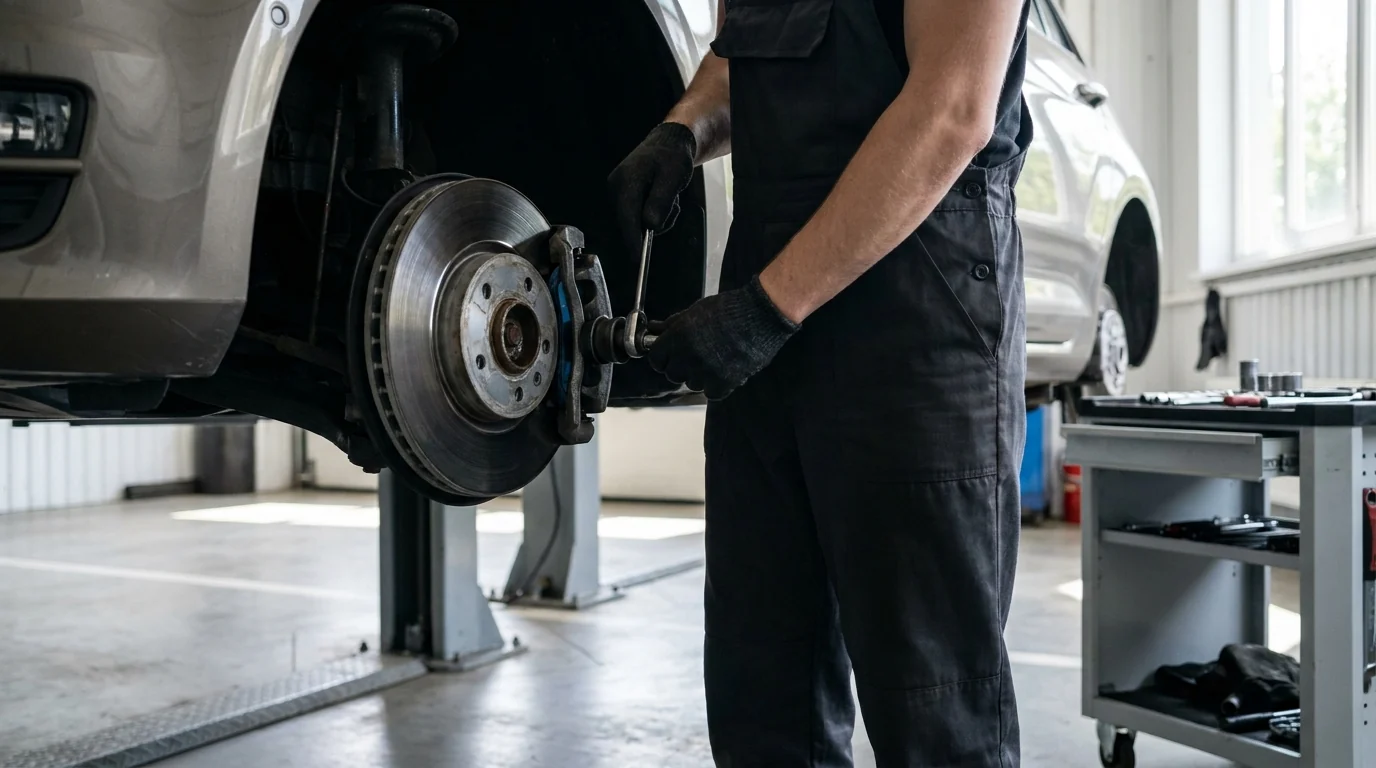
When a car arrives at our service center in Kyiv with a suspected brake malfunction, we conduct a comprehensive diagnosis. The first step is to talk to the owner to understand what specific symptoms are concerning them. Then, the car is raised on a lift for a detailed inspection. The mechanic removes the wheels to get full access to the brake mechanisms.
During the inspection, several key parameters are checked. First, the remaining thickness of the friction material on the pads and the thickness of the brake disc itself. Special measuring tools are used for this. The discs are also checked for deep grooves, cracks, and signs of overheating (a bluish tint). Second, the condition of the brake calipers is assessed: the ease of piston movement, the integrity of the dust boots. A seized caliper is a common problem that leads to overheating and uneven wear.
The third stage is checking the system for leaks. The mechanic carefully inspects all brake hoses and metal lines for cracks, bulges, rust, and fluid leaks. Special attention is paid to the brake fluid itself. Using a special tester, we check its boiling point, which directly depends on the moisture content. If the reading is below the norm, the fluid must be replaced. Only after such a complete inspection do we form a conclusion and agree with the owner on the list of necessary work and its cost. Repair work with us starts from 1 800 ₴, but the final estimate is always approved before work begins.
Brake Fluid: Why Changing It Is as Important as Changing Pads
Many drivers meticulously monitor the condition of their pads and discs but forget about the brake fluid. And that's a mistake, because braking efficiency depends on its condition just as much. The main property of brake fluid, which over time becomes its greatest enemy, is hygroscopicity. This means that it actively absorbs moisture from the air through micropores in the hoses and seals. Over time, the water content in the fluid can increase significantly, which negatively affects its properties.
What's the danger of water in the system? First, it significantly lowers the boiling point of the brake fluid. The boiling point of fresh fluid is high, but even a small amount of moisture in the system lowers it significantly. During active braking, for example, on a mountain road, the calipers get very hot. If the fluid boils, the resulting vapor pockets will create a "pedal fade" effect—the system becomes compressible, and the brakes will simply disappear. This is an extremely dangerous situation.
Second, moisture causes internal corrosion of the braking system components: cylinders, pistons, and lines. Rust can not only compromise the system's seal but also cause calipers to seize. That is why car manufacturers and we, as a service center, recommend a complete brake fluid change every two years, regardless of mileage. This procedure is inexpensive, but its importance for safety can hardly be overestimated. This is one of those items where you definitely should not try to save money.
Why Do Brakes Vibrate the Steering Wheel? It's Not Always the Discs
Vibration during braking is one of the most unpleasant and common complaints. Most often, drivers and even some mechanics immediately point to warped brake discs. And indeed, this is the most common cause. Uneven wear or deformation of the disc due to overheating causes the pads to make uneven contact with the surface during braking, creating a pulsating force that is transmitted to the steering wheel and pedal.
However, you shouldn't rush to replace the discs. This is a classic example of where proper diagnosis saves money. Sometimes the cause of the vibration lies not in the brakes at all. Problems with the suspension can produce very similar symptoms. For example, worn control arm bushings, play in the ball joints or tie rod ends, and especially a worn wheel hub bearing. All these faults cause the wheel to have excessive freedom of movement, and it begins to vibrate under the load of braking.
Therefore, the honest approach to diagnosis is this: before condemning the discs, you need to check the entire suspension. There are situations where a client comes in for a disc replacement, but it turns out that it's enough to replace a cheap bushing or perform a 3D wheel alignment. We always conduct a comprehensive check to eliminate the root cause, not just fight the symptom. We discussed the connection between vibrations and the suspension in more detail in the article "Why the steering wheel vibrates at speed".
The Bottom Line
Check your brakes regularly, at least once a year during scheduled maintenance, and react immediately to any changes: strange noises, vibrations, or atypical pedal behavior. Timely diagnosis is not only about your safety but also about direct savings on repairs, as a problem detected at an early stage is easier and cheaper to solve. If you notice signs of a malfunction, don't postpone it—schedule an inspection.
Frequently asked questions
Book in a minute —
Leave your number and we'll call back. Or share the details so the technician can prepare.
Book nowWhat clients say.
Honest Google reviews. Unedited.