Suspension repair consists of three key stages: accurate diagnostics to identify worn components, approval of a parts replacement estimate, and a final wheel alignment. Starting with diagnostics is essential to repair only what is actually broken, rather than replacing parts 'just in case' and wasting money. The suspension is a complex system of control arms, shock absorbers, springs, and joints, where the failure of one component accelerates the wear of others. Therefore, the 'replace everything and sort it out later' approach is a direct path to unnecessary expenses. Proper repair begins with an inspection on a lift, where a mechanic can check every component for play, cracks, and wear. Only after this is a clear work plan and estimate created and agreed upon with you. This approach ensures you pay to solve a specific problem, not for a mechanic's guesswork.
Why is Diagnostics a Mandatory First Step?
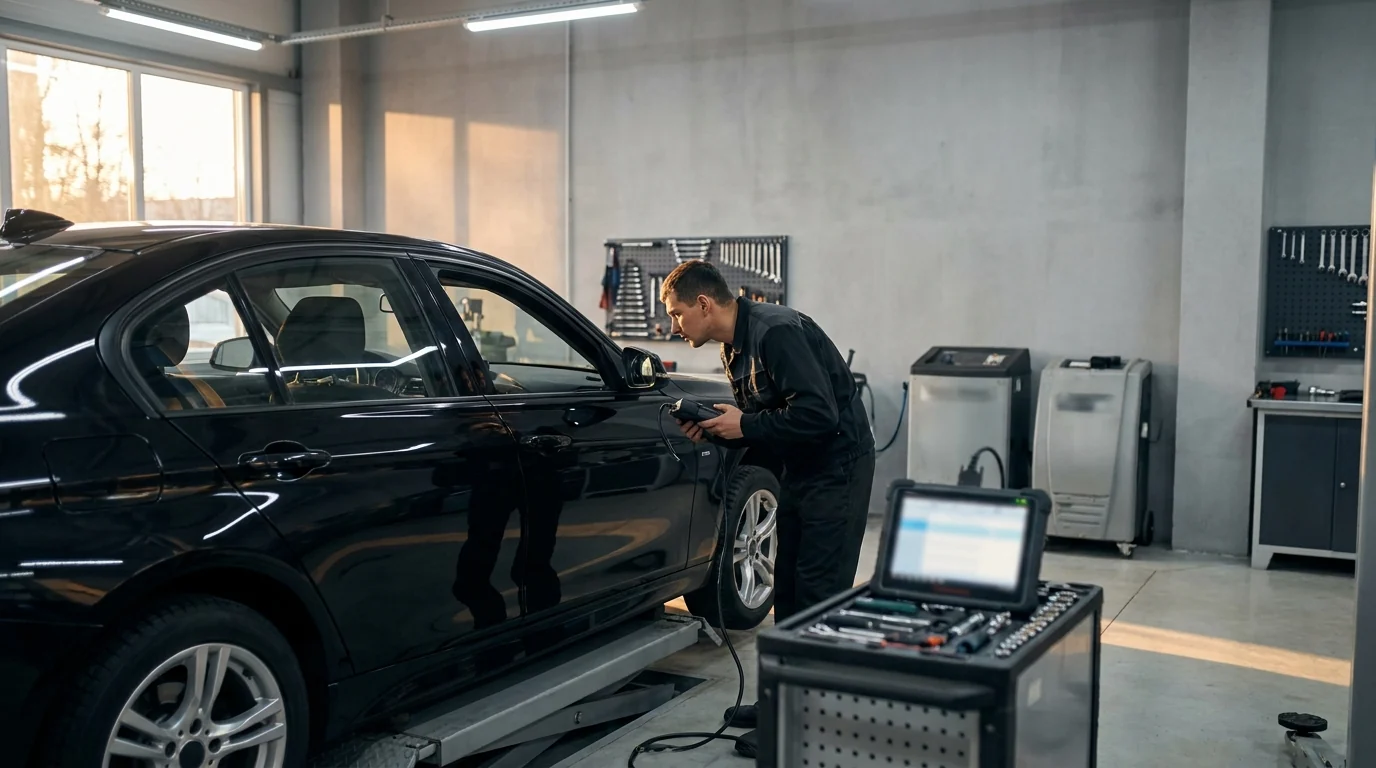
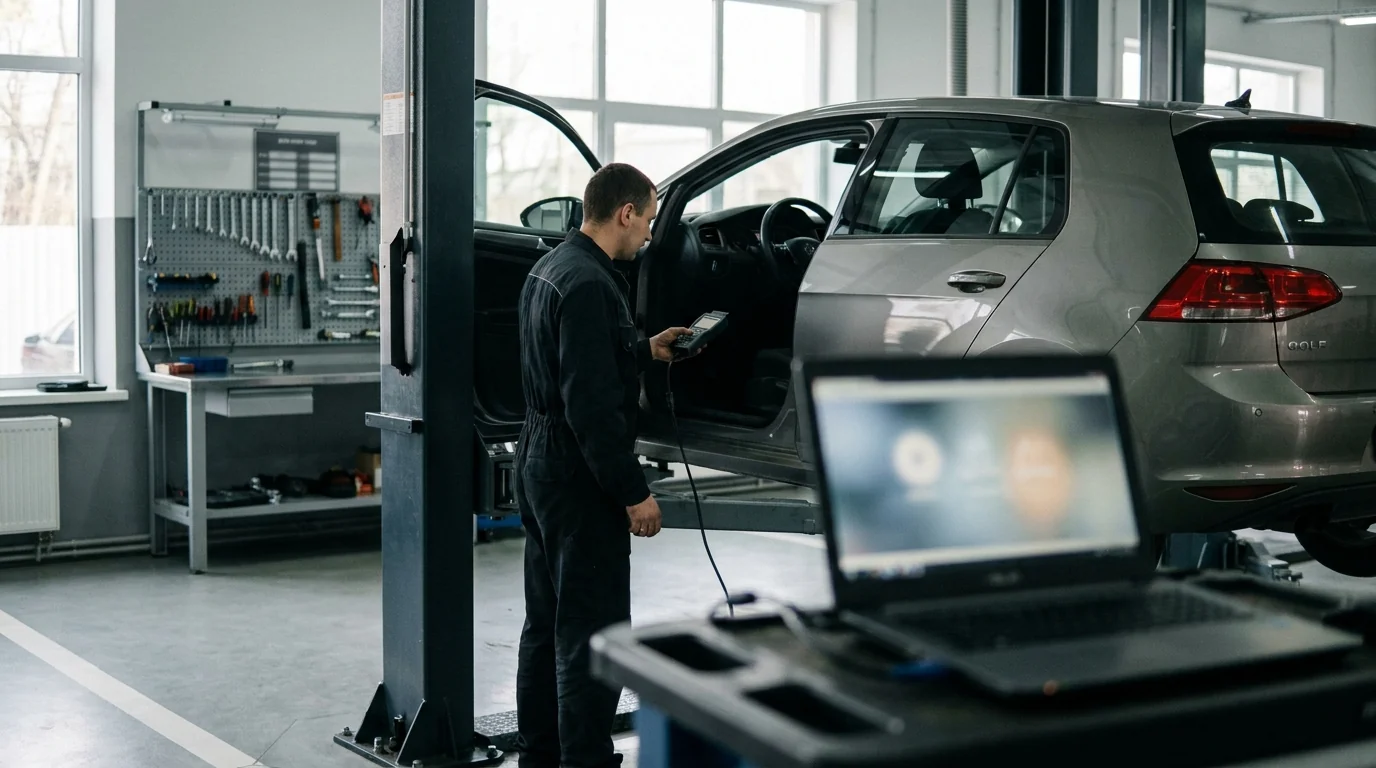
Repairing a suspension without prior diagnostics is like treating an illness without lab tests: expensive and ineffective. The main goal of diagnostics is to pinpoint the source of the problem. A knock, hum, or vibration can have dozens of causes, and often the symptom appears far from the faulty part. For example, a humming sound resembling a worn wheel bearing might actually be coming from the tires, and a knock from the front right could be caused by a worn stabilizer link on the left. Without an inspection on a lift, a mechanic can only make assumptions, which leads to replacing perfectly good parts.
Proper suspension diagnostics saves you money. Instead of replacing everything on the principle of 'it can't hurt,' you pay only for the labor and parts that are truly necessary. A typical situation: a driver complains about a knock, and another shop suggests replacing the shocks, control arms, and mounts. In reality, the problem turns out to be just the relatively inexpensive stabilizer bushings. A comprehensive inspection allows us to create a precise list of faults and separate critical issues from those that can wait.
Furthermore, diagnostics provide a complete picture of the suspension's condition. It's possible that besides the obvious problem, there are other worn components that haven't started causing symptoms yet but could fail soon. Knowing this, you can plan future repairs and avoid sudden breakdowns on the road. The mechanic will show you all the problem areas, explain their impact, and help you prioritize replacements. This is an honest approach that builds trust, unlike blindly replacing parts.
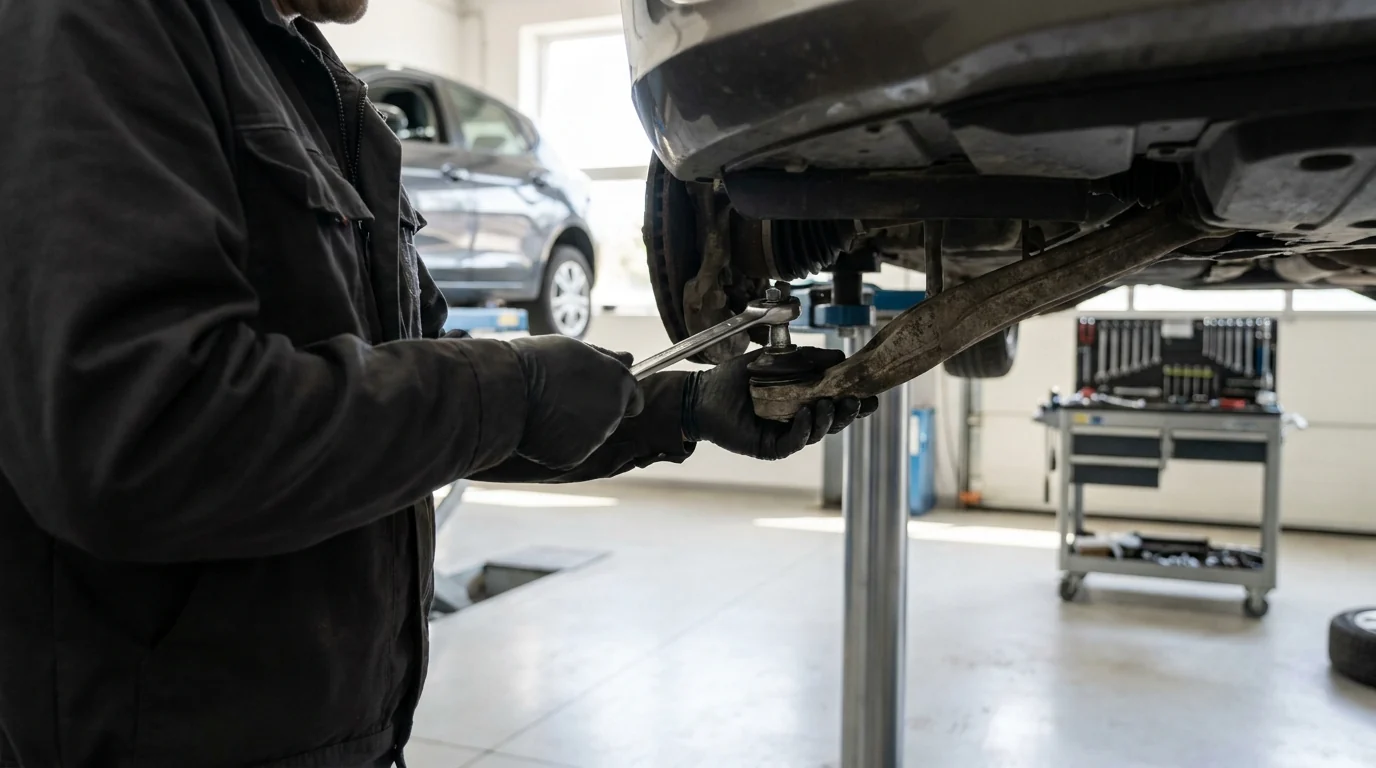
After any suspension work involving control arms, bushings, or mounts, a wheel alignment is mandatory. Otherwise, the new parts won't save your tires from uneven wear.
What Exactly Does a Mechanic Check During a Suspension Inspection?
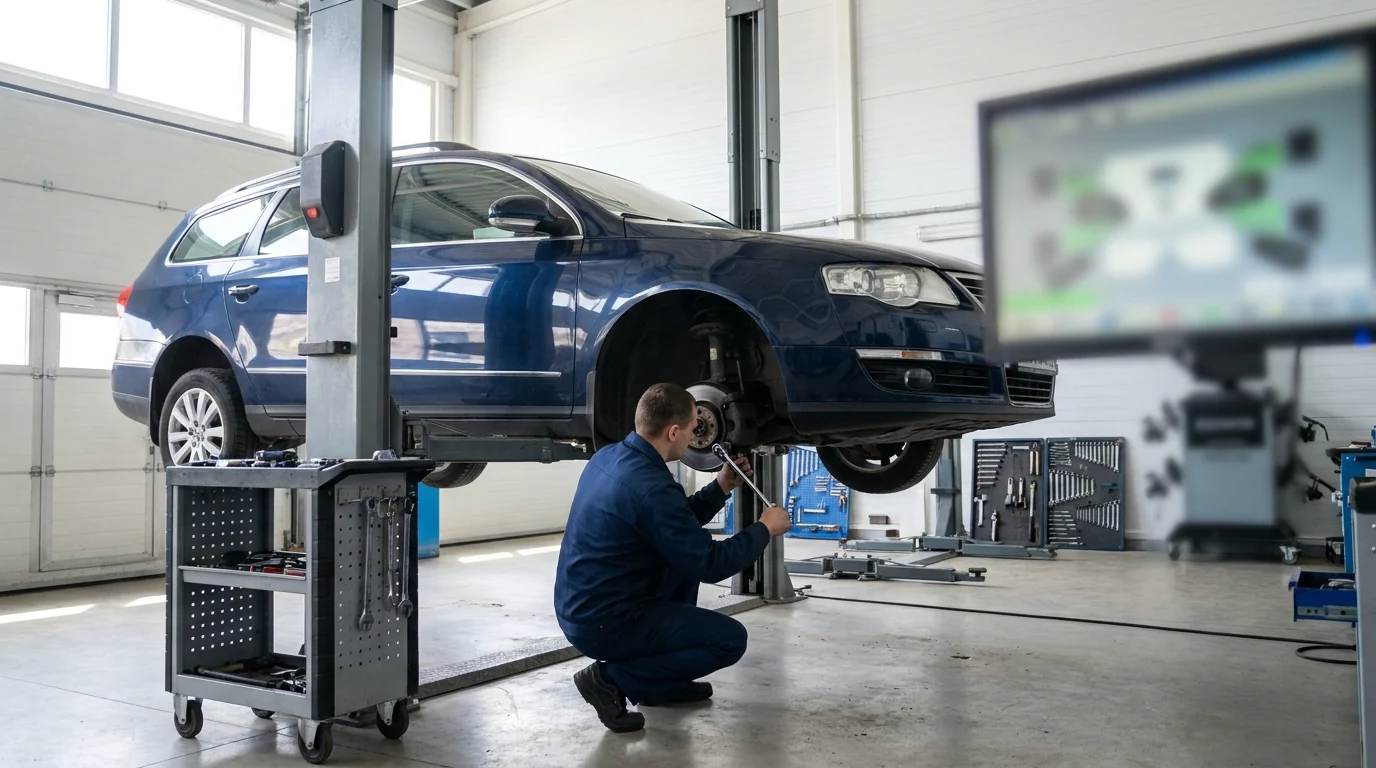
A suspension inspection is a methodical check of all its components for wear, damage, and play. The process begins with a visual inspection on a lift. The mechanic looks for cracks in bushings, torn boots on ball joints and tie rod ends, and oil leaks on the shock absorbers. Any of these defects is a signal that a replacement is needed, as a torn boot quickly leads to joint failure, and a leaking shock absorber no longer performs its function.
Next comes the check for play. Using a pry bar and their hands, the mechanic tests every moving element: ball joints, tie rods and ends, stabilizer links and bushings, and control arm bushings. Excessive play (free movement) in the connections is the main cause of knocking and poor handling. The wheel bearings are also checked: the wheel is spun and rocked vertically and horizontally to detect any humming or play.
Special attention is paid to the shock absorbers and springs. In addition to checking for leaks, the mechanic assesses the condition of the shock absorber's piston rod and the integrity of the springs. A cracked spring can not only cause the car to sag but also damage adjacent components. The condition of the strut mount bearings, which are responsible for smooth steering and can make a crunching sound when turning, is also evaluated. This comprehensive check allows for a complete report on the suspension's condition.
The most expensive suspension repair is replacing parts that aren't broken. That's why we start with an inspection on the lift, not with a wrench.
Not every knock is a death sentence for your entire suspension. Often, the cause is a single inexpensive part, like a stabilizer link. Don't rush into a full suspension overhaul without a detailed inspection.
The Repair Process: From Estimate Approval to Parts Replacement
After the diagnostics are complete, the most important stage begins: communication with the car owner. The mechanic creates a defect report listing all identified faults. Next to each item, its criticality is indicated: what needs to be replaced immediately and what can wait until the next visit. This allows you to make an informed decision based on safety and your budget. We never push for the highest possible bill; our job is to explain the car's technical condition.
The next step is to agree on the estimate. We offer options for spare parts: original equipment (OEM) or quality aftermarket parts from trusted manufacturers. For each item, we explain the difference in price and lifespan so you can make a conscious choice. Once you've decided on the scope of work and the parts, we create a final estimate. The total amount will not change during the repair process without your knowledge. Work begins only after your final approval.
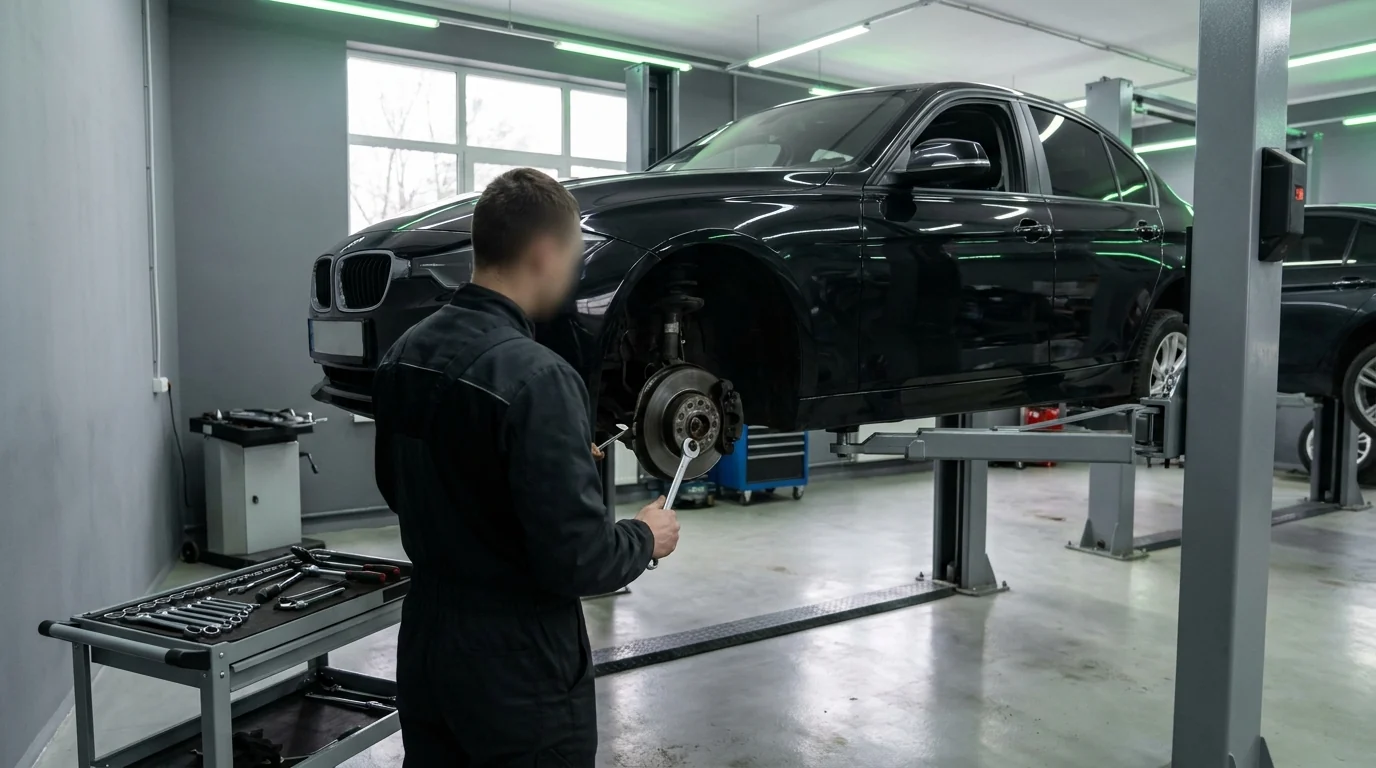
The repair itself involves removing the worn parts and installing new ones. Our mechanics use professional tools, which allows them to perform the work to a high standard and in accordance with the manufacturer's technology. For example, a press is used for replacing bushings, not a sledgehammer, which guarantees the part is seated correctly. After all work is completed, a final inspection and a test drive are conducted if necessary. The duration of the repair depends on the complexity and volume of work and can take from 2 to 4 hours. We can give you a precise time estimate after the diagnostics and approval of the work list.
The Most Common Failures: Where Do Suspension Knocks Come From?
Most often, the first parts to fail are the stabilizer (sway bar) links. These are small rods with joints at the ends that take on significant loads during turns and on uneven roads. Their wear manifests as a distinct, sharp knock over small bumps, often felt in the pedals or floor. Fortunately, this is one of the cheapest parts in the suspension, and its replacement is not complicated.
In second place are bushings. These are rubber-to-metal joints that dampen vibrations and allow the control arms to move. Over time, the rubber cracks, dries out, and separates from the metal sleeves. Symptoms of wear include dull thuds when going over speed bumps, creaks on uneven surfaces, and worsened handling. You can read more about this in our article Why bushings knock and creak—and what happens if you don't replace them.
Worn ball joints and tie rod ends are a more serious problem. These components are responsible for turning the wheels and connecting them to the control arms. A worn ball joint manifests as a sharp knock when starting from a stop or when turning the steering wheel at low speed. Ignoring this problem is dangerous: in a critical moment, the joint can pop out, leading to a complete loss of steering control. Therefore, at the first sign of trouble, you should immediately come in for diagnostics.
Shock absorbers and their mounts are also a common source of problems. A failed shock absorber no longer dampens oscillations, causing the car to become 'floaty,' swaying on uneven pavement and 'nose-diving' during braking. Worn strut mount bearings produce a crunching sound when turning the steering wheel. Although faulty shocks don't always knock, they significantly compromise safety by increasing braking distance and reducing grip.
Why is a Wheel Alignment a Mandatory Step After Repairs?
Many drivers neglect to have their wheel alignment adjusted after suspension repairs, considering it an unnecessary expense. This is a big mistake. Any intervention in the suspension design, whether it's replacing a control arm, bushing, tie rod, or strut assembly, inevitably changes the wheel's position in space. Even if the new part perfectly matches the old one in size, microscopic deviations during installation will throw off the settings.
The consequences of driving with incorrect wheel alignment angles appear quickly. The first thing to suffer is the tires: they will start to wear unevenly on the inner or outer edge, significantly shortening their lifespan. A new set of tires costs much more than an alignment procedure. The second consequence is worsened handling. The car may pull to one side, and the steering may become 'heavy' or, conversely, too light and uninformative. This is not only uncomfortable but also dangerous, especially at high speeds.
Therefore, a wheel alignment is not an optional extra but the final and mandatory stage of a quality suspension repair. It ensures that all new parts will work correctly, the car will drive straight, and the tires will wear evenly. Skimping on this procedure negates all the money spent on the repair itself. We always remind our clients of this because our goal is not just to replace a part, but to restore the car's proper and safe operation as a whole.
OEM Parts vs. Aftermarket: What to Choose for Suspension Repair?
The choice between original equipment manufacturer (OEM) parts and aftermarket alternatives is a timeless question for every car owner. OEM parts are produced either by the car manufacturer itself or by a contractor on its behalf. Their main advantage is guaranteed compatibility and quality. They fit perfectly, and their lifespan generally matches factory specifications. The main drawback is the high price, which often includes a markup for the brand name.
Aftermarket parts are made by third-party manufacturers. The aftermarket is vast, ranging from premium brands that supply parts to assembly lines (like Lemförder, Sachs, TRW) to overtly cheap Chinese producers. The main benefit is the price, which can be several times lower than OEM. However, quality can vary greatly. High-quality aftermarket parts from reputable brands are often as good as the original, and sometimes even better, offering reinforced designs.
Our approach is to provide you with a choice and honest advice. For critical components like ball joints, control arms, or tie rods, we recommend either OEM or parts from trusted premium aftermarket manufacturers. Saving money on these elements can lead to safety issues. For less critical parts, such as stabilizer links or bushings, you can confidently choose a quality mid-range aftermarket option. We work with suppliers whose product quality has been proven over the years, and we always confirm every brand with you before ordering.
The Bottom Line
Suspension repair always starts with thorough diagnostics to replace only worn parts and save you money. After replacing key suspension elements, a wheel alignment is mandatory to maintain handling and tire life. If you notice a knock or other signs of a problem, don't delay—schedule an inspection at Tiraspolskaya, 12.
Frequently asked questions
Book in a minute —
Leave your number and we'll call back. Or share the details so the technician can prepare.
Book nowWhat clients say.
Honest Google reviews. Unedited.